
Have you ever looked in the mirror and wished you could simply restore a bit of the vibrancy you had five years ago, without the fear of looking “overdone”? It is a completely valid concern. Many people worry that dermal fillers might leave them looking unnatural or distorted, particularly when navigating the medical landscape in a foreign city.
We understand that you want to feel confident and refreshed, not like a different person. This article explains exactly how these treatments work to replenish facial volume and which areas benefit most from a subtle touch to ensure a safe, natural-looking result in Bangkok.
You will discover the main differences between fillers and other injectables, what to expect during the recovery process, and how to choose a practitioner you can trust. By the end, you will have a clear roadmap for achieving a refreshed appearance that helps you feel like your best self again.
Key Takeaways
- Learn how dermal fillers work to restore the structure and volume lost through the natural ageing process.
- Understand why different facial areas require specific gel thicknesses to achieve a subtle, seamless look.
- Discover why selecting reputable, high-quality brands is vital for both safety and the longevity of your results.
- Find out why a thorough medical consultation is the most important step in your treatment journey.
- Identify what to look for in a Bangkok clinic, including the importance of clear communication with an experienced, English-speaking doctor.
Understanding Dermal Fillers: Restoring Volume and Structure
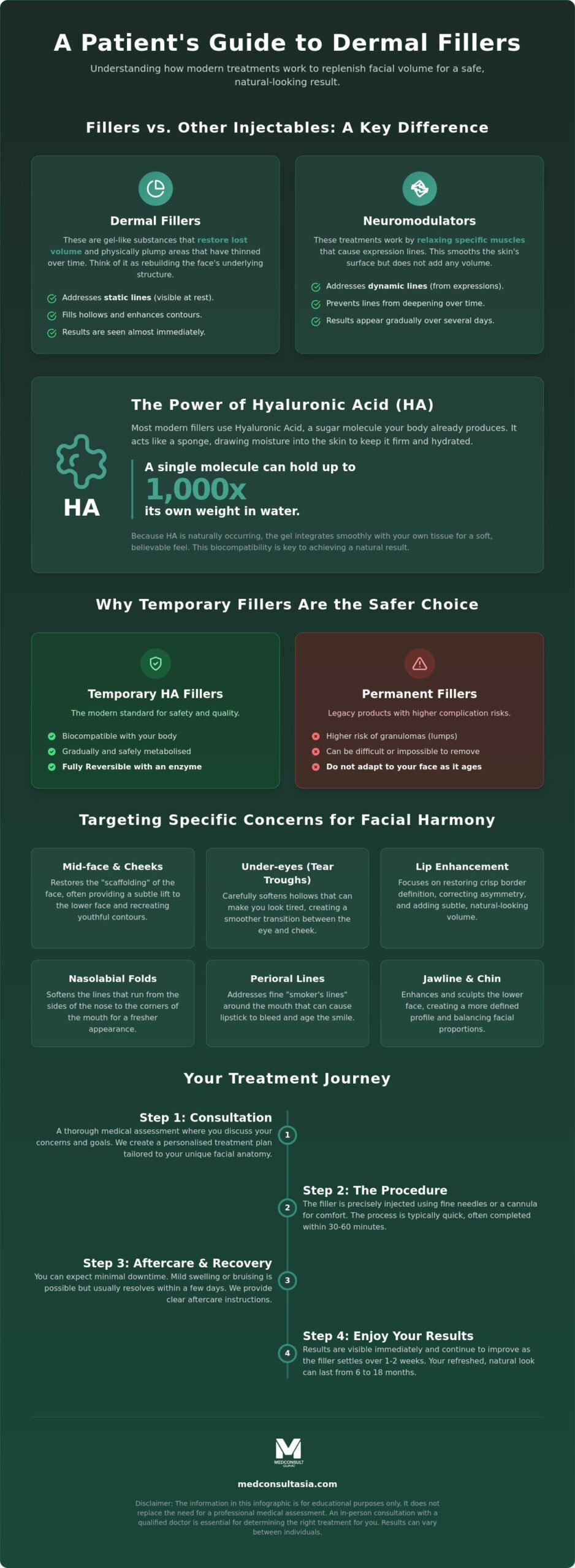
Have you ever wondered why skin loses its “bounce” as we age? It is largely due to the natural decline of collagen and elastin, the proteins that provide our facial structure. As these levels drop, the face can begin to look tired or hollow in areas that were once firm. This is where dermal fillers come in. These are gel-like substances injected just beneath the skin’s surface to physically replenish lost volume.
This loss of volume can also be a side effect of significant weight changes. For those achieving their health goals through physician-supervised medical weight loss programs like Medi Slim, dermal fillers provide an effective way to restore the facial fullness that often diminishes during such a transformation.
It is common to confuse fillers with other treatments like Botox. While Botox works by relaxing the muscles that cause expression lines, fillers address a different concern altogether. They focus on structure and “plumping” areas that have thinned over time. Think of it as restoring the foundation of a house rather than just smoothing the wallpaper. Modern fillers are cleverly designed to mimic substances already found in your body, making them a natural choice for rejuvenation.
The Science of Hyaluronic Acid (HA)
Most modern dermal fillers use Hyaluronic Acid (HA). This is a sugar molecule your body already produces to keep tissues lubricated and skin hydrated. It acts like a sponge, drawing moisture into the skin to keep it firm. In fact, a single molecule of HA can hold up to 1,000 times its own weight in water. Because HA is naturally occurring, the gel integrates smoothly with your own tissue, resulting in a soft and believable feel.
Temporary vs. Permanent Fillers
In the past, permanent fillers were more common, but they carry higher risks of long-term complications. Most medical professionals now prefer temporary HA fillers because they are much safer for the patient. One of the greatest advantages of HA is that it is reversible. If a patient is unhappy or a complication occurs, an enzyme called hyaluronidase can be used to dissolve the gel almost immediately. This level of control provides peace of mind that permanent, non-dissolvable materials simply cannot offer.
Targeting Specific Concerns: Popular Treatment Areas
Modern dermal fillers are incredibly versatile tools. They aren’t just for “filling” a single deep line; they’re used to sculpt and balance the entire face. To achieve a natural look, we focus on facial harmony rather than just treating one isolated wrinkle. It’s helpful to review FDA information on dermal fillers to understand how different formulations are approved for specific facial regions.
The gel’s thickness, or viscosity, is tailored to the area being treated. A firmer gel provides structure for the cheeks or jawline, while a softer, more fluid gel is better for the lips or under the eyes. For a broader look at how these options fit into a full plan, you might explore our aesthetic treatments pillar. If you’re ready to discuss your goals, you can book a professional assessment with our team.
Lip Enhancement and Definition
Lip treatments have evolved far beyond simply adding volume. Many patients seek to correct natural asymmetry or restore the crisp border definition that softens with age. We can also address perioral wrinkles, often called “smoker’s lines”, which can cause lipstick to bleed. A “less is more” approach is vital here. By using a light touch, we ensure your lips remain soft and mobile, avoiding the stiff, overfilled appearance that many fear.
Mid-face Volumisation and Under-eye Refreshing
The cheeks act as the scaffolding for the rest of the face. By restoring volume to the mid-face, we often see a lifting effect on the lower face, recreating what’s known as the “triangle of youth”. For those who look tired even after a good night’s sleep, “tear trough” fillers can help smooth the hollows under the eyes. This area is anatomically delicate, so it requires a precise hand and an expert understanding of the periorbital region to ensure safety and a seamless transition between the eye and cheek.
Safety and Selection: Identifying Quality Fillers
Safety in aesthetic medicine is about more than just the final result. It begins with the quality of the product itself. Brands matter for safety. Not all gels are created equal; choosing high-quality brands is vital for ensuring longevity and minimising the risk of adverse reactions.
“Budget” options often bypass strict manufacturing standards. This can lead to complications such as granulomas (hard lumps) or persistent infections. We prioritise products that have undergone rigorous clinical testing to ensure your peace of mind.
It’s also about how the product is handled before it reaches you. Genuine dermal fillers require specific cold-chain storage to remain stable. When you are considering dermal filler cosmetic procedures, you should feel empowered to ask your practitioner about their supply chain and product authenticity.
Recognising Genuine FDA-Approved Brands
Stick to globally recognised names such as Restylane or Juvederm. In Thailand, every legal medical product must have a Thai FDA approval sticker on the box. You can also ask to see the packaging and note down the batch number of your specific syringe. This transparency is a hallmark of a professional clinic and provides a clear record of your treatment.
The Importance of Medical Supervision
A deep understanding of facial anatomy is what separates a safe treatment from a risky one. Doctors spend years studying the intricate network of nerves and blood vessels beneath your skin. This knowledge is necessary for avoiding rare but serious complications like vascular occlusion (where filler accidentally enters a blood vessel). While these events are uncommon, a trained medical professional knows exactly how to identify and manage them immediately. For those who want to ensure their aesthetic goals align with their overall health, a GP consultation can provide a helpful, holistic starting point.
The Treatment Journey: From Consultation to Recovery
Your journey to a refreshed appearance begins long before the first injection. The consultation is the most pivotal part of the entire process. This is the time for you to share your concerns and for your doctor to assess your unique facial anatomy. A clear plan ensures that the results look natural and balanced rather than “done.”
Managing the Injection Process
Modern dermal fillers are designed with your comfort in mind. Most high-quality gels now contain lidocaine, a local anaesthetic that numbs the treatment area from the inside out. Before we begin, we also apply a topical numbing cream to the skin’s surface. The actual injecting process is efficient, often taking less than 30 minutes to complete.
Your doctor might use a fine needle or a cannula (a thin, blunt-ended tube). Cannulas are often favoured for areas like the cheeks because they slide through tissue more smoothly, which helps reduce the risk of bruising. If you’re ready to start your own journey, you can schedule your initial consultation online today.
Post-Procedure Care for Lasting Results
While you’ll see a visible difference immediately, the gel needs time to settle. It usually takes about two weeks for the product to fully integrate with your skin tissue. During this time, minor swelling or bruising is normal. In the Bangkok heat and humidity, staying cool and hydrated is particularly helpful. Drinking plenty of water allows Hyaluronic Acid to draw in moisture and “plump” as intended.
- Avoid strenuous exercise for 48 hours to keep blood pressure stable.
- Stay away from high heat, such as saunas, steam rooms, or intense direct sun.
- Gently apply a cool compress if you experience any initial puffiness.
- Sleep with an extra pillow for the first night to help reduce facial swelling.
Following these simple steps helps protect your investment and ensures your results settle beautifully. Most patients find they can return to their usual social activities almost immediately, provided they follow the basic aftercare advice.
Dermal Fillers in Bangkok: Why Expertise Matters
Bangkok is a global hub for aesthetic medicine, but for those living here, the sheer number of options can be overwhelming. While many clinics offer dermal fillers, the quality of care and the ability to communicate your specific goals vary widely. Finding a clinic that offers transparent medical pricing and a hassle-free experience is essential for your peace of mind.
Navigating Aesthetic Care as an Expat
Clear communication is the foundation of any successful medical procedure. Being able to speak directly with an English-speaking, UK-trained doctor ensures that your aesthetic goals aren’t “lost in translation.” Different ethnic facial structures and varying beauty standards require a nuanced understanding. A practitioner who recognises these differences can provide results that respect your natural features rather than following a one-size-fits-all trend.
Our central location makes booking and follow-up care straightforward for busy professionals and residents alike. We understand the practical needs of the international community. We aim to provide a service that is as efficient as it is professional, valuing your time as much as your health.
Personalised Care at MedConsult Clinic
At MedConsult Clinic, Dr. Donna Robinson leads with a philosophy of subtle, natural rejuvenation. We believe that aesthetic treatments should complement your overall health. This is why we often integrate dermal fillers with a broader view of wellness and hormones. Our consultations are entirely non-judgmental; we focus on what you want to achieve for your own confidence.
Ultimately, looking refreshed is just one part of the journey. When you feel confident in your appearance, it often supports a greater sense of overall well-being. Please note that results vary and online information does not replace a medical assessment.
Achieving Your Aesthetic Goals with Confidence
Choosing to restore facial volume is a personal decision that deserves a professional, medically led approach. You now understand that successful treatments rely on high-quality, FDA-approved products and an expert knowledge of facial anatomy. By prioritising a “less is more” philosophy, you can achieve a refreshed look that feels entirely natural.
Since 2003, MedConsult Clinic has been a trusted partner for the international community in central Bangkok. Led by UK-trained Dr. Donna Robinson, we focus on providing a transparent and supportive environment for all your aesthetic needs. We use only premium, approved brands to ensure your safety and comfort throughout the process.
Please remember that results vary for each individual and online information does not replace a formal medical assessment. We are here to answer your questions and help you feel confident in your care. Book a Personalised Aesthetic Consultation with Dr. Donna to discuss how dermal fillers may help you achieve a subtle, revitalised appearance.
Frequently Asked Questions
How long do dermal fillers typically last?
Most hyaluronic acid fillers last between six and eighteen months, depending on the specific product used and the area treated. Fillers in highly mobile areas, such as the lips, tend to break down faster than those placed in the cheeks or jawline. Your individual metabolism also plays a role in how quickly the body absorbs the gel. We usually recommend a maintenance treatment once a year to keep your results looking consistent.
Is the filler injection procedure painful?
You shouldn’t find the procedure painful, as we use several techniques to ensure your comfort. We apply a strong topical numbing cream before we begin; additionally, most modern dermal fillers contain lidocaine, which numbs the area as the gel is injected. While you might feel a slight pressure or a pinching sensation, most patients describe the experience as easily manageable and much less uncomfortable than they initially expected.
Can dermal fillers be reversed if I don’t like the result?
Yes, hyaluronic acid fillers can be completely dissolved using an enzyme called hyaluronidase. If you aren’t happy with the outcome or if a complication occurs, this enzyme can be injected into the area to break down the filler almost immediately. This reversibility is one of the main reasons we prefer using temporary HA fillers, as it provides a safety net and peace of mind for our patients.
What is the difference between fillers and Botox?
The main difference lies in how they address wrinkles. Botox relaxes the muscles that cause expression lines, such as crow’s feet or forehead furrows. In contrast, dermal fillers physically add volume to hollow areas or deep folds, like the cheeks or nasolabial lines. While Botox limits movement to smooth the skin, fillers plump the skin from beneath to restore lost structure and facial contours.
Are there any side effects I should be worried about?
Minor side effects like swelling, redness, and bruising are common and typically resolve within a few days. These are normal reactions to the injection process rather than the product itself. More serious risks, such as vascular occlusion or infection, are very rare when the treatment is performed by an experienced medical professional. We provide clear aftercare instructions and are always available for follow-up care if you have any concerns.
How much filler will I need for a natural look?
Most natural-looking results are achieved with just one or two syringes per session. The exact amount depends on your specific goals and the degree of volume loss we are addressing. We always advocate for a “less is more” approach; it’s much easier to add a little more during a follow-up appointment than to overfill the face initially. Our goal is to refresh your appearance, not change your fundamental features.
Can I fly immediately after getting fillers in Bangkok?
We generally advise waiting at least 24 to 48 hours before boarding a flight. The changes in cabin pressure can sometimes worsen swelling or bruising, particularly after under-eye or lip treatments. Additionally, it’s safer to remain in the city for a day or two so that your doctor can check the results if you have any immediate questions. If you must fly sooner, please discuss this with us during your consultation.
At what age should I start considering dermal fillers?
There is no perfect age to start, as everyone ages at a different rate. While many patients begin to notice volume loss in their late 20s or early 30s, others wait until their 40s or 50s. Some younger patients use fillers for subtle enhancement, like lip definition, while older patients often focus on restoring lost structure. We assess your skin’s condition and your personal goals rather than just looking at your age.