
Did you know that bringing a standard prescription of Adderall into Thailand could lead to a prison sentence of up to fifteen years? It is a startling fact for many expats and travellers who rely on specific stimulants to manage their daily focus. If you are looking for ADHD medication Bangkok, you will quickly find that the regulatory landscape is far stricter than in the UK or Australia; making it vital to understand the local rules before you arrive.
We understand how daunting it feels to navigate foreign drug laws while worrying about running out of your treatment. You deserve a clear, hassle-free path to maintaining your health without legal risks. This article provides the necessary facts on medication availability, the requirement to see a Thai-licensed psychiatrist, and the specific documentation you need for a smooth transition.
We will explore the current list of permitted substances for 2026, explain why your foreign prescription cannot be filled at a local pharmacy, and outline how to find a reliable clinical partner for your ongoing care and refills.
Key Takeaways
- Identify which common ADHD stimulants are strictly prohibited in Thailand and learn about the legal, local alternatives available for your treatment.
- Understand the clinical requirement for a consultation with a Thai-licensed psychiatrist, as foreign prescriptions cannot be filled at local pharmacies.
- Discover the specific medical records and diagnostic reports you need to bring to ensure your transition of care is seamless and professional.
- Learn the step-by-step process for obtaining ADHD medication Bangkok through hospital-based pharmacies in full compliance with Category 2 substance regulations.
- Explore how to manage your treatment long-term by monitoring physical health markers and combining medication with supportive behavioural strategies.
Understanding ADHD Medication Options Available in Thailand
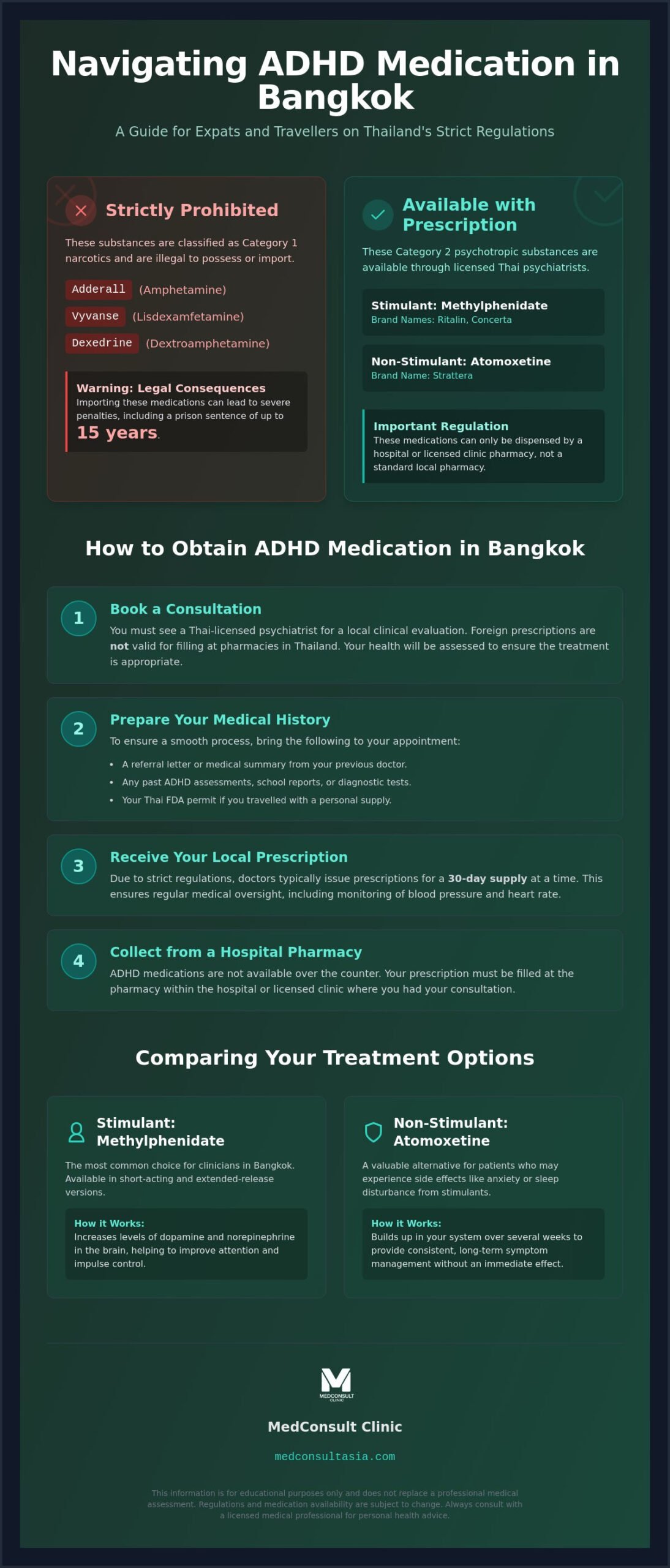
If you are seeking ADHD medication Bangkok, it is vital to understand that the pharmaceutical landscape here is likely different from your home country. The Thai Food and Drug Administration (FDA) maintains strict oversight on treatments for neurodivergent conditions. Currently, these medications are classified as Category 2 psychotropic substances; this means they are heavily regulated and can only be dispensed through specific clinical channels.
The primary stimulant available in Thailand is Methylphenidate, which you may recognise under brand names such as Ritalin or Concerta. For those who require non-stimulant alternatives, Atomoxetine (Strattera) is also accessible. While the variety of brands may feel limited compared to Western markets, these options provide effective support for the majority of patients managing focus and executive function.
Stimulants vs Non-Stimulants in the Thai Context
Methylphenidate remains the most common choice for clinicians in Bangkok. It works by increasing levels of dopamine and norepinephrine in the brain, which helps to improve attention and impulse control. You can find both short-acting and extended-release versions depending on your specific needs. For a broader look at how these treatments fit into a wider care plan, you can explore Understanding ADHD Medication Options through various therapeutic lenses.
Atomoxetine serves as a valuable alternative for patients who experience side effects from stimulants, such as anxiety or sleep disturbances. Unlike stimulants, it does not provide an immediate effect; instead, it builds up in your system over several weeks to provide consistent, long-term symptom management. This makes it a popular choice for those seeking a more gradual approach to their ADHD medication Bangkok journey.
The Status of Adderall and Vyvanse
You should be aware that amphetamine-based medications, including Adderall, Dexedrine, and Vyvanse, are strictly prohibited in Thailand. These are classified as Category 1 narcotics. They are not available for prescription locally, and bringing them into the country is illegal, even with a valid foreign prescription. Attempting to import these substances can lead to severe legal penalties.
If you are currently prescribed an amphetamine-based medication, we recommend speaking with a doctor at our mental health clinic well before your current supply runs out. Local psychiatrists are experienced in helping patients transition safely to Methylphenidate or Atomoxetine, ensuring your treatment continues without interruption while you are living in or visiting Thailand.
The Step-by-Step Process for Obtaining a Prescription
Securing a prescription for ADHD medication Bangkok is a methodical process designed to ensure patient safety and legal compliance. Unlike some countries where a general practitioner might handle long-term repeats without frequent reviews, Thailand requires a more specialised approach. You will need to meet with a licensed psychiatrist or a GP with specific expertise in mental health to begin your treatment journey.
During your initial visit, you will undergo a local clinical evaluation. This step isn’t just about confirming a prior diagnosis; it’s about assessing your current health status to ensure the treatment plan is appropriate for your lifestyle in Thailand. Because these medications are Category 2 psychotropic substances, doctors are often restricted to issuing a 30-day supply at one time. This regulation ensures you receive regular medical oversight and support.
What to Bring to Your First Consultation
If you’re an expat, arriving prepared can significantly speed up the clinical process. We recommend bringing a formal referral letter or a medical summary from your previous doctor. Any past ADHD assessments, school reports, or diagnostic tests are incredibly helpful. It’s also standard practice to conduct doctor consultation screenings, including blood pressure and heart rate checks, as stimulants can impact cardiovascular health.
If you are travelling into the country with an existing supply for personal use, ensure you have already applied for the Thai FDA permit for travelers. Having this documentation ready shows that you’re following local laws and helps your new doctor understand your history more clearly. It serves as a bridge between your care abroad and your new treatment plan in Bangkok.
Legal Requirements for Refills and Monitoring
You won’t find these medications available over the counter in Thai pharmacies. Because they’re strictly controlled, they must be dispensed by a hospital or a clinic with a specific licence to handle psychotropic substances. This system prevents misuse and ensures that every tablet is accounted for under the Thai Narcotics Code.
Regular follow-up appointments are both a legal and medical necessity. These visits allow your doctor to monitor for side effects, check the efficacy of your dose, and adjust your treatment as needed. It’s a collaborative process that prioritises your long-term wellness and peace of mind. If you’re ready to discuss your options with an English-speaking professional, you can schedule an appointment online to begin your evaluation.
Managing Your ADHD Treatment Long-Term in Bangkok
Successful management of ADHD is rarely about a single appointment; it is an ongoing process of adjustment and observation. When you are stabilised on ADHD medication Bangkok, your focus shifts toward maintaining that balance while protecting your physical health. Stimulants can occasionally impact your appetite or sleep quality, so keeping a simple diary of these patterns helps your medical team make precise adjustments to your care plan. Regular cardiovascular monitoring, such as checking your blood pressure and resting heart rate, is also a standard part of responsible long-term treatment.
Maintaining this balance often involves looking at one’s health from a broader perspective. For individuals interested in natural wellness options, Dr.Vaishali Nore’s Homeopathy & Wellness Clinic offers holistic homeopathic treatments that can serve as a supportive addition to a patient’s overall health strategy.
Building a consistent relationship with an English-speaking medical team makes this process much easier. At MedConsult Clinic, we prioritise a “hassle-free” approach that values your time and peace of mind. Having a doctor who understands your history and the specific challenges of living as an expat in Thailand ensures that your refills and health checks are handled with efficiency and empathy. This continuity of care is the best way to ensure your treatment remains effective as your lifestyle or work demands change.
Combining Medication with Mental Health Support
While medication addresses the biological side of focus, many patients find that therapy helps with the practical “skill” side of ADHD. Learning new organisational strategies or cognitive techniques can significantly enhance the benefits you get from your prescription. If you feel you need extra support beyond the pharmacy, exploring mental health services can provide a more holistic approach to your wellness journey. It’s about giving you a complete toolkit for success.
Travel and ADHD: Staying Compliant
If you plan to travel within Southeast Asia, you must stay mindful of differing drug laws in neighbouring countries. Always carry your medication in its original packaging and ensure you have a valid medical certificate from your doctor. This document should state your diagnosis and the specific details of your treatment to prevent any misunderstandings at customs. Because of the 30-day limit on ADHD medication Bangkok, we recommend scheduling your follow-up appointments well in advance of any regional trips to ensure you never face a gap in your treatment while abroad.
Disclaimer: Results vary for each individual and online information does not replace a formal medical assessment. Always consult with a licensed professional before starting or changing any medication.
Taking Control of Your ADHD Care in Thailand
Living in a new city shouldn’t mean compromising your mental health or focus. While the rules surrounding ADHD medication Bangkok are strict, they are designed to ensure you receive the highest standard of regulated care. By understanding the shift from amphetamine-based treatments to local options like Methylphenidate and committing to regular clinical check-ups, you can maintain your productivity and wellbeing with confidence.
Since 2003, Dr. Donna Robinson and our bilingual medical team have specialised in supporting the international community. We understand the unique pressures of expat life and offer a transparent, supportive process for managing your treatment. Whether you visit us at our Thonglor or Silom locations, you’ll find a professional environment dedicated to your long-term health and peace of mind.
If you’re ready to secure your prescription or discuss your treatment plan with a knowledgeable expert, we’re here to help. You can Book an ADHD Consultation with our English-speaking team today to begin your journey toward better focus. Your mental health is a priority; we look forward to partnering with you in your wellness journey.
Common Questions About ADHD Care in Thailand
Is Adderall legal in Thailand for personal use?
Adderall is strictly illegal in Thailand and is classified as a Category 1 narcotic. You cannot purchase it locally, and it is prohibited to bring it into the country, even if you hold a valid prescription from your home country. Possession of amphetamine-based stimulants carries severe legal penalties; therefore, doctors will typically transition you to a permitted alternative like Methylphenidate.
Can I bring my ADHD medication when I fly into Bangkok?
You may bring a 30-day supply of Methylphenidate (Ritalin or Concerta) if you have obtained a permit from the Thai FDA before your arrival. This requires a signed doctor’s certificate and a copy of your prescription. Non-controlled medications like Atomoxetine do not require a permit, but you should still carry a medical letter and keep the medication in its original packaging to ensure a smooth process at customs.
How much does ADHD medication cost in Bangkok?
The cost of ADHD medication Bangkok depends on whether you are prescribed generic Methylphenidate or branded extended-release options like Concerta. Prices fluctuate between different hospitals and private clinics. Generally, while these treatments are often more affordable than in the United States, they may be more expensive than in countries with fully subsidised healthcare systems like the UK.
Do I need a new diagnosis if I already have one from my home country?
A Thai-licensed psychiatrist must perform their own clinical evaluation before they can legally issue a new prescription. While they cannot simply “refill” a foreign prescription, your existing diagnostic reports and medical history are incredibly useful. Bringing a detailed summary from your previous specialist will help the local doctor understand your history and may make the consultation process much more efficient.
Can any doctor in Bangkok prescribe Ritalin?
No, only doctors at facilities specifically licensed by the Thai FDA to handle Category 2 psychotropic substances can prescribe and dispense these medications. This usually means you must visit a psychiatrist at a hospital or a specialised medical clinic. You will not find these treatments available in high-street retail pharmacies, as the government maintains strict control over their distribution.
What happens if I lose my ADHD medication while in Thailand?
If you lose your medication, you must see a local doctor immediately to undergo an evaluation and obtain a replacement prescription. You cannot buy these treatments over the counter or use a foreign prescription at a Thai pharmacy. Keeping a digital copy of your original medical certificate or diagnostic report on your phone can help the local clinician verify your treatment plan quickly during an emergency visit.