
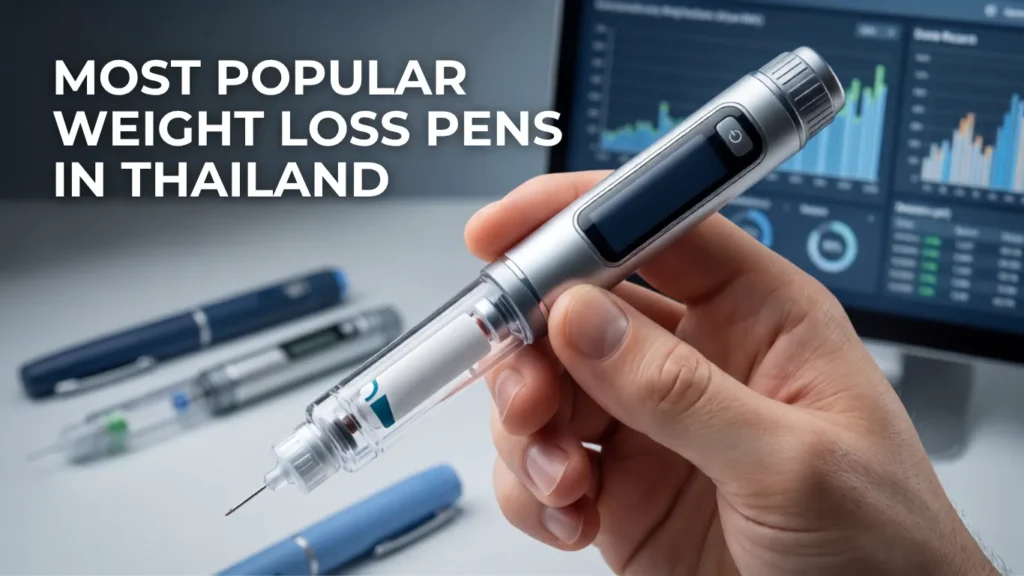
What Are Weight Loss Pens
A weight loss pen is a pre-filled injection device containing medication used to support weight management.
Many of the treatments discussed as weight loss pens work through hormone pathways involved in:
- Appetite
- Fullness
- Blood sugar regulation
- Digestion
- Energy balance
These medications can help some patients reduce appetite and calorie intake.
However, they are intended to be used as part of a broader weight-management plan that may include nutrition, physical activity, and medical follow-up.
Which Most Popular Weight Loss Pens in Thailand?
The most commonly discussed prescription weight loss pens in Thailand include treatments containing semaglutide and tirzepatide.
These medications have received significant attention because of their clinical evidence for weight management.
However, patients should distinguish between a medication’s active ingredient and its brand name.
The same active ingredient may be marketed under different brand names and may have different approved indications in different countries.
The Thai FDA’s National Drug Information database can be used to check registered medicines in Thailand. (ndi.fda.moph.go.th)
Semaglutide Weight Loss Pens
Semaglutide is a GLP-1 receptor agonist.
It works by activating GLP-1 pathways involved in appetite regulation, fullness, and glucose metabolism.
For suitable patients, this can help reduce food intake and support weight loss.
Clinical trials have demonstrated significant weight reduction with semaglutide in adults with overweight or obesity when used alongside lifestyle intervention.
Research has also examined potential effects on cardiovascular health in specific patient populations.
However, clinical trial results are averages and should not be interpreted as a guarantee of individual weight loss.
Tirzepatide Weight Loss Pens
Tirzepatide works differently from semaglutide because it activates two hormone pathways: GIP and GLP-1.
This is why tirzepatide is often described as a dual GIP/GLP-1 receptor agonist.
The two pathways are involved in appetite regulation, glucose metabolism, and energy balance.
Clinical research has demonstrated substantial weight reduction with tirzepatide in selected adults with overweight or obesity.
However, the fact that tirzepatide acts on two pathways does not automatically mean that it is the right treatment for every patient.
What Is the Difference Between Semaglutide and Tirzepatide?
One of the main differences is how they work.
Semaglutide:
- Primarily targets GLP-1 receptors
- Influences appetite and fullness
- Supports blood sugar regulation
Tirzepatide:
- Targets both GIP and GLP-1 receptors
- Influences appetite and fullness
- Supports glucose regulation
- Acts through an additional GIP pathway
Both can support weight management, but individual responses vary.
A doctor should consider your health history and treatment goals rather than choosing based solely on which medication appears more popular.
Does the Most Popular Pen Mean It Is the Best?
Not necessarily.
There is no single weight loss pen that is best for everyone.
Treatment choice can depend on:
- BMI
- Medical conditions
- Blood sugar
- Blood pressure
- Cholesterol
- Previous weight-loss attempts
- Current medication
- Side-effect risk
- Personal treatment goals
A medication that works well for one person may cause significant side effects or provide a different response in another person.
Who May Benefit From Weight Loss Pens?
Weight loss medication may be considered for selected adults with overweight or obesity, depending on the specific medication and medical criteria.
A doctor may consider treatment when a patient has:
- Obesity
- Overweight with weight-related health concerns
- Difficulty losing weight through lifestyle changes alone
- Repeated weight regain
- Metabolic risk factors
Additional health conditions may also influence the treatment decision.
The appropriate option depends on individual assessment.
When Should You Consider a Weight Loss Consultation?
You may want to speak with a doctor if:
- You have repeatedly tried to lose weight without lasting results
- Your appetite is difficult to manage
- You frequently regain weight
- You have prediabetes or insulin resistance
- You have PCOS-related weight concerns
- You have fatty liver concerns
- Your weight is affecting your health
A consultation can help determine whether medication is appropriate or whether lifestyle-based treatment may be sufficient.
What Happens Before Starting a Weight Loss Pen?
A responsible treatment plan begins with medical assessment.
Your doctor may review:
- Current weight
- Height and BMI
- Weight history
- Previous diets or treatments
- Appetite and eating patterns
- Physical activity
- Medical conditions
- Current medications
- Family history
Blood tests may also be recommended depending on your medical history.
These can include:
- HbA1c
- Fasting glucose
- Cholesterol
- Liver function
- Kidney function
- Other metabolic tests
What a Doctor May Assess
A doctor-led approach may include:
- Medical consultation
- BMI assessment
- Waist circumference
- Weight history
- Blood pressure
- Medical history review
- Current medication review
- Blood tests if needed
- HbA1c and glucose
- Cholesterol
- Liver and kidney function
- Treatment suitability
- Side-effect risk
- Follow-up planning
This provides a more complete picture than simply selecting a weight loss pen based on online reviews.
What Side Effects Can Weight Loss Pens Cause?
Many GLP-1-based treatments can cause gastrointestinal side effects.
These may include:
- Nausea
- Constipation
- Diarrhoea
- Vomiting
- Bloating
- Abdominal discomfort
- Reduced appetite
Side effects may be more noticeable when treatment begins or when the dose is increased.
Some patients find that symptoms improve as their body adjusts.
However, severe or persistent symptoms should be discussed with a healthcare professional.
Why Buying Weight Loss Pens Online Can Be Risky
Online marketplaces and social media can make weight loss pens appear similar to ordinary consumer products.
They are not.
Prescription medicines should come from appropriate medical channels.
Products from unverified sources may have concerns involving:
- Authenticity
- Storage
- Ingredients
- Strength
- Expiry dates
- Supply chain
- Regulatory status
The Thai FDA has also taken steps to strengthen controls around injectable GLP-1 medicines and has highlighted concerns about inappropriate use and unauthorised sales.
Patients should not purchase or use prescription weight loss medication solely based on online recommendations.
Why Storage Matters
Many injectable medications have specific storage requirements.
Patients should follow the storage instructions for their specific medication and avoid using a pen if its storage history is uncertain.
This is particularly important when travelling around Thailand or ordering medication from another location.
A healthcare provider can explain how your specific medication should be stored and handled.
What About Weight Loss Results?
Results vary significantly.
Factors that may influence response include:
- Starting weight
- Nutrition
- Physical activity
- Sleep
- Medical conditions
- Medication adherence
- Individual biology
Some patients experience noticeable appetite changes early, while others have a more gradual response.
Weight loss may also slow down after the initial period.
A plateau does not automatically mean that a medication has stopped working.
Weight Loss Pens and Long-Term Health
Weight management should not focus only on how many kilograms you lose.
Doctors may also monitor:
- Blood pressure
- Blood sugar
- HbA1c
- Cholesterol
- Waist circumference
- Liver health
- Muscle mass
- Overall wellbeing
The goal is to support healthier weight management while protecting nutrition and physical function.
Safety and Important Considerations
Weight loss pens are prescription medicines and should be used under appropriate medical supervision.
They may not be suitable for everyone, particularly people with certain medical conditions, medication interactions, or pregnancy-related considerations.
Do not:
- Change your dose without medical advice
- Share your medication
- Switch products without discussing it with your doctor
- Use a product from an unverified source
If you experience severe or unusual symptoms, seek medical advice.
Why Doctor-Led Care Matters
The question should not simply be:
“Which weight loss pen is most popular?”
A more useful question is:
“Which treatment is appropriate for my health?”
A doctor can compare available options based on your medical history, weight-related risks, treatment goals, and potential side effects.
This makes treatment more personalised and helps avoid choosing medication based only on social media trends.
Book a Weight Management Consultation in Bangkok
If you are researching weight loss pens in Thailand, MedConsult Clinic can help you understand the available medical options.
Our doctors can review your BMI, health history, medications, metabolic health, and weight-management goals before discussing whether prescription treatment may be suitable.
Availability can change, so a consultation can also help you understand which options are currently appropriate and available.
Frequently Asked Questions
What are the most popular weight loss pens in Thailand?
Semaglutide- and tirzepatide-based injectable treatments are among the most widely discussed weight-management medications. Availability and registration can change over time.
Is tirzepatide the same as semaglutide?
No. Semaglutide primarily activates the GLP-1 receptor, while tirzepatide activates both GIP and GLP-1 receptors.
Which weight loss pen works best?
There is no single option that is best for everyone. Treatment should be selected based on medical suitability, health risks, treatment goals, and individual response.
Do I need a prescription for a weight loss pen in Thailand?
Injectable GLP-1 medicines are regulated prescription medicines in Thailand. Patients should obtain them through appropriate medical channels.
Can I buy weight loss pens online?
It is safer to obtain prescription medication through an authorised medical provider. Unverified products may have concerns regarding authenticity, storage, ingredients, or regulatory status.
References
Thai Food and Drug Administration – GLP-1 Injectable Medicines
Thai FDA – GLP-1 and Weight-Loss Pen Information
Thai FDA – National Drug Information
Thai FDA – National Drug Information Database
Wilding JPH, Batterham RL, Calanna S, et al.
Once-Weekly Semaglutide in Adults with Overweight or Obesity. New England Journal of Medicine. 2021;384:989–1002.
Jastreboff AM, Aronne LJ, Ahmad NN, et al.
Tirzepatide Once Weekly for the Treatment of Obesity. New England Journal of Medicine. 2022;387:205–216.
Lincoff AM, Brown-Frandsen K, Colhoun HM, et al.
Semaglutide and Cardiovascular Outcomes in Obesity without Diabetes. New England Journal of Medicine. 2023;389:2221–2232.