
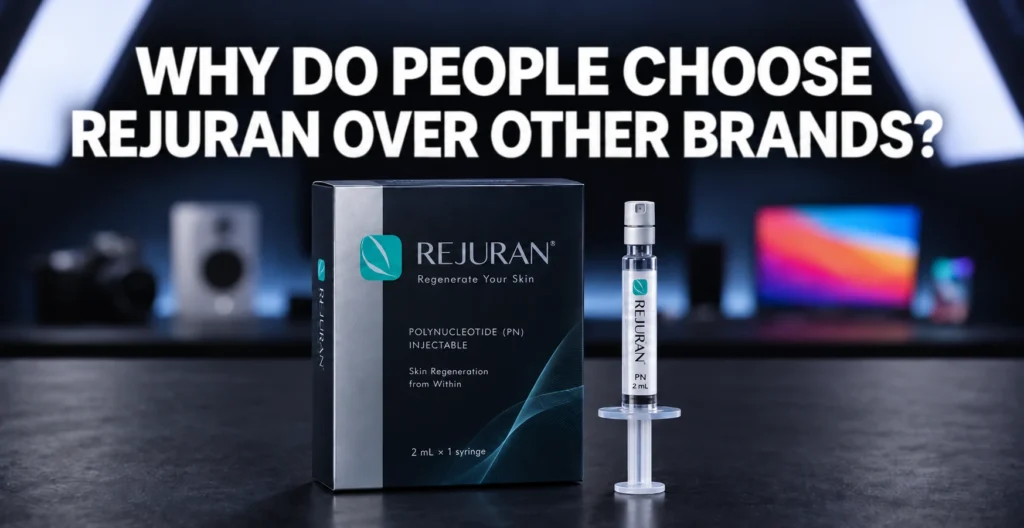
Why Do People Choose Rejuran Healer Over Other Skin Boosters?
Skin rejuvenation is no longer simply about reducing wrinkles or adding volume to the face. Many people are now interested in treatments that focus on skin texture, hydration, elasticity, and overall skin quality while maintaining their natural facial appearance.
Among the options discussed in Korean aesthetic medicine, Rejuran Healer has attracted attention for its use of polynucleotides (PN), a category of DNA-derived compounds being investigated for their potential role in skin rejuvenation.
But what makes Rejuran Healer different from traditional skin boosters? Why might someone consider it instead of hyaluronic acid injections, Profhilo, Juvelook, or other aesthetic treatments?
In this guide, we explore Rejuran Healer benefits, how polynucleotide treatments work, their potential advantages and limitations, and the factors to consider before choosing a skin rejuvenation treatment in Bangkok.
What Is Rejuran Healer?
Rejuran Healer is an injectable skin treatment associated with Korean aesthetic medicine. It contains purified polynucleotides, commonly referred to as PN, derived from fish DNA.
Polynucleotides are chains of nucleotide molecules. In aesthetic medicine, they are being studied for their possible effects on tissue repair processes, skin hydration, and the appearance of aging skin.
Unlike traditional dermal fillers, which are commonly used to restore facial volume or enhance facial contours, Rejuran Healer is primarily discussed in relation to improving skin quality.
The treatment is generally considered by people interested in concerns such as:
Uneven or rough skin texture
Fine lines and early visible signs of skin aging
Enlarged-looking pores
Dull or tired-looking skin
Changes in skin elasticity
Overall skin rejuvenation without a significant change in facial volume
It is important to understand that Rejuran Healer is not a guaranteed solution for these concerns. Suitability, treatment response, and expected improvements depend on the individual, the specific product, and the treatment technique.
Why Do People Choose Rejuran Healer?
There are several reasons why someone researching aesthetic treatments may become interested in Rejuran Healer.
1. A Focus on Skin Quality Rather Than Facial Volume
One of the main differences between Rejuran Healer and traditional volumizing dermal fillers is their intended treatment approach.
Hyaluronic acid dermal fillers are frequently selected to restore lost volume, contour facial features, or address certain facial folds.
Rejuran Healer, by comparison, is usually discussed as a skin-quality treatment.
For individuals who are not looking to change their facial shape, a skin-focused approach may be appealing.
The objective is not necessarily to create a noticeably different face, but to address concerns about how the skin itself looks and feels.
This distinction is particularly relevant for people who prefer subtle aesthetic improvements.
2. Interest in Improving Uneven Skin Texture
Skin texture can change for many reasons, including aging, sun exposure, environmental factors, and previous inflammatory skin conditions.
Some people notice that their skin becomes rougher, less even, or more difficult to cover smoothly with makeup.
Polynucleotide treatments have been investigated for their potential to improve aspects of skin texture.
A randomized clinical trial comparing polynucleotide injections with non-crosslinked hyaluronic acid around the eyes reported improvements in skin roughness and pore-related measurements in the PN-treated areas.
However, the study involved only 27 participants, and overall aesthetic improvement scores were not significantly different between the two treatments.
These findings are encouraging but do not establish that Rejuran Healer is universally more effective than hyaluronic acid skin boosters.
For someone primarily concerned about skin texture, understanding the available evidence may help guide a more informed treatment discussion.
3. Potential Benefits for Fine Lines
Fine lines are often among the earliest visible changes associated with skin aging.
They may appear around the eyes, on the cheeks, or in areas where the skin is thinner or frequently moves.
Several clinical studies of polynucleotide-based treatments have reported improvements in wrinkle-related measurements.
A systematic review published in the Journal of Cosmetic Dermatology examined nine studies involving 219 patients and found promising results in areas including wrinkles, skin texture, and elasticity.
Nevertheless, the authors emphasized that the existing evidence was generally of low to moderate quality and that further high-quality research is needed.
Rejuran should therefore not be presented as a replacement for every wrinkle treatment.
Expression lines caused by repeated muscle movement, for example, may require a different treatment strategy from fine lines associated with skin texture or skin aging.
4. Interest in a More Natural-Looking Aesthetic Approach
Some aesthetic patients are less interested in dramatic facial changes and more concerned about maintaining their existing appearance.
This may include people who want to explore treatments for early signs of aging without adding visible facial volume.
Rejuran Healer fits into the broader discussion around skin-focused rejuvenation.
However, natural-looking results depend on many factors, including the patient’s starting skin condition, injection technique, treatment selection, and realistic expectations.
A product name alone cannot guarantee a particular aesthetic outcome.
5. The Influence of Korean Aesthetic Medicine
Korean skincare has influenced beauty discussions worldwide, from daily skincare routines to clinical treatments.
Rejuran is frequently associated with this Korean approach to aesthetic skin care.
For patients researching Korean skin treatments in Bangkok, its familiarity may make Rejuran a product worth learning more about.
However, popularity and country of origin should not be considered substitutes for clinical evidence, product authenticity, or professional assessment.
A treatment should be selected because it is appropriate for the patient’s concerns, not simply because it is trending.
How Does Polynucleotide Skin Treatment Work?
Polynucleotides are DNA-derived molecules that have been studied in regenerative and aesthetic medicine.
Research has explored their possible influence on cellular activity, tissue-repair pathways, and the environment surrounding skin cells.
In aesthetic applications, these mechanisms have generated interest in whether PN injections can support improvements in visible skin quality.
It is important to distinguish laboratory findings from confirmed clinical outcomes.
A biological mechanism that appears promising in experimental studies does not necessarily mean every patient will experience a visible improvement.
Similarly, PN and PDRN are related but not identical terms. Polynucleotides and polydeoxyribonucleotides can differ in their molecular characteristics, formulations, and clinical applications.
Evidence from one PN or PDRN product cannot automatically be applied to every other product.
For this reason, treatment discussions should consider the specific Rejuran formulation and the evidence supporting its intended use.
Rejuran Healer Benefits: What Does Research Suggest?
Research into polynucleotide-based aesthetic treatments is developing.
A 2026 systematic review of randomized clinical trials evaluated seven studies involving 183 participants across skin rejuvenation, scar-related treatment, and wound-healing applications.
The review identified promising findings but also highlighted important limitations, including small sample sizes, differences in treatment protocols, and limited long-term follow-up.
The main areas of interest include the following.
Skin Texture and Smoothness
Some studies suggest that polynucleotide injections may improve skin roughness and certain measures of texture.
These findings are relevant to patients concerned about an uneven skin surface.
Fine Lines and Wrinkle Appearance
Clinical research has reported improvements in selected wrinkle-related measures following PN treatment.
However, results vary between studies, and there is not yet sufficient evidence to guarantee a specific degree of wrinkle reduction.
Skin Elasticity
Elasticity describes the skin’s ability to stretch and return toward its original shape.
Some studies have investigated improvements in skin elasticity following polynucleotide treatment, although findings are not consistent enough to establish a predictable result for every patient.
Pore Appearance
Clinical studies have evaluated PN injections for enlarged-looking pores.
Results suggest potential improvements in pore-related measurements, but these treatments cannot permanently eliminate pores.
Pores are normal structures of the skin, and their appearance is influenced by oil production, genetics, aging, and other factors.
Hydration and Skin Appearance
Hydration-related outcomes have also been studied in PN treatments.
However, results are mixed, and hyaluronic acid treatments remain an important option when hydration is the principal concern.
Overall, polynucleotides are a promising category, but more robust clinical trials are needed to determine optimal treatment protocols and long-term effectiveness.
Rejuran Healer vs Traditional Hyaluronic Acid Skin Boosters
Traditional hyaluronic acid skin boosters and polynucleotide treatments are often discussed together, but they are not interchangeable.
Hyaluronic acid is a naturally occurring substance that binds water. Injectable HA formulations may be used to improve skin hydration and certain aspects of skin quality.
Polynucleotide treatments are investigated for a broader range of biological effects related to skin tissue and rejuvenation.
The main distinctions are:
| Feature | Rejuran Healer (PN) | HA Skin Boosters |
|---|---|---|
| Main component | Polynucleotides | Hyaluronic acid |
| Main treatment concept | Skin-quality rejuvenation | Hydration and skin quality |
| Primary research interest | Texture, fine lines, tissue-related outcomes | Hydration, elasticity, and skin appearance |
| Facial volumizing effect | Not primarily intended for contouring | Depends on the specific HA product |
| Treatment schedule | May involve multiple sessions | Varies by formulation |
| Expected outcome | Gradual, variable skin improvement | Product-dependent improvement |
Neither option is universally better.
For someone primarily concerned about dehydration, a hyaluronic acid treatment may be worth discussing.
For someone researching texture-related concerns, a PN treatment may be another option.
An appropriate comparison must consider the specific product rather than the ingredient category alone.
Rejuran vs Profhilo vs Juvelook: What Is the Difference?
These three names are frequently discussed in aesthetic medicine, but they use different formulations and treatment approaches.
Rejuran Healer
Rejuran Healer is associated with polynucleotide-based skin rejuvenation.
Its primary appeal is the concept of improving skin quality without using a conventional volumizing filler approach.
Profhilo
Profhilo is a hyaluronic acid-based injectable product associated with skin bioremodeling.
It is commonly discussed in relation to hydration, skin quality, and changes in skin elasticity.
Its formulation and injection approach differ from those of polynucleotide products.
Juvelook
Juvelook combines poly-D,L-lactic acid (PDLLA) with hyaluronic acid.
It is associated with collagen-stimulating aesthetic treatment approaches, depending on the specific product and indication.
While all three treatments may be mentioned in discussions about skin rejuvenation, they should not be considered equivalent.
Their formulations, injection techniques, contraindications, and expected responses differ.
There is insufficient direct comparative evidence to declare one of these products the best choice for every skin concern.
Who May Consider Rejuran Healer?
Someone may be interested in learning about Rejuran Healer if they are concerned about:
Early visible signs of skin aging
Uneven skin texture
Fine lines
Enlarged-looking pores
Subtle skin-quality improvement
Non-volumizing rejuvenation options
However, interest in these concerns does not automatically mean the treatment is appropriate.
A qualified medical professional should assess the skin condition, medical history, allergies, treatment goals, and relevant contraindications.
People with active infection or inflammation in the proposed treatment area may need to postpone elective injections.
Individuals who are pregnant or breastfeeding, have relevant allergies, or have particular medical conditions should discuss the lack of adequate safety data and any additional risks before considering treatment.
Because polynucleotide products may be derived from fish DNA, a history of fish allergy should be disclosed and carefully assessed.
How Many Rejuran Healer Sessions Are Needed?
One common question is whether Rejuran Healer can produce noticeable results after a single treatment.
There is no universal schedule that is appropriate for everyone.
Some published PN clinical studies have evaluated treatment courses involving multiple sessions spaced several weeks apart.
For example, a randomized study comparing PN and HA injections around the eyes used three treatment sessions at two-week intervals.
Other studies have used different approaches.
These research schedules should not be interpreted as standard instructions for Rejuran Healer.
The number of sessions and treatment intervals should follow the relevant product instructions and an individualized clinical assessment.
Patients should also understand that additional sessions do not guarantee proportionally greater improvement.
When Can You Expect to See Results?
The timing of visible changes after polynucleotide injections varies.
Patients may experience temporary swelling immediately after injections. This should not be mistaken for the final treatment result.
Changes in skin quality, when they occur, may become more noticeable over subsequent weeks.
However, there is not enough high-quality product-specific evidence to promise a precise timeline for Rejuran Healer.
Results depend on factors such as:
Initial skin condition
Age and degree of skin damage
Injection technique
Product formulation
Number of sessions
Individual biological response
Sun exposure and skincare habits
Photographs taken under consistent lighting and conditions may help with evaluating changes, but outcomes should be assessed realistically.
Are There Any Side Effects or Downtime?
Like other injectable aesthetic procedures, polynucleotide treatments carry risks.
Common short-term effects may include:
Redness around injection sites
Swelling
Small raised bumps
Tenderness or discomfort
Bruising
Temporary skin sensitivity
These effects often improve as the injection sites recover, although the duration varies.
Less common but potentially more significant complications can include infection, allergic reactions, inflammatory nodules, and other injection-related problems.
Treatment-related pain may also be an important consideration, especially when multiple injections are required.
Patients should receive clear information about the treatment, its expected downtime, and warning signs requiring medical attention.
Increasing pain, spreading redness, fever, or unusual skin discoloration after an injection should be assessed promptly.
The absence of serious adverse events in small clinical trials does not mean a procedure is risk-free.
Rejuran Healer in Bangkok: What Should You Check Before Treatment?
Bangkok offers a wide range of aesthetic treatments, making it important to compare more than price alone.
Before considering any injectable skin treatment, patients should understand exactly what is being offered.
Check the Specific Product
Rejuran is associated with more than one product variation.
Patients should confirm the full product name, formulation, and amount being proposed.
Products with similar branding should not be assumed to have identical properties or clinical indications.
Ask About Product Authenticity
Patients may wish to ask the clinic about the product’s origin, packaging, batch information, and applicable regulatory status.
Authenticity and correct storage are important considerations for injectable products.
Understand the Total Cost
When comparing treatment prices in Bangkok, it is useful to confirm:
The quantity of product included
Whether the price is per session
Whether multiple sessions are recommended
Whether consultation and additional services are included
Whether follow-up care carries an additional charge
A lower advertised price may not represent the lowest overall treatment cost.
Review Qualifications and Safety Procedures
Injectable procedures should be performed by appropriately qualified healthcare professionals in suitable clinical settings.
Patients should be able to ask questions about infection prevention, potential complications, aftercare, and the management of unexpected reactions.
Can Rejuran Replace Your Daily Skincare Routine?
No.
Even when an injectable treatment is appropriate, basic skin care remains important.
Sun protection is particularly relevant because ultraviolet exposure contributes to visible skin aging, pigmentation changes, and deterioration in skin quality.
A routine that includes gentle cleansing, appropriate moisturization, and broad-spectrum sunscreen can support skin health.
Depending on the individual’s needs, topical products such as retinoids or other evidence-based ingredients may also be considered.
Injectable treatments should be viewed as one possible component of a broader skincare plan rather than a substitute for consistent skin care.
Skin rejuvenation is no longer simply about reducing wrinkles or adding volume to the face. Many people are now interested in treatments that focus on skin texture, hydration, elasticity, and overall skin quality while maintaining their natural facial appearance.
Among the options discussed in Korean aesthetic medicine, Rejuran Healer has attracted attention for its use of polynucleotides (PN), a category of DNA-derived compounds being investigated for their potential role in skin rejuvenation.
But what makes Rejuran Healer different from traditional skin boosters? Why might someone consider it instead of hyaluronic acid injections, Profhilo, Juvelook, or other aesthetic treatments?
In this guide, we explore Rejuran Healer benefits, how polynucleotide treatments work, their potential advantages and limitations, and the factors to consider before choosing a skin rejuvenation treatment in Bangkok.
What Is Rejuran Healer?
Rejuran Healer is an injectable skin treatment associated with Korean aesthetic medicine. It contains purified polynucleotides, commonly referred to as PN, derived from fish DNA.
Polynucleotides are chains of nucleotide molecules. In aesthetic medicine, they are being studied for their possible effects on tissue repair processes, skin hydration, and the appearance of aging skin.
Unlike traditional dermal fillers, which are commonly used to restore facial volume or enhance facial contours, Rejuran Healer is primarily discussed in relation to improving skin quality.
The treatment is generally considered by people interested in concerns such as:
Uneven or rough skin texture
Fine lines and early visible signs of skin aging
Enlarged-looking pores
Dull or tired-looking skin
Changes in skin elasticity
Overall skin rejuvenation without a significant change in facial volume
It is important to understand that Rejuran Healer is not a guaranteed solution for these concerns. Suitability, treatment response, and expected improvements depend on the individual, the specific product, and the treatment technique.
Why Do People Choose Rejuran Healer?
There are several reasons why someone researching aesthetic treatments may become interested in Rejuran Healer.
1. A Focus on Skin Quality Rather Than Facial Volume
One of the main differences between Rejuran Healer and traditional volumizing dermal fillers is their intended treatment approach.
Hyaluronic acid dermal fillers are frequently selected to restore lost volume, contour facial features, or address certain facial folds.
Rejuran Healer, by comparison, is usually discussed as a skin-quality treatment.
For individuals who are not looking to change their facial shape, a skin-focused approach may be appealing.
The objective is not necessarily to create a noticeably different face, but to address concerns about how the skin itself looks and feels.
This distinction is particularly relevant for people who prefer subtle aesthetic improvements.
2. Interest in Improving Uneven Skin Texture
Skin texture can change for many reasons, including aging, sun exposure, environmental factors, and previous inflammatory skin conditions.
Some people notice that their skin becomes rougher, less even, or more difficult to cover smoothly with makeup.
Polynucleotide treatments have been investigated for their potential to improve aspects of skin texture.
A randomized clinical trial comparing polynucleotide injections with non-crosslinked hyaluronic acid around the eyes reported improvements in skin roughness and pore-related measurements in the PN-treated areas.
However, the study involved only 27 participants, and overall aesthetic improvement scores were not significantly different between the two treatments.
These findings are encouraging but do not establish that Rejuran Healer is universally more effective than hyaluronic acid skin boosters.
For someone primarily concerned about skin texture, understanding the available evidence may help guide a more informed treatment discussion.
3. Potential Benefits for Fine Lines
Fine lines are often among the earliest visible changes associated with skin aging.
They may appear around the eyes, on the cheeks, or in areas where the skin is thinner or frequently moves.
Several clinical studies of polynucleotide-based treatments have reported improvements in wrinkle-related measurements.
A systematic review published in the Journal of Cosmetic Dermatology examined nine studies involving 219 patients and found promising results in areas including wrinkles, skin texture, and elasticity.
Nevertheless, the authors emphasized that the existing evidence was generally of low to moderate quality and that further high-quality research is needed.
Rejuran should therefore not be presented as a replacement for every wrinkle treatment.
Expression lines caused by repeated muscle movement, for example, may require a different treatment strategy from fine lines associated with skin texture or skin aging.
4. Interest in a More Natural-Looking Aesthetic Approach
Some aesthetic patients are less interested in dramatic facial changes and more concerned about maintaining their existing appearance.
This may include people who want to explore treatments for early signs of aging without adding visible facial volume.
Rejuran Healer fits into the broader discussion around skin-focused rejuvenation.
However, natural-looking results depend on many factors, including the patient’s starting skin condition, injection technique, treatment selection, and realistic expectations.
A product name alone cannot guarantee a particular aesthetic outcome.
5. The Influence of Korean Aesthetic Medicine
Korean skincare has influenced beauty discussions worldwide, from daily skincare routines to clinical treatments.
Rejuran is frequently associated with this Korean approach to aesthetic skin care.
For patients researching Korean skin treatments in Bangkok, its familiarity may make Rejuran a product worth learning more about.
However, popularity and country of origin should not be considered substitutes for clinical evidence, product authenticity, or professional assessment.
A treatment should be selected because it is appropriate for the patient’s concerns, not simply because it is trending.
How Does Polynucleotide Skin Treatment Work?
Polynucleotides are DNA-derived molecules that have been studied in regenerative and aesthetic medicine.
Research has explored their possible influence on cellular activity, tissue-repair pathways, and the environment surrounding skin cells.
In aesthetic applications, these mechanisms have generated interest in whether PN injections can support improvements in visible skin quality.
It is important to distinguish laboratory findings from confirmed clinical outcomes.
A biological mechanism that appears promising in experimental studies does not necessarily mean every patient will experience a visible improvement.
Similarly, PN and PDRN are related but not identical terms. Polynucleotides and polydeoxyribonucleotides can differ in their molecular characteristics, formulations, and clinical applications.
Evidence from one PN or PDRN product cannot automatically be applied to every other product.
For this reason, treatment discussions should consider the specific Rejuran formulation and the evidence supporting its intended use.
Rejuran Healer Benefits: What Does Research Suggest?
Research into polynucleotide-based aesthetic treatments is developing.
A 2026 systematic review of randomized clinical trials evaluated seven studies involving 183 participants across skin rejuvenation, scar-related treatment, and wound-healing applications.
The review identified promising findings but also highlighted important limitations, including small sample sizes, differences in treatment protocols, and limited long-term follow-up.
The main areas of interest include the following.
Skin Texture and Smoothness
Some studies suggest that polynucleotide injections may improve skin roughness and certain measures of texture.
These findings are relevant to patients concerned about an uneven skin surface.
Fine Lines and Wrinkle Appearance
Clinical research has reported improvements in selected wrinkle-related measures following PN treatment.
However, results vary between studies, and there is not yet sufficient evidence to guarantee a specific degree of wrinkle reduction.
Skin Elasticity
Elasticity describes the skin’s ability to stretch and return toward its original shape.
Some studies have investigated improvements in skin elasticity following polynucleotide treatment, although findings are not consistent enough to establish a predictable result for every patient.
Pore Appearance
Clinical studies have evaluated PN injections for enlarged-looking pores.
Results suggest potential improvements in pore-related measurements, but these treatments cannot permanently eliminate pores.
Pores are normal structures of the skin, and their appearance is influenced by oil production, genetics, aging, and other factors.
Hydration and Skin Appearance
Hydration-related outcomes have also been studied in PN treatments.
However, results are mixed, and hyaluronic acid treatments remain an important option when hydration is the principal concern.
Overall, polynucleotides are a promising category, but more robust clinical trials are needed to determine optimal treatment protocols and long-term effectiveness.
Rejuran Healer vs Traditional Hyaluronic Acid Skin Boosters
Traditional hyaluronic acid skin boosters and polynucleotide treatments are often discussed together, but they are not interchangeable.
Hyaluronic acid is a naturally occurring substance that binds water. Injectable HA formulations may be used to improve skin hydration and certain aspects of skin quality.
Polynucleotide treatments are investigated for a broader range of biological effects related to skin tissue and rejuvenation.
The main distinctions are:
| Feature | Rejuran Healer (PN) | HA Skin Boosters |
|---|---|---|
| Main component | Polynucleotides | Hyaluronic acid |
| Main treatment concept | Skin-quality rejuvenation | Hydration and skin quality |
| Primary research interest | Texture, fine lines, tissue-related outcomes | Hydration, elasticity, and skin appearance |
| Facial volumizing effect | Not primarily intended for contouring | Depends on the specific HA product |
| Treatment schedule | May involve multiple sessions | Varies by formulation |
| Expected outcome | Gradual, variable skin improvement | Product-dependent improvement |
Neither option is universally better.
For someone primarily concerned about dehydration, a hyaluronic acid treatment may be worth discussing.
For someone researching texture-related concerns, a PN treatment may be another option.
An appropriate comparison must consider the specific product rather than the ingredient category alone.
Rejuran vs Profhilo vs Juvelook: What Is the Difference?
These three names are frequently discussed in aesthetic medicine, but they use different formulations and treatment approaches.
Rejuran Healer
Rejuran Healer is associated with polynucleotide-based skin rejuvenation.
Its primary appeal is the concept of improving skin quality without using a conventional volumizing filler approach.
Profhilo
Profhilo is a hyaluronic acid-based injectable product associated with skin bioremodeling.
It is commonly discussed in relation to hydration, skin quality, and changes in skin elasticity.
Its formulation and injection approach differ from those of polynucleotide products.
Juvelook
Juvelook combines poly-D,L-lactic acid (PDLLA) with hyaluronic acid.
It is associated with collagen-stimulating aesthetic treatment approaches, depending on the specific product and indication.
While all three treatments may be mentioned in discussions about skin rejuvenation, they should not be considered equivalent.
Their formulations, injection techniques, contraindications, and expected responses differ.
There is insufficient direct comparative evidence to declare one of these products the best choice for every skin concern.
Who May Consider Rejuran Healer?
Someone may be interested in learning about Rejuran Healer if they are concerned about:
Early visible signs of skin aging
Uneven skin texture
Fine lines
Enlarged-looking pores
Subtle skin-quality improvement
Non-volumizing rejuvenation options
However, interest in these concerns does not automatically mean the treatment is appropriate.
A qualified medical professional should assess the skin condition, medical history, allergies, treatment goals, and relevant contraindications.
People with active infection or inflammation in the proposed treatment area may need to postpone elective injections.
Individuals who are pregnant or breastfeeding, have relevant allergies, or have particular medical conditions should discuss the lack of adequate safety data and any additional risks before considering treatment.
Because polynucleotide products may be derived from fish DNA, a history of fish allergy should be disclosed and carefully assessed.
How Many Rejuran Healer Sessions Are Needed?
One common question is whether Rejuran Healer can produce noticeable results after a single treatment.
There is no universal schedule that is appropriate for everyone.
Some published PN clinical studies have evaluated treatment courses involving multiple sessions spaced several weeks apart.
For example, a randomized study comparing PN and HA injections around the eyes used three treatment sessions at two-week intervals.
Other studies have used different approaches.
These research schedules should not be interpreted as standard instructions for Rejuran Healer.
The number of sessions and treatment intervals should follow the relevant product instructions and an individualized clinical assessment.
Patients should also understand that additional sessions do not guarantee proportionally greater improvement.
When Can You Expect to See Results?
The timing of visible changes after polynucleotide injections varies.
Patients may experience temporary swelling immediately after injections. This should not be mistaken for the final treatment result.
Changes in skin quality, when they occur, may become more noticeable over subsequent weeks.
However, there is not enough high-quality product-specific evidence to promise a precise timeline for Rejuran Healer.
Results depend on factors such as:
Initial skin condition
Age and degree of skin damage
Injection technique
Product formulation
Number of sessions
Individual biological response
Sun exposure and skincare habits
Photographs taken under consistent lighting and conditions may help with evaluating changes, but outcomes should be assessed realistically.
Are There Any Side Effects or Downtime?
Like other injectable aesthetic procedures, polynucleotide treatments carry risks.
Common short-term effects may include:
Redness around injection sites
Swelling
Small raised bumps
Tenderness or discomfort
Bruising
Temporary skin sensitivity
These effects often improve as the injection sites recover, although the duration varies.
Less common but potentially more significant complications can include infection, allergic reactions, inflammatory nodules, and other injection-related problems.
Treatment-related pain may also be an important consideration, especially when multiple injections are required.
Patients should receive clear information about the treatment, its expected downtime, and warning signs requiring medical attention.
Increasing pain, spreading redness, fever, or unusual skin discoloration after an injection should be assessed promptly.
The absence of serious adverse events in small clinical trials does not mean a procedure is risk-free.
Rejuran Healer in Bangkok: What Should You Check Before Treatment?
Bangkok offers a wide range of aesthetic treatments, making it important to compare more than price alone.
Before considering any injectable skin treatment, patients should understand exactly what is being offered.
Check the Specific Product
Rejuran is associated with more than one product variation.
Patients should confirm the full product name, formulation, and amount being proposed.
Products with similar branding should not be assumed to have identical properties or clinical indications.
Ask About Product Authenticity
Patients may wish to ask the clinic about the product’s origin, packaging, batch information, and applicable regulatory status.
Authenticity and correct storage are important considerations for injectable products.
Understand the Total Cost
When comparing treatment prices in Bangkok, it is useful to confirm:
The quantity of product included
Whether the price is per session
Whether multiple sessions are recommended
Whether consultation and additional services are included
Whether follow-up care carries an additional charge
A lower advertised price may not represent the lowest overall treatment cost.
Review Qualifications and Safety Procedures
Injectable procedures should be performed by appropriately qualified healthcare professionals in suitable clinical settings.
Patients should be able to ask questions about infection prevention, potential complications, aftercare, and the management of unexpected reactions.
Can Rejuran Replace Your Daily Skincare Routine?
No.
Even when an injectable treatment is appropriate, basic skin care remains important.
Sun protection is particularly relevant because ultraviolet exposure contributes to visible skin aging, pigmentation changes, and deterioration in skin quality.
A routine that includes gentle cleansing, appropriate moisturization, and broad-spectrum sunscreen can support skin health.
Depending on the individual’s needs, topical products such as retinoids or other evidence-based ingredients may also be considered.
Injectable treatments should be viewed as one possible component of a broader skincare plan rather than a substitute for consistent skin care.
Is Rejuran painful?
Injection discomfort is possible, particularly when treatment involves multiple injection points. The degree of discomfort varies according to the technique and individual sensitivity.
Final Thoughts: Why Is Rejuran Healer Worth Understanding?
The interest in Rejuran Healer reflects a broader focus within aesthetic medicine on skin quality rather than facial shape alone.
Its polynucleotide formulation has generated research interest in skin texture, fine lines, pore appearance, and other aspects of skin rejuvenation.
For some individuals, this may make PN treatment an option worth discussing alongside hyaluronic acid skin boosters and other aesthetic procedures.
However, promising research does not mean guaranteed results.
Clinical studies are still relatively small, long-term evidence remains limited, and outcomes vary according to the formulation and individual treatment factors.
At MedConsult Clinic Bangkok, we believe that understanding treatment options, their limitations, and their safety considerations is an important part of making informed aesthetic decisions.
For more information about skin concerns and available aesthetic services, contact MedConsult Clinic at our Thonglor or Silom branch.
Medical information disclaimer: This article is intended for general educational purposes and does not replace an individual medical assessment. Product availability, approved indications, and treatment suitability must be verified locally. Results and risks vary between individuals.
Frequently Asked Questions
Is Rejuran Healer the same as a dermal filler?
Not exactly. Rejuran Healer is primarily discussed as a polynucleotide skin-quality treatment, while conventional dermal fillers are frequently used for adding volume or contouring. The differences depend on the specific products being compared.
Is Rejuran better than Profhilo?
There is insufficient direct clinical evidence to say Rejuran is universally better than Profhilo. They have different formulations and approaches, so the most appropriate option depends on the patient’s skin concerns.
Does Rejuran help with enlarged pores?
Some clinical research on polynucleotide injections has reported improvements in pore-related measurements. However, improvement is not guaranteed, and pores cannot be permanently eliminated.
Can Rejuran remove acne scars?
Rejuran should not be described as a proven method for removing acne scars. Scar appearance depends on scar type and severity, and established treatments may include subcision, resurfacing procedures, or other approaches after assessment.
References
Lampridou et al. (2025). The Effectiveness of Polynucleotides in Esthetic Medicine: A Systematic Review. Journal of Cosmetic Dermatology. View study
PubMedComparison of the Effects of Polynucleotide and Hyaluronic Acid Fillers on Periocular Rejuvenation: A Randomized, Double-Blind, Split-Face Trial. View study
PubMedAlhussain et al. (2026). Polynucleotides and Polydeoxyribonucleotides for Skin Rejuvenation, Postoperative Scar Prevention, and Wound Healing: A Systematic Review of Randomized Clinical Trials. View study
PubMed