Cryotherapy uses extreme cold to treat selected areas of abnormal skin. In a clinic, liquid nitrogen may be applied to a wart or another suitable skin lesion for a short period. The appointment can be brief, but the treated area needs time to recover afterwards.
Understanding cryotherapy treatment and aftercare makes that recovery easier to plan. A blister or crust can be part of healing, while increasing pain, spreading inflammation or pus calls for medical attention. The diagnosis, body site and depth of treatment all influence what happens next.
This article focuses on liquid-nitrogen treatment of individual skin lesions. It explains how assessment works, what treatment can feel like and how to care for the area at home. MedConsult lists cryotherapy among its clinic services and prices; suitability and the number of visits are discussed after examination.
What Does Cryotherapy Do?
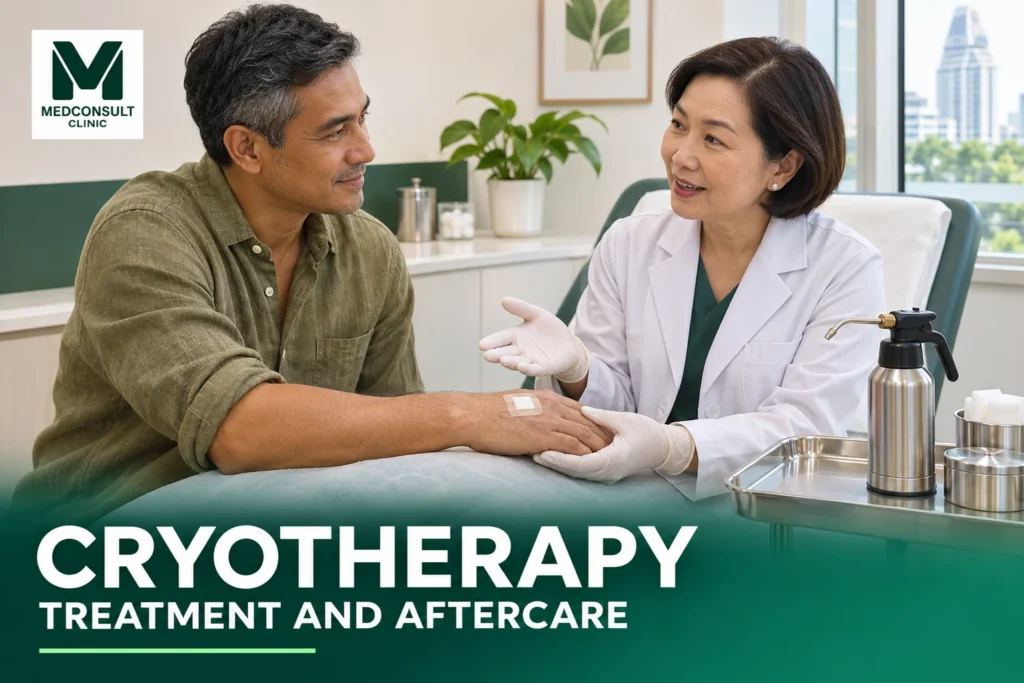
Liquid nitrogen freezes the targeted tissue. As the skin thaws, the treated cells become damaged and the area gradually heals. A clinician may use a fine spray, a contact device or a cotton-tipped applicator, depending on the lesion and available equipment.
The freezing itself often lasts seconds. The full visit also includes checking the diagnosis, discussing options and explaining aftercare. The duration of a spray is not a measure of how successful treatment will be, and a longer freeze is not automatically better.
Common uses include selected viral warts, seborrhoeic keratoses and some skin tags. Cryotherapy can also be used for certain sun-damaged patches called actinic keratoses. Each condition has its own treatment plan. A rough patch or raised bump cannot be identified reliably from appearance alone without appropriate assessment.
Why the Skin Lesion Is Checked First
Confirm what is being treated
Before freezing, the clinician examines the area and asks how long it has been present, whether it has changed and what treatments have already been tried. Mention bleeding, rapid growth, persistent soreness or a wound that repeatedly opens.
Some skin cancers can resemble common warts or other harmless growths. An uncertain or suspicious lesion may need a biopsy or specialist assessment. Cryotherapy destroys tissue, so the frozen material cannot then provide an intact sample for examination under a microscope.
A changing mole or unexplained pigmented patch needs assessment before any removal attempt. Do not use a home freezing product simply because a mark looks similar to an online photograph.
Consider the location and your health
Tell the clinician about diabetes, reduced feeling, poor circulation, previous slow healing and unusual reactions to cold. These details are particularly relevant when treating feet or lower legs. Also mention medicines that affect immunity or bleeding, allergies to dressings and any history of raised scars.
The face, eyelids, nail area and sensitive body sites need particular care. If you are unsure where to start, a GP appointment at MedConsult can help establish the next step, including referral when appropriate.
Preparing for the Appointment
Bring the names of medicines and skin products you use, plus details of previous treatment. If the lesion has changed, dated photographs can help explain its history, although they do not replace an examination.
Wear clothing that allows the area to be seen easily. The clinician may ask you to remove makeup, lotion or powder from the treatment site. Avoid cutting, picking or aggressively filing the lesion before the visit unless the treating clinic has given specific instructions.
Think about what you will be doing afterwards. A sore area on the sole may affect a walking holiday, while a treated finger may be uncomfortable during manual work. Mention upcoming swimming, sport, travel or an event where a visible crust would be difficult.
Before agreeing to treatment, ask what diagnosis is being treated, what alternatives are available, what the skin may look like during healing and whether another session is likely. You can also review the MedConsult clinical team when arranging your visit.
What Happens During Treatment?
The clinician identifies the exact area and applies liquid nitrogen for a controlled period. The skin may turn pale or white as it freezes, then gradually return towards its usual appearance as it warms. Some lesions are treated with more than one freeze-and-thaw cycle.
You may feel stinging, burning or a sharp cold sensation. Tingling or an ache can follow as the area thaws. Discomfort varies with the location, size and depth of treatment, as well as individual sensitivity.
Many small treatments are carried out without local anaesthetic, but pain relief can be discussed beforehand. Tell the clinician if the sensation becomes difficult to tolerate. Children and people who find procedures distressing may benefit from a different approach.
Before leaving, make sure you understand how to wash the area, whether to use an ointment or dressing, what pain relief is suitable and who to contact if healing is different from the expected course.
What Can the Skin Look Like Afterwards?
The reaction often resembles a small local burn. It can look more noticeable the next day than it did immediately after treatment. Redness may be less obvious on darker skin, so tenderness, warmth and swelling are also useful observations.
| Stage | Possible changes | Practical response |
|---|---|---|
| Soon after treatment | Stinging, tenderness, redness or swelling | Protect the site from rubbing and follow the pain-relief plan. |
| Over the next few days | A clear or blood-filled blister, or a small amount of watery fluid | Leave the blister intact and ask for advice if it becomes very tense or painful. |
| As healing progresses | A dry crust or scab that gradually loosens | Allow it to separate naturally; avoid picking. |
| After the surface closes | Pinkness or a lighter or darker patch | Continue sun protection and discuss persistent changes at follow-up. |
Not everyone develops a blister. The appearance alone does not prove whether a lesion has cleared. Let the area heal before judging the final result or arranging further treatment.
Cryotherapy Aftercare at Home
Follow the washing instructions for your site
Written aftercare instructions vary slightly between services. Some advise keeping the area dry for the first 24 hours; others allow gentle washing sooner. Follow the instructions given for your treatment rather than combining several different routines.
Once washing is allowed, clean gently with water and a mild, fragrance-free soap, then pat dry. Avoid scrubbing, prolonged soaking and rubbing with a towel. Wash your hands before touching the site or changing a dressing.
Use simple wound care
A thin layer of plain petroleum jelly may be part of the aftercare plan. It helps keep the healing surface from drying and cracking. Use it as directed, and avoid adding antiseptics, antibiotic creams or other products unless the clinic has advised them.
A dressing is not always needed. A clean, non-stick covering can help if clothing rubs the area, the site is likely to be knocked or there is drainage. Change a wet or dirty dressing, and avoid adhesive directly over fragile skin.
Leave blisters and crusts alone
Do not routinely puncture a blister or peel away its roof. If it becomes large, tight or painful, contact the clinic for advice. If it opens by itself, gently clean the area and protect it with an appropriate dressing; do not pull off attached skin.
Let a crust loosen on its own. Picking it can reopen the wound and increase the chance of infection or a lasting mark. Avoid shaving directly across the treated area while the surface is fragile.
Work, Exercise, Swimming and Skin Products
What you can comfortably do depends on where the treatment was performed. Someone with a small lesion on the upper arm may have a different experience from someone with a painful blister on a weight-bearing part of the foot.
Reduce activities that repeatedly rub, stretch or knock the area. If walking, gripping equipment or wearing work gloves causes pain, discuss practical adjustments. Choose clothing or footwear that avoids pressure on the wound, and do not force activity through increasing discomfort.
Avoid swimming while the area is open, weeping or blistered, and ask the clinic when it is safe to return. A waterproof plaster does not automatically make an unhealed wound ready for a pool. Plan water activities around the skin’s condition rather than a fixed number of days.
Keep makeup, scented products and exfoliating treatments off the healing site until it has closed and the clinic says they can be restarted. This includes applying wart acids to freshly treated skin unless that timing is specifically part of the treatment plan.
Use shade and clothing to limit sun exposure during healing. Once the surface has healed, use a broad-spectrum sunscreen with SPF 30 or higher on exposed skin. Sun protection helps care for the area but cannot guarantee that colour changes will disappear.
How Long Does Healing Take?
Small, superficial treatment sites may settle within roughly one to two weeks, while others take several weeks. Lower legs can heal much more slowly. A deeper freeze, a larger lesion or a problem with circulation can also change the recovery period.
The skin surface closing and the colour returning to normal are separate processes. A pink, lighter or darker patch can remain after the wound has healed. Ask what timeframe is realistic for your particular site, especially before an important event.
If healing seems to stop progressing, the wound repeatedly opens or the lesion remains after the expected recovery period, arrange a review. There is no benefit in waiting indefinitely because an online example took longer to heal.
Possible Risks and Lasting Changes
Temporary soreness, swelling and blistering are common reactions. Infection, scarring and persistent changes in skin colour are also possible. Pigment changes can be particularly noticeable in darker skin and may occasionally be permanent.
A raised scar is uncommon but worth discussing if you have had one before. Treatment close to a nail can sometimes affect nail growth. Deeper freezing may also affect a superficial nerve or hair follicle, causing numbness or hair loss at the treatment site.
These possibilities are part of choosing the right treatment. Tell the clinician if the cosmetic outcome is especially important to you. Depending on the diagnosis, another treatment or leaving a harmless lesion alone may be a reasonable option.
When to Contact the Clinic
A small amount of clear fluid can accompany healing. Increasing symptoms, especially after an initial improvement, deserve attention. Contact a clinician promptly for:
- Pain that is getting worse rather than easing.
- Spreading redness, warmth, swelling or tenderness beyond the treated site.
- Yellow or green drainage, pus or an unpleasant smell.
- Fever, chills or feeling generally unwell.
- A wound that is enlarging, repeatedly opening or failing to heal.
For bleeding, apply firm, continuous pressure with clean gauze. Seek medical help if it does not stop, or if bleeding is heavy. Rapidly spreading inflammation, severe pain or feeling very unwell calls for urgent assessment rather than waiting for a routine follow-up.
Keep the clinic’s contact details with your aftercare instructions so you can ask about unexpected changes without delay.
Will More Than One Session Be Needed?
One treatment may be enough for some lesions, but warts often need several sessions. The clinician considers the response and the condition of the surrounding skin before repeating treatment. For common warts, sessions are often spaced a few weeks apart; your own schedule may differ.
A wart can return after apparently successful treatment. Freezing a visible wart does not guarantee that new warts will never appear. Avoid picking or shaving over warts, wash your hands after touching them and avoid sharing items used on the affected area.
If a lesion is not responding as expected, reassessing the diagnosis and treatment options is more useful than repeatedly freezing it without a review. Keep any planned follow-up, particularly if the original lesion was a sun-damaged patch.
Planning Cryotherapy in Bangkok
When booking, describe the location and approximate number of lesions, how long they have been present and whether they are changing or painful. Ask about treatment availability, the likely visit plan and how to contact the team afterwards. The final decision about treatment follows examination.
Use MedConsult’s locations and contact details to choose a convenient branch, or send an enquiry through the appointment page. Mention upcoming travel or swimming so the timing can be discussed. Message us to book.
Frequently Asked Questions
Does cryotherapy hurt?
It can sting or burn during freezing, followed by tenderness as the skin warms. The sensation varies by site and treatment depth. Discuss pain relief beforehand and tell the clinician if it becomes difficult to tolerate.
Is a blister after cryotherapy normal?
Yes, a clear or blood-filled blister can be an expected reaction. Leave it intact and contact the clinic if it is very painful, enlarging or accompanied by spreading inflammation or pus.
When can I wash the treated area?
Follow your clinic’s instructions. Some plans keep the site dry for 24 hours before gentle daily washing. Once washing is allowed, avoid scrubbing and pat the skin dry.
Will cryotherapy leave a scar or colour change?
It can. Some people develop a lighter or darker patch, and scarring is possible. Changes may fade over time, but some persist. Discuss this risk before treating a visible area.
How many cryotherapy treatments will I need?
That depends on the diagnosis, size, location and response. Warts often need repeat sessions. The clinician can explain the likely plan after examining the lesion and checking how it heals.
References
Sources checked 16 November 2026. Personal aftercare instructions take priority where timing or wound care differs for the treatment site.
- British Association of Dermatologists: Cryotherapy
- Primary Care Dermatology Society: Cryotherapy patient information
- DermNet: Cryotherapy, uses and cautions
- MedlinePlus: Cryotherapy for the skin
- MedlinePlus: Skin lesion removal aftercare
- American Academy of Dermatology: Wart diagnosis and treatment
- American Academy of Dermatology: Wart self-care
- Memorial Sloan Kettering Cancer Center: Cryotherapy for skin lesions
- Leeds Teaching Hospitals: Cryotherapy and wound care
- Gloucestershire Hospitals: Cryotherapy and healing
- Lancashire Teaching Hospitals: Information following cryotherapy
- Tisbury Surgery: Cryotherapy preparation and health considerations