
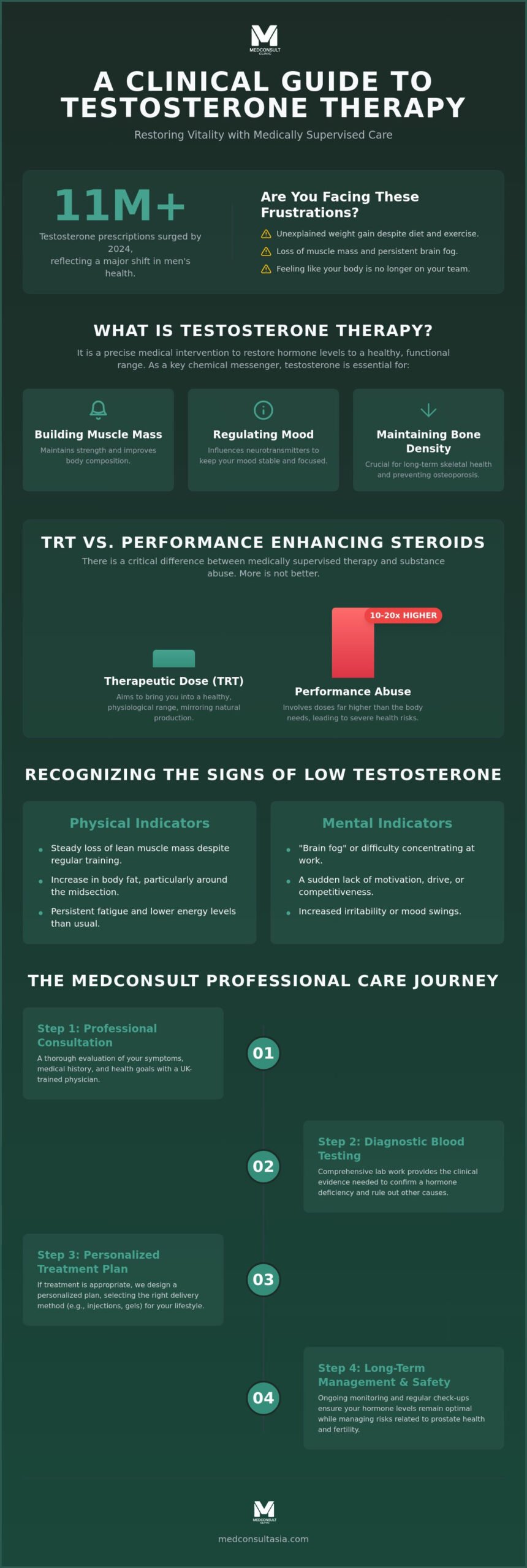
Did you know that by 2024, testosterone prescriptions surged to over 11 million? This growth reflects a major shift in how we approach male health, especially as new clinical data in 2026 continues to reshape our understanding of long-term safety and vitality. It’s incredibly frustrating when you’re hitting the gym and eating well, yet you still face unexplained weight gain, muscle loss, and a persistent brain fog that stalls your productivity at work. You might feel like your body is no longer on your team, leaving you wondering if testosterone therapy is a safe, viable path back to your peak performance.
We understand these concerns and believe that healthcare should be supportive, transparent, and entirely hassle-free. This clinical guide will show you how a medically supervised approach can safely address hormone imbalances to restore your energy levels and improve your body composition. We’ll walk you through the latest 2026 treatment trends, the diagnostic process for identifying low levels, and exactly how professional hormone management works to help you feel like yourself again. You deserve a clear, evidence-based roadmap to restoring your vitality without the stress or guesswork.
Key Takeaways
- Understand the critical role testosterone plays in regulating your mood, muscle mass, and bone density for long-term health.
- Learn to identify the physical and mental symptoms of hormone imbalance that signal it’s time for a professional clinical evaluation.
- Compare the pros and cons of different delivery methods, including injections and gels, to determine which testosterone therapy approach best fits your lifestyle.
- Gain a clear understanding of the 2026 medical consensus on safety, including how to manage risks related to fertility and prostate health.
- Discover the step-by-step process for receiving international-standard care and personalized hormone management from UK-trained physicians in Thailand.
What is Testosterone Therapy and How Does it Work?
At its core, testosterone therapy is a precise medical intervention designed to return your hormone levels to a healthy, functional range. It is often clinically referred to as Androgen replacement therapy. Rather than being a “quick fix” for fitness, it is a foundation for systemic health. Testosterone acts as a chemical messenger that influences nearly every part of your body. It is essential for maintaining bone density, building muscle mass, and regulating the neurotransmitters that keep your mood stable. When these levels drop below the clinical threshold, your physical and mental performance can suffer significantly.
Doctors typically look for two types of deficiencies when diagnosing a patient. Primary hypogonadism occurs when the problem originates in the testes, often due to injury or specific medical conditions. Secondary hypogonadism is a signaling issue where the brain fails to tell the body to produce the hormone. While some degree of decline is a natural part of aging, a clinical deficiency is characterized by symptoms that actively degrade your quality of life. We believe that “normal for your age” shouldn’t mean living with exhaustion or brain fog if a safe medical solution is available.
The Science of Hormone Regulation
Your body manages hormones through a complex feedback loop called the Hypothalamic-Pituitary-Gonadal (HPG) axis. Think of it as a thermostat for your vitality. The hypothalamus in your brain senses your current levels and sends a signal to the pituitary gland. The pituitary then releases hormones that tell your body to produce more testosterone. When you begin testosterone therapy, you are essentially supplementing this loop. Because this system is so delicate, external replacement requires careful medical calibration. Without professional monitoring, adding hormones can disrupt your body’s natural signaling, which is why a doctor’s supervision is vital for long-term success.
TRT vs. Performance Enhancing Steroids
There’s a significant difference between therapeutic hormone management and the abuse of performance-enhancing steroids. Therapeutic doses aim to bring you into a healthy, physiological range that mirrors what a young, healthy man produces naturally. In contrast, athletic abuse often involves doses that are ten or twenty times higher than what the body needs, leading to severe health risks. Clinical supervision ensures that your treatment remains focused on health and longevity rather than reckless growth. In the world of hormone health, more is definitely not always better. Precision and balance are the keys to feeling your best without compromising your safety.
Identifying Symptoms: When to Seek Professional Consultation
Recognizing the signs of a hormone deficiency is often the most challenging part of the patient journey. Many men dismiss persistent fatigue or a sudden lack of drive as a standard consequence of a busy career or a few extra birthdays. However, when these symptoms begin to cluster, they often point toward a deeper metabolic shift. Low testosterone doesn’t just affect your mood; it fundamentally alters how your body manages energy and stores fat. This can lead to a frustrating cycle where diet and exercise seem less effective than they used to be. Using a structured hormone imbalance treatment framework helps you move past guesswork and toward a professional clinical solution.
Physical and Mental Indicators of Low T
The physical markers of low testosterone are rarely isolated events. You might notice a steady loss of lean muscle mass despite regular training, often accompanied by an increase in body fat, particularly around the midsection. Mentally, the impact is just as significant. Brain fog, a sudden lack of motivation, and increased irritability can strain personal and professional relationships. Andropause is the term used to describe this gradual but impactful transition into lower androgen production. When considering testosterone therapy, it’s essential to weigh the potential benefits and risks with a qualified physician to ensure the treatment aligns with your long-term health goals. To better understand how these changes impact your efficiency, you can explore Metabolic Testing to gain insights into your metabolic health. We see many patients who find that restoring their levels doesn’t just fix a number; it restores their sense of self.
The Role of Diagnostic Blood Testing
While symptoms provide the reason to investigate, diagnostic testing provides the evidence needed to act. Feelings alone are never enough to begin a medical protocol. We rely on precise blood markers to build a complete picture of your endocrine health. Essential markers include:
- Total Testosterone: The overall amount of the hormone circulating in your bloodstream.
- Free Testosterone: The bioavailable portion that your tissues can actually use.
- SHBG (Sex Hormone Binding Globulin): A protein that can bind to testosterone, rendering it inactive.
Timing is everything when it comes to these tests. Testosterone levels typically peak in the early morning hours, so we require blood draws before 10:00 AM for the most accurate results. Integrating these labs into broader health check-ups ensures we aren’t just treating a single deficiency, but optimizing your entire physiological system. If you’re ready to get clear answers about your health, you can book a professional consultation to review your symptoms and begin the diagnostic process.
Treatment Options: Gels, Injections, and the BHRT Advantage
Once your diagnostic blood work confirms a deficiency, the next step is selecting a delivery method that aligns with your biology and lifestyle. Not all testosterone therapy protocols are the same. The goal is to mimic your body’s natural rhythm as closely as possible while ensuring the treatment is easy to maintain. Choosing the right path involves balancing clinical effectiveness with your daily routine. We focus on Bio-Identical Hormone Replacement Therapy (BHRT) because it offers a more natural synchronization with your body’s needs. You can explore this in detail in our BHRT for Men pillar article, which covers the long-term benefits of this precision approach.
Why Bio-Identical Hormones Matter
Bio-identical hormones are molecularly identical to the ones your body produces naturally. Unlike older, synthetic versions, your body recognizes these hormones as its own, which often results in fewer side effects and better absorption. This molecular match is critical for maintaining long-term health and avoiding the “rollercoaster” effect some patients experience with traditional treatments. While our focus here is on men, we also provide comprehensive BHRT for women. Many couples find that addressing hormone health together improves their mutual quality of life and energy levels.
Choosing the Right Delivery Method
The method you choose depends heavily on your lifestyle and how your body responds to different absorption rates. Intramuscular injections are a popular, cost-effective choice. They allow for precise dosing but can sometimes lead to “peaks and valleys” in energy if the frequency isn’t managed correctly. For those who prefer a more stable, daily baseline, transdermal gels or creams are excellent options. These are applied to the skin and provide a steady release that mimics natural daily fluctuations.
Your daily habits play a major role in this decision. If you travel frequently, long-acting pellets might be the most “hassle-free” choice since they only require a simple procedure every few months. If you’re highly active in the gym, you’ll need to time your gel applications so they absorb fully before you sweat. Throughout this process, we monitor you closely to manage any Risks of testosterone replacement therapy, such as changes in blood thickness or skin reactions. We believe the best treatment is the one that fits seamlessly into your life while delivering consistent, life-changing results.
Safety First: Managing Risks and Long-Term Health
Safety is the most common concern for men considering testosterone therapy. It is a valid worry, especially given the historical misinformation surrounding hormone treatments. To help clarify these issues, you can discover Summit Rejuvenation and their guide on debunking common safety myths. Modern clinical protocols have transformed therapy into a highly controlled, predictable process. Risks are not something to fear, but rather something to manage through precise medical oversight. When you work with a professional team, safety isn’t a secondary thought. It’s the foundation of your entire treatment plan. We prioritize transparency so you can make informed decisions about your long-term vitality.
Two primary areas of focus during therapy are blood thickness and fertility. Polycythemia, a condition where the body produces too many red blood cells, can occur as the body responds to treatment. We manage this easily by monitoring your blood markers and adjusting your dosage if needed. It’s also vital to understand that exogenous testosterone can suppress natural sperm production. If preserving fertility is a priority for you, we can integrate specific medications like HCG into your protocol to maintain reproductive health. By 2026, the medical consensus on prostate health has also shifted significantly. Recent reviews suggest that testosterone therapy does not increase the risk of developing prostate cancer in healthy men, provided they are monitored correctly.
Monitoring Key Health Markers
Regular follow-up blood work is the only way to ensure your protocol remains both safe and effective. We focus heavily on monitoring your Hematocrit levels to check blood viscosity and your PSA (Prostate-Specific Antigen) to ensure prostate health remains stable. Dosage adjustments are a normal part of the journey. They allow us to find the “sweet spot” where you feel your best without triggering adverse effects. Additionally, careful estrogen management is a standard part of our clinical oversight to prevent common side effects like water retention or mood fluctuations. These checks turn a complex biological process into a manageable, routine health habit.
Lifestyle Synergies for Better Results
Hormone therapy is most effective when it is supported by a healthy lifestyle foundation. Strength training is particularly beneficial. It helps your body utilize the restored testosterone to build lean muscle and improve metabolic rate. Nutrition also plays a critical role, as a balanced diet supports the liver and cardiovascular system during treatment. Managing sleep and stress is equally important, as high cortisol can blunt the positive effects of your therapy. This holistic approach integrates seamlessly with broader preventive health goals. If you want to ensure your body is ready for a safe transformation, you can schedule your clinical assessment to begin with a professional baseline.
The MedConsult Journey: Professional Care in Thailand
Healthcare shouldn’t feel like a hurdle. For expats and locals in Thailand, finding a clinic that combines international standards with a welcoming, approachable atmosphere is essential. We’ve designed our testosterone therapy journey to be entirely transparent and patient-centered. From the moment you walk through our doors, the focus is on your comfort and peace of mind. Our team, led by UK-trained physician Dr. Donna Robinson, understands the unique needs of an international community. We provide a non-judgmental environment where your concerns are heard and your time is respected. Our “hassle-free” approach means you can focus on your health while we handle the clinical logistics with efficiency and care.
Our process is methodical but brisk. It starts with a comprehensive consultation to understand your health history and current symptoms. Next, we conduct precise diagnostic testing to establish your baseline. Once we have your results, we develop a personalized plan tailored specifically to your biology. This structured approach ensures that you aren’t just another number; you’re a partner in your own wellness journey. Because our doctors are fluent in English, you’ll never have to worry about a language barrier when discussing your most personal health concerns.
Your First Consultation
Preparation helps you get the most out of your visit. If you have previous blood work or medical records from your home country, please bring them along. You should feel free to ask your doctor about the expected timeline for results, potential side effects, or how the treatment fits with your current medications. This first meeting is a collaborative discussion. We review your medical history thoroughly to ensure that any proposed protocol is safe and appropriate for your specific needs. We’re here to guide you, not pressure you, ensuring you feel confident in every decision you make.
Ongoing Support and Monitoring
Consistency is the key to long-term vitality. After starting your plan, we’ll schedule regular follow-up visits and blood tests to monitor your progress. These checks usually occur every three to six months once your levels have stabilized. This ongoing oversight allows us to make small, precise adjustments to your dosage, ensuring you continue to feel your best without any unnecessary risks. We support patients across Thailand with accessible care that removes the stress from hormone management. You don’t have to navigate this journey alone. If you’re ready to take the next step toward restoring your performance, book your consultation at MedConsult Clinic today.
Take the Next Step Toward Lasting Vitality
Restoring your hormone balance is about more than just hitting a target number on a lab report. It’s about reclaiming the energy, focus, and physical strength that allow you to excel in both your personal and professional life. We’ve explored how modern testosterone therapy has evolved into a safe, precision-based medical intervention. By choosing a path that prioritizes clinical monitoring and bio-identical hormones, you can address the root causes of fatigue and brain fog while protecting your long-term health. You deserve to feel like yourself again.
At MedConsult Clinic, we provide international-standard care under UK-trained medical leadership. Our team offers a discreet and confidential environment where your health is our only priority. With convenient diagnostic testing and specialized BHRT services right here in Bangkok, starting your journey is entirely hassle-free. You don’t have to settle for feeling less than your best. High-level wellness is a collaborative effort, and we’re here to guide you through every step of the process with expertise and empathy.
Schedule Your Professional Hormone Consultation Today and start your journey toward a more vibrant, high-performing version of yourself. Your best years are still ahead of you.
Frequently Asked Questions
Is testosterone therapy safe for long-term use?
Testosterone therapy is safe for long-term use when it’s managed by a qualified physician who conducts regular monitoring. The key to safety lies in frequent blood tests to check markers like red blood cell count and prostate health. This proactive approach allows for dosage adjustments that keep your levels in a healthy range, preventing potential complications while maintaining the benefits of treatment over several years. Regular consultations ensure the protocol remains aligned with your evolving health needs.
How long does it take to see results from testosterone therapy?
Most patients begin to notice improvements in mood and libido within three to six weeks of starting treatment. Physical changes, such as increased muscle mass or fat loss, typically take three to six months of consistent treatment to become visible. It’s essential to remember that hormone restoration is a gradual process rather than an overnight fix. Your body needs time to adjust to the new hormonal balance and begin repairing metabolic functions that have been sluggish.
Will testosterone therapy affect my fertility?
Yes, traditional testosterone treatments can significantly reduce your sperm count by suppressing the natural signals that trigger production. If you plan to have children in the future, it’s vital to discuss this with your doctor before starting. We can often include specific medications like HCG in your protocol to help maintain fertility and natural production while you receive therapy. This dual approach helps protect your reproductive options while you address your hormone deficiency.
What is the difference between TRT and BHRT?
Testosterone Replacement Therapy (TRT) is a broad term for replacing missing hormones, while Bio-Identical Hormone Replacement Therapy (BHRT) specifically uses hormones molecularly identical to those your body produces. Many patients prefer BHRT because the body recognizes and processes these bio-identical structures more naturally. This often leads to a smoother experience with fewer side effects compared to older, synthetic versions of hormone replacement. Both aim to restore vitality, but BHRT focuses on precise biological synchronization.
Do I need a doctor’s prescription for testosterone in Thailand?
You absolutely need a doctor’s prescription for testosterone in Thailand. It is a controlled medical substance that requires a professional diagnosis and ongoing clinical oversight. Purchasing hormones without a prescription or medical supervision is not only illegal but also dangerous, as you won’t have the necessary blood work to ensure your dosage is safe and effective for your specific biology. A legal prescription ensures you receive high-quality, regulated medication that meets international safety standards.
Can I still exercise while on testosterone therapy?
Exercise is highly encouraged and actually works in synergy with your treatment. Resistance training and cardiovascular activity help your body utilize the restored hormones more effectively to build lean muscle and burn fat. Most men find that their recovery times improve and their strength increases once their levels are optimized. Just be sure to listen to your body and maintain a balanced routine that supports your overall health and performance throughout the therapy process.
What happens if I stop taking testosterone?
If you stop testosterone therapy, your hormone levels will eventually return to their baseline, and your original symptoms like fatigue and brain fog will likely reappear. Additionally, your body’s natural production may take some time to restart, which could cause a temporary dip in energy. We always recommend consulting with your doctor before making any changes so you can taper off safely or explore alternative management strategies that keep your health goals on track.
Are there any natural alternatives to testosterone therapy?
Lifestyle changes like improving sleep, reducing stress, and optimizing nutrition can support your body’s natural hormone production. While these habits are excellent for overall health, they are rarely enough to correct a significant clinical deficiency. For men with a diagnosed imbalance, testosterone therapy remains the most effective way to restore levels to a functional range that lifestyle adjustments alone simply cannot achieve in the long term. These natural habits should complement, not replace, medical treatment.