
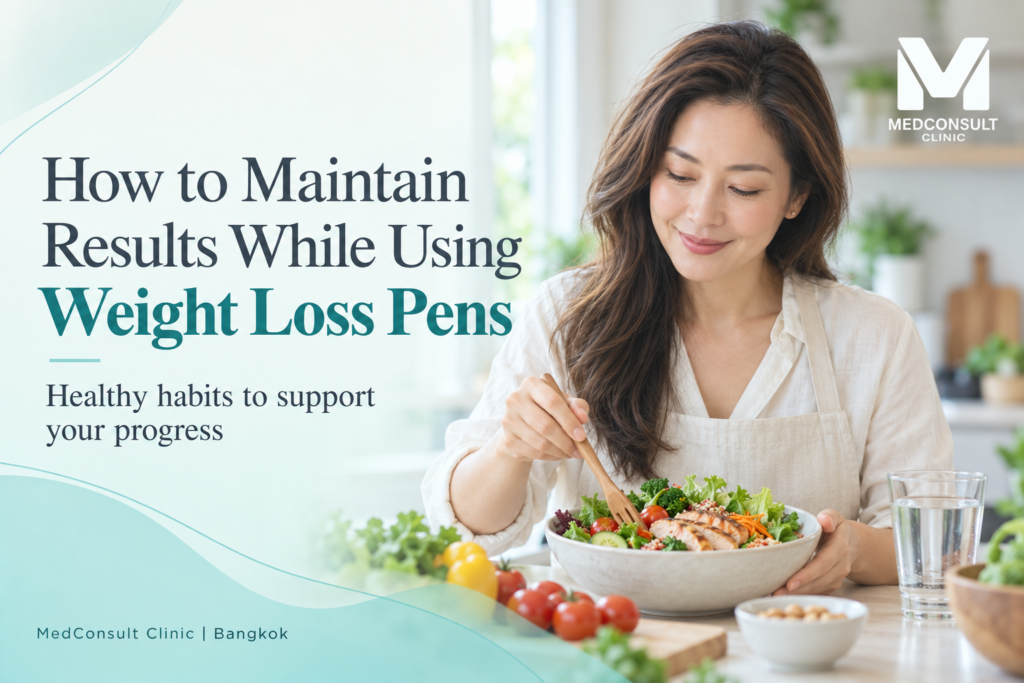
To maintain results while using weight loss pens, it is important to build healthy habits alongside your treatment. Healthy eating, adequate hydration, regular physical activity and sustainable lifestyle habits can all support your weight management journey.
Whether you are using a GLP-1 medication such as semaglutide or a medication such as tirzepatide, maintaining healthy eating patterns, staying active and looking after your overall wellbeing can help support your progress.
So, what should you do alongside your weight loss pen to help maintain your results?
Focus on nutritious, balanced meals
Weight loss pens can affect appetite and help you feel full sooner. As a result, you may find yourself eating smaller portions or feeling less interested in food.
When you are eating less, it becomes even more important to make the food you do eat count.
Try to include a variety of:
Protein-rich foods such as eggs, fish, chicken, lean meat, tofu, beans and lentils
Vegetables and whole fruits
Whole grains and other sources of fibre
Healthy sources of fat
Nutrient-rich foods that provide the vitamins and minerals your body needs
You do not need to completely eliminate carbohydrates, fats or other food groups. Instead, aim for a balanced eating pattern that you can realistically maintain over time.
A healthy eating plan is more useful when it is sustainable rather than extremely restrictive.
Prioritise protein
Protein is an important part of a balanced diet and can be especially useful during weight loss.
Including a source of protein with meals can help you meet your nutritional needs while supporting muscle maintenance as you lose weight.
Examples include:
Eggs
Fish and seafood
Chicken and other lean meats
Tofu and soy products
Beans and lentils
Greek-style or high-protein yoghurt
Nuts and seeds
Your individual nutritional needs can vary, so focus on a balanced diet rather than trying to maximise protein intake unnecessarily.
Stay hydrated
Drinking enough fluids is another simple habit to maintain while using weight loss medication.
When your appetite changes, you may find yourself paying less attention to food and drink throughout the day. Some people may also experience gastrointestinal symptoms such as nausea, vomiting or diarrhoea while using certain weight loss medications.
Keep water available and drink regularly throughout the day.
If you experience persistent vomiting, diarrhoea, difficulty keeping fluids down or signs of dehydration, seek appropriate medical advice.
Keep moving
Physical activity can complement the changes that happen with weight loss medication.
You do not necessarily need to begin with intense workouts. Choose activities that fit your current fitness level and lifestyle, such as:
Walking
Cycling
Swimming
Dancing
Jogging
Strength training
Bodyweight exercises
For general health, adults are generally advised to aim for at least 150 minutes of moderate-intensity aerobic activity each week, together with muscle-strengthening activities on at least two days per week.
If you are currently inactive, start gradually and build up your activity over time.
Include strength training
Weight loss involves changes in body composition as well as changes on the scale. Resistance or strength training can be a useful addition to your routine because it helps you work your muscles while you are losing weight.
You can start with simple exercises such as:
Squats
Lunges
Wall push-ups
Resistance-band exercises
Light weights
Bodyweight exercises
You do not need an elaborate gym routine. Consistency matters more than having a complicated programme.
Build habits you can keep long term
One of the biggest mistakes people can make during weight loss is thinking only about reaching a target number on the scale.
Instead, think about the habits you want to keep once you reach your goal.
Ask yourself:
Can I realistically continue eating this way?
Can I keep this level of physical activity in my routine?
What habits help me manage my appetite and portions?
The more practical and sustainable your habits are, the easier they may be to maintain over time.
Healthy eating and regular physical activity are considered important parts of weight management, including when weight management medications are being used.
Be consistent with your routine
Changes in routine can make healthy habits harder to maintain. Weekends, holidays, travel, social events and busy periods can all affect eating and activity patterns.
Rather than trying to be perfect, plan for situations that commonly disrupt your routine.
For example:
Keep nutritious snacks available when you are busy
Bring water with you when travelling
Plan meals ahead when possible
Keep some form of physical activity in your schedule
Return to your normal routine after a special occasion rather than treating it as a setback
Consistency over time is more important than being perfect every day.
Pay attention to your body’s signals
Weight loss medication can change appetite and feelings of fullness. Learning to recognise your body’s hunger and fullness signals can help you develop eating habits that work alongside these changes.
Try to eat slowly and pay attention to how you feel while eating.
If you regularly experience significant nausea, vomiting, abdominal pain, difficulty eating or other concerning symptoms while using your medication, speak with a healthcare professional.
Keep track of your progress
The number on the scale is only one way to look at your progress.
Depending on your goals, you may also want to keep track of:
Weight
Waist measurements
Physical activity
Strength and fitness
Eating habits
Energy levels
How your clothes fit
How you feel overall
Regularly checking your progress can help you recognise changes early and identify which habits are working well for you.
Using Weight Loss Pens as Directed
If you are using a prescription weight loss pen, follow the instructions provided for your specific medication.
Do not increase your dose, change how often you use it or combine it with another weight loss medication unless this has been specifically advised for you.
Different weight loss medications have different dosing schedules, precautions and potential side effects, so always check the instructions that apply to your medication.
Can weight loss pens maintain results alone?
Weight loss medications are not intended to replace healthy eating and physical activity. Research and health guidance generally support using weight management medication alongside lifestyle changes rather than treating medication as a standalone solution.
Some people may also regain weight after stopping weight management medication. Maintaining healthy eating and physical activity habits may help support longer-term weight management.
How long someone should use a particular medication can vary depending on the medication, individual circumstances, response to treatment and other factors.
If you are considering stopping or changing your weight loss medication, discuss your options with an appropriate healthcare professional.
What happens if your progress slows down?
It is normal for weight loss to change over time. Your rate of weight loss may not remain the same throughout your journey.
If your progress slows or your weight begins to increase, look at your overall routine rather than focusing on one individual meal or one number on the scale.
Consider:
Has your activity level changed?
Have your portion sizes changed?
Are you eating differently because of a change in routine?
Are you getting enough sleep?
Are you staying hydrated?
Are you experiencing medication side effects?
Has anything else changed since your previous progress?
These factors can help you identify areas where your routine may need adjusting.
The bottom line
A weight loss pen can be one part of a weight management journey. The habits you build alongside it can also play an important role in supporting your progress.
Focus on balanced nutrition, adequate hydration, regular physical activity, strength training and sustainable routines rather than trying to achieve results through medication alone.
The goal is not simply to lose weight. It is to develop habits that can support your health and help you maintain your results over time.
Frequently Asked Questions
What should I do alongside a weight loss pen?
Focus on balanced nutrition, adequate hydration, regular physical activity and sustainable eating habits. Strength training can also be useful as part of an overall fitness routine.
Can I eat normally while using a weight loss pen?
You can generally continue eating a varied, balanced diet, but your appetite and portion sizes may change. Focus on nutrient-rich foods and pay attention to your body’s hunger and fullness signals.
Should I exercise while using weight loss pens?
Physical activity can be an important part of weight management. Start at a level that is appropriate for your fitness and gradually build up your activity. A combination of aerobic activity and strength training can support overall health.
How much water should I drink while using a weight loss pen?
Fluid needs vary from person to person. Drink regularly throughout the day and pay particular attention to hydration if you experience vomiting or diarrhoea.
Will I regain weight if I stop using a weight loss pen?
Some people regain weight after stopping weight management medication. Weight management can be influenced by appetite, eating patterns, activity, metabolism and other factors. If you are considering stopping your medication, discuss the appropriate approach with a healthcare professional.
Can I take another weight loss medication with my weight loss pen?
Do not combine weight loss medications unless this has been specifically recommended for you. Different medications can have different effects, interactions and safety considerations.
How long should I use a weight loss pen?
The appropriate duration varies depending on the specific medication and individual circumstances. Follow the instructions provided for your medication and discuss any changes to your treatment with an appropriate healthcare professional.
What if I stop losing weight while using a weight loss pen?
Weight loss does not always happen at the same rate throughout treatment. Review your eating patterns, physical activity and other lifestyle factors, and consider discussing your progress with a healthcare professional if you have concerns.
References
- National Institute of Diabetes and Digestive and Kidney Diseases (NIDDK). Prescription Medications to Treat Overweight & Obesity.
- NIDDK. Eating & Physical Activity to Lose or Maintain Weight.
- Centers for Disease Control and Prevention (CDC). Steps for Losing Weight.
- CDC. Tips for Keeping Weight Off.
- CDC. Tips for Maintaining Healthy Weight.
- CDC. Physical Activity and Your Weight and Health.