

Switching weight loss pens can feel like a straightforward next step when progress slows, side effects become frustrating or the cost no longer fits your budget. Yet a different pen can mean a different medicine, device and treatment plan. The decision deserves more than a comparison of results seen online.
Before changing treatment, discuss why you want to switch, what your current medicine has achieved, any unwanted effects and how the transition will work. There is no universal dose conversion between different weight loss medicines. Your clinician can assess the new treatment and set an individual plan rather than carrying your existing dose across. Evidence on switching remains limited. [1]
This article explains the questions that make that discussion useful. Whether you are considering a change after several months or exploring alternatives early in treatment, the aim is a plan that fits your health, priorities and everyday life.
What Changes When You Switch Weight Loss Pens?
A pen is a delivery device, not the name of a medicine. Two pens can look similar while containing different active ingredients. Conversely, products containing the same ingredient can have different devices, labelled uses or instructions.
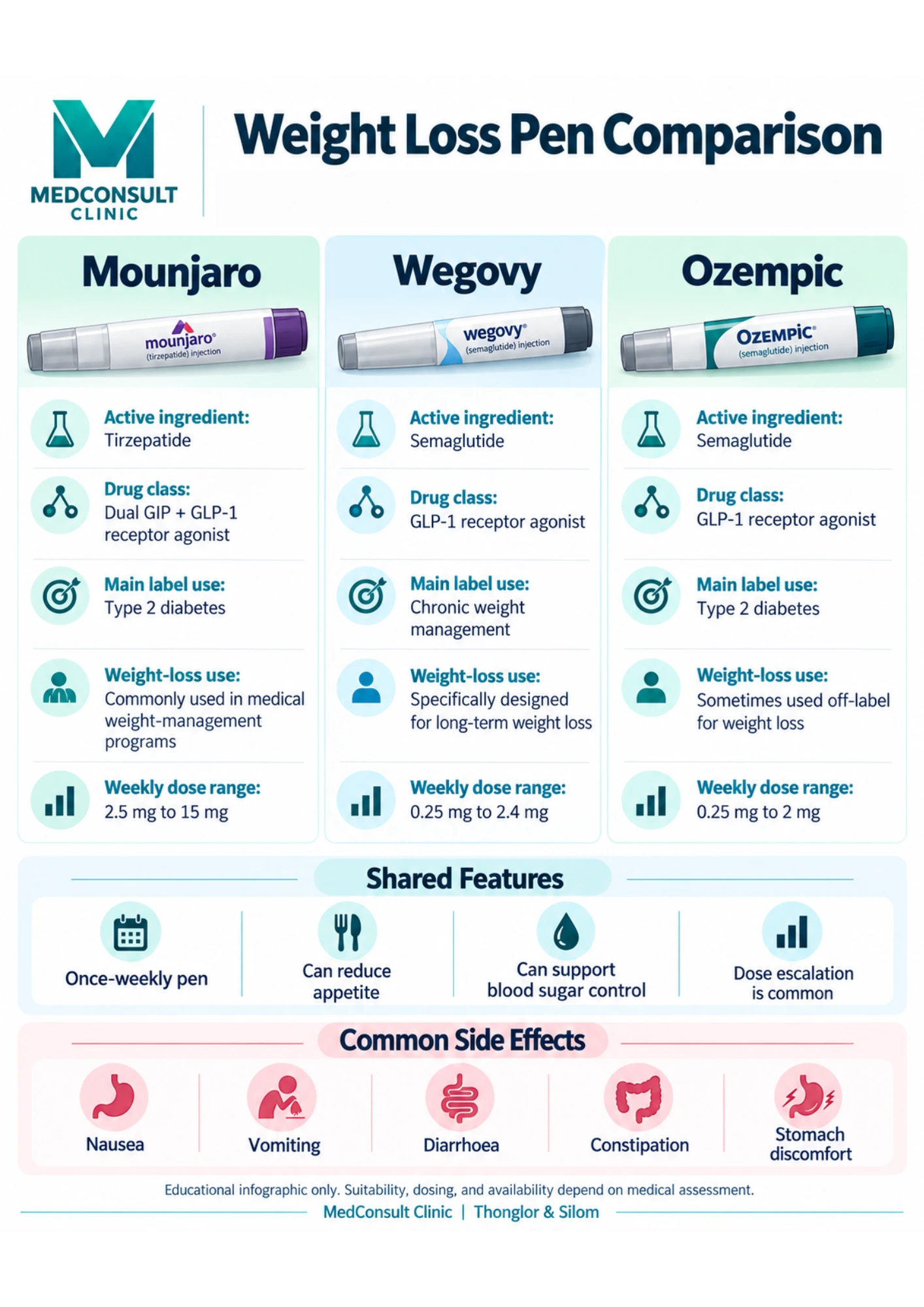
Semaglutide and liraglutide act on the GLP-1 receptor, which is involved in appetite and food intake. Tirzepatide acts on both GIP and GLP-1 receptors. Semaglutide and tirzepatide pens are generally used weekly, while liraglutide pens are used daily. These differences help explain why the medicines are not interchangeable simply by matching the numbers on their labels. [2]
Begin with the exact name of your current product and the proposed alternative. Ask whether the change involves a new active ingredient, a different device or both. Our explanation of how semaglutide works for weight loss offers background if this medicine is part of your discussion.
Start With the Reason for Changing Treatment
A useful opening question is: “What problem are we trying to solve?” Your answer might be uncomfortable symptoms, difficulty fitting treatment into your routine, limited progress, cost or uncertainty about future supply.
Be specific. “I feel unwell” gives less information than “I have nausea on the morning after my pen and struggle to eat lunch.” Similarly, “It has stopped working” can mean no recent weight change, more hunger or disappointment compared with someone else’s results. These concerns deserve different conversations.
Write down your two main priorities before the appointment. For example, you may value comfortable meals and affordable ongoing care more than reaching a particular weight quickly. Ask what the new treatment might improve, what could remain unchanged and what new difficulties it could introduce.
The outcome of this discussion may be a switch, further assessment or continuing the current treatment. A decision to stay with a suitable medicine can be just as deliberate as changing it.
Review Progress Before Calling Treatment Unsuccessful
Bring a timeline showing when treatment began, any changes made by your clinician, treatment breaks and your weight records. Include what has happened to appetite, daily activity and the practical experience of eating.
Ask how your response will be assessed and over what period. A short interval on the calendar does not explain the whole treatment history, particularly when there have been interruptions or difficulties using the device.
Agree on what improvement would look like for you. It may include weight change, a health measure relevant to your medical history or being able to follow the plan with fewer difficulties. Ask which outcomes are realistic to assess at the next visit and which need a longer perspective.
Keep the conversation factual rather than treating a slower result as a personal failure. The most useful question is what the recorded experience tells you about the next decision.
What Research Can Tell You About Different Pens
In the 2025 SURMOUNT-5 trial, 751 adults with obesity and without type 2 diabetes were randomly assigned to tirzepatide or semaglutide. At 72 weeks, average weight reductions were 20.2% and 13.7%, respectively, at the trial’s maximum tolerated treatment levels. The trial was open-label, meaning participants and investigators knew which treatment was being used. [3]
These results compare treatment groups. They do not show how much extra weight someone will lose after switching from one medicine to the other. They also cannot predict your individual result or establish a personal switching schedule.
When discussing a study, ask whether its participants, treatment conditions and follow-up period resemble your situation. A higher average weight reduction is one part of a decision that also includes tolerability, health history and affordability.
Discuss Side Effects in Detail
Nausea, vomiting, diarrhoea and constipation can occur with these medicines. Changing to another pen does not guarantee that digestive symptoms will disappear. Significant vomiting or diarrhoea can cause dehydration and affect kidney function. [4]
Describe when symptoms began, how often they happen and whether they affect meals, fluids, sleep or work. Include anything you have tried to manage them. If symptoms appeared after a treatment change, note the date.
Ask whether the symptoms need assessment before the proposed switch. Avoid assuming that every new symptom comes from the pen, or that a replacement medicine will resolve it.
Seek urgent medical care for severe, persistent abdominal pain, particularly pain spreading to the back, or sudden loss or rapid deterioration of vision. Repeated vomiting with an inability to keep fluids down also needs prompt medical assessment. These symptoms take priority over a routine switching appointment. [6]
Review Your Health History and Other Medicines
A treatment change is a useful time to update your medical record. Bring the names of all medicines, non-prescribed products and supplements you use, including products taken only occasionally.
Topics particularly relevant to this discussion include:
- Previous pancreatitis, gallbladder problems or significant digestive symptoms.
- Kidney problems or recent dehydration.
- Diabetes treatment and any episodes of low blood sugar.
- Eye disease, particularly diabetes-related eye problems.
- Previous allergic reactions to medicines.
Semaglutide and tirzepatide can increase the risk of low blood sugar when combined with insulin or certain diabetes tablets, including sulfonylureas. Your clinician may need to adjust the wider diabetes plan. Do not change insulin or other diabetes medicines yourself. [4] [5]
Ask which findings would change the treatment choice and whether any targeted tests are useful. Bring recent results so the discussion begins with information already available.
Pregnancy Plans, Contraception and Upcoming Procedures
Tell your clinician if pregnancy is possible or planned, or if you are breastfeeding. Weight loss medicines are not used during pregnancy, and stopping before a planned pregnancy involves a medicine-specific interval. Switching to another weight loss pen is not a solution to this concern. [6]
Tirzepatide has a specific interaction concern with oral contraception. Its UK product information advises people with overweight or obesity to use a non-oral contraceptive method or add a barrier method for four weeks after starting and four weeks after each dose increase. Discuss this before the switch so contraception is addressed from the outset. [5]
Also tell the team about planned surgery or procedures involving deep sedation. These medicines delay stomach emptying, which can affect anaesthesia planning. The procedure team can provide an individual plan; do not choose a stopping interval yourself. [4]
Get a Clear Transition Plan Before the First New Pen
The transition needs clear instructions for the current medicine and the new one. Your previous treatment experience does not establish an equivalent starting dose for a different active ingredient. NHS Specialist Pharmacy Service notes that data on switching these medicines are limited and directs clinicians to the relevant product information. [1]
Ask for a written plan covering:
- Which medicine is ending and the date of the last planned dose.
- The exact new product and the clinician-selected starting plan.
- The date treatment begins and how later changes will be decided.
- What to do if symptoms persist or the new product is delayed.
- Whom to contact if instructions are unclear.
Do not overlap pens, alternate medicines or calculate a conversion from online charts yourself. Semaglutide product information specifically excludes combining it with other GLP-1 receptor agonist products. [4]
If you have already stopped treatment, give the actual date of your last dose. Explain whether the gap was planned and whether symptoms are still present. A transition after an interruption needs that context, even if the original appointment was arranged as a routine switch.
Learn the New Device and Check Practical Details
Ask the clinic or pharmacist to demonstrate the exact pen you will receive. Do not assume familiar packaging means identical instructions. Bring your glasses if needed, and make sure you can comfortably read the label and understand the demonstration.
Ask about preparation, storage before and after first use, travel, expiry dates and disposal. Keep the product leaflet accessible. Do not use click-count conversions or transfer instructions from a different device.
For an overview of the local treatment discussion, explore our article on weight loss pens in Bangkok. Confirm the specific product and current availability with the clinic. A listing or discussion of a medicine does not establish that every presentation is available at every location.
Compare Ongoing Costs and Support
Ask for a breakdown covering the medicine, appointments, device supplies and any clinically appropriate tests. Check what is included and which costs are separate. A quoted pen price alone may not explain the full cost of care.
Discuss a budget you can maintain, and ask how future treatment changes could affect it. If you travel between countries, clarify where follow-up will take place and how records can be shared with another clinician.
Weight management medicines work alongside eating and activity changes, and treatment duration depends on benefit and tolerability. Some people regain weight after stopping. A useful conversation therefore includes the longer-term plan, not only the first supply of a replacement medicine. [2]
Ask what support is available if cost, supply or side effects make continuation difficult. This gives you a contact route before an unexpected interruption occurs.
Agree on Follow-Up and What to Record
Before leaving, confirm when the next review will happen and how to contact the team between visits. Ask which changes are worth recording and which symptoms need earlier attention.
A short record can include the dates you use the pen, symptoms, appetite and any difficulties following the agreed plan. Keep it manageable: a few clear notes are easier to discuss than a large collection of unlabelled screenshots.
At follow-up, return to the reason you wanted to switch. Has the original problem improved? Has the new treatment created another difficulty? Is the cost workable? These questions keep the review connected to your priorities rather than making the next decision solely from a single weight reading.
Discussing Treatment Changes at MedConsult Clinic Bangkok
MedConsult Clinic offers weight-management care in Bangkok. If you are considering switching weight loss pens, bring your current packaging or a clear photograph of the label, your treatment timeline, recent results and your main questions.
The discussion can focus on why you want a change and what information is needed to assess your options. Ask whether any health checks or blood tests are relevant to your history, rather than selecting a broad testing package yourself.
For Thai residents, expats and international patients, practical details such as language, travel dates and continuity of care are worth raising early. Contact the clinic to confirm current product availability, appointment location and pricing.
You can explore available appointments at MedConsult Clinic to discuss which options fit your needs. A useful visit ends with a clear next step, whether that involves changing treatment or continuing the current approach.
How semaglutide works for weight loss