
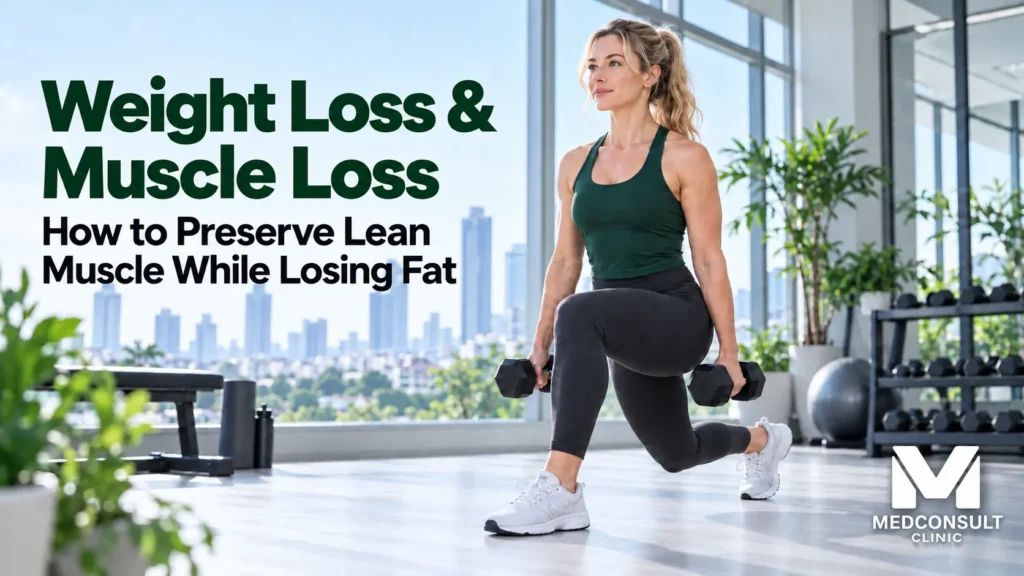
Losing weight can be an important step towards improving health, but not all weight loss is the same. When the number on the scale decreases, the body may be losing fat, water, and lean tissue, including some muscle.
For people working towards a healthier weight, understanding weight loss and muscle loss is important. The goal should not simply be to become lighter, but to reduce excess body fat while maintaining as much muscle, strength, and physical function as possible.
Muscle plays an essential role in movement, metabolism, blood sugar regulation, and everyday activities. Losing too much muscle during weight reduction may affect strength and make long-term weight management more challenging.
The good news is that nutrition, exercise, and a realistic weight management plan can help reduce the risk of unnecessary muscle loss.
In this article, we explain why muscle loss can happen during weight reduction and share seven practical ways to help preserve lean muscle while losing fat.
Quick Answer: Can You Lose Fat Without Losing Muscle?
Yes, it is possible to reduce body fat while maintaining much of your existing muscle, although some loss of lean tissue may still occur during weight reduction.
The most effective strategies include eating adequate protein, performing regular resistance training, avoiding extreme calorie restriction, getting enough rest, and monitoring changes in strength and body composition.
For people using medical weight loss treatments, nutritional intake and physical activity remain particularly important.
What Is the Difference Between Fat Loss and Muscle Loss?
Body weight includes several components: fat, muscle, bones, organs, water, and other tissues.
When someone loses five kilograms, it does not necessarily mean they have lost five kilograms of body fat.
Some of the reduction may come from water or fat-free tissue.
Fat Loss
Body fat provides stored energy and helps regulate several biological processes. However, excessive body fat, particularly around internal organs, can be associated with metabolic and cardiovascular health risks.
Reducing excess fat can support improvements in health, depending on a person’s starting weight, medical conditions, and overall lifestyle.
Muscle Loss
Muscle loss refers to a reduction in skeletal muscle tissue, which is important for strength, mobility, balance, and physical function.
When weight loss occurs without adequate nutrition or physical activity, some muscle may be lost alongside fat.
There is also an important difference between lean body mass and muscle mass. Lean body mass includes muscle, but also water, organs, and other non-fat tissues.
This distinction matters because many body composition studies measure changes in lean mass rather than directly measuring skeletal muscle loss.
Why Does Muscle Loss Happen During Weight Loss?
During weight reduction, the body uses stored energy to help meet its needs.
When calorie intake decreases, body fat can be used as an energy source. However, the body may also lose some lean tissue.
Several factors can influence how much muscle is maintained.
Eating Too Little
Very restrictive diets may make it difficult to consume enough protein, vitamins, minerals, and overall energy.
If nutritional intake is inadequate, maintaining muscle tissue becomes more challenging.
Not Eating Enough Protein
Protein provides amino acids needed to maintain and repair body tissues, including muscle.
A diet that consistently lacks adequate protein may increase the risk of losing muscle during weight reduction.
Limited Strength Training
Muscle responds to regular use.
When a person loses weight without resistance exercise, the body receives less stimulus to maintain muscle strength and size.
Age and Existing Health Conditions
Muscle mass and strength tend to decline with age, particularly when physical activity is limited.
Older adults and people with certain chronic health conditions may therefore need additional attention to muscle preservation during weight loss.
7 Proven Ways to Preserve Lean Muscle While Losing Fat
Preserving muscle during weight reduction involves more than simply eating less.
These seven evidence-informed approaches can help support healthier body composition and long-term physical function.
1. Eat Enough Protein Throughout the Day
Protein is one of the most important nutrients for muscle maintenance.
It helps the body repair tissues and supports muscle protein synthesis, the process involved in building and maintaining muscle.
When trying to lose weight, including a source of protein with each meal can help make nutritional intake more consistent.
Examples of protein-rich foods include:
Eggs
Fish and chicken
Lean meat
Tofu and tempeh
Beans and lentils
Greek yoghurt
Milk and fortified soy products
For people living in Bangkok, practical meals might include grilled chicken with rice and vegetables, fish with steamed vegetables, tofu stir-fry, or eggs with whole-grain toast.
Some clinical guidance discusses approximately 1.2–1.6 grams of protein per kilogram of body weight per day during weight reduction for appropriate adults. However, this is not a universal target. The correct amount depends on age, body size, activity, medical history, and kidney function. For people with obesity, clinicians may use a reference or adjusted weight when calculating protein needs.
There is no need to dramatically increase protein intake without understanding your individual nutritional requirements.
2. Include Resistance Training in Your Routine
Resistance training is one of the most useful ways to help preserve muscle during weight loss.
It provides a stimulus that encourages the body to maintain muscle tissue even when food intake is reduced.
Resistance training does not always require a gym.
Examples include:
Bodyweight squats
Resistance-band exercises
Wall push-ups
Light dumbbell exercises
Controlled sit-to-stand movements
Weight machines at a gym
For most adults, public health guidance recommends muscle-strengthening activities on at least two days per week.
Beginners can start with movements that suit their abilities and gradually increase the challenge.
The goal is consistency rather than lifting the heaviest possible weight.
People with significant joint pain, balance problems, cardiovascular concerns, or other medical conditions may benefit from individual exercise guidance before starting.
3. Avoid Extreme or Unnecessarily Rapid Weight Loss
Very restrictive diets can make it difficult to obtain enough nutrients and maintain regular physical activity.
Although faster weight loss does not always result in a greater proportion of muscle loss, aggressive energy restriction may increase the risk of inadequate nutrition and reduced physical performance.
A more sustainable approach focuses on gradual changes that allow adequate protein intake, regular movement, and recovery.
For example, instead of eliminating entire food groups or skipping most meals, a balanced eating plan can include lean protein, vegetables, fruit, whole grains, and suitable portions of carbohydrates and healthy fats.
The ideal rate of weight loss varies according to starting weight, medical needs, and treatment type.
For people receiving weight loss treatment, progress and nutritional intake should be reviewed as the treatment continues.
4. Combine Strength Training With Cardiovascular Exercise
Walking, swimming, cycling, and other aerobic activities support heart health and cardiovascular fitness.
Resistance training serves a different but complementary role by helping maintain muscle strength and function.
Combining both types of exercise can support overall health during weight reduction.
For example, someone with a busy work schedule might choose:
Two days of resistance exercises
Several shorter walking sessions during the week
Light stretching or mobility exercises
Rest and recovery between challenging workouts
Current adult physical activity recommendations generally include at least 150 minutes of moderate-intensity aerobic activity per week, alongside muscle-strengthening activities on two or more days.
These are overall health recommendations, not a requirement that every person must achieve immediately.
Starting gradually is reasonable, particularly for people who have been inactive.
5. Get Enough Sleep and Allow Time for Recovery
Exercise creates a stimulus for muscle adaptation, but adequate recovery is also important.
Sleep supports many processes involved in physical health, including recovery, appetite regulation, and energy levels.
Poor sleep can make exercise routines harder to maintain and may affect food choices and daily activity.
Useful habits include:
Keeping a consistent sleep schedule
Limiting caffeine late in the day
Making time for recovery between workouts
Managing stress where possible
Avoiding excessive exercise when feeling exhausted
Rest days are not a failure to exercise. They allow the body time to recover and support a sustainable routine.
People experiencing persistent fatigue, poor exercise recovery, or significant sleep problems may benefit from medical advice.
6. Monitor More Than the Number on the Scale
Body weight is useful, but it cannot explain how much of a person’s weight change comes from fat, muscle, or water.
This is why body composition and physical function can be valuable parts of a weight management assessment.
Possible ways to monitor progress include:
Waist measurement: Can help track changes in abdominal size over time.
Strength and exercise performance: Maintaining strength during weight loss can be a useful sign of preserved physical function.
Body composition assessment: Methods such as bioelectrical impedance analysis (BIA) or dual-energy X-ray absorptiometry (DXA) can estimate fat and lean tissue. However, results have limitations and can be affected by factors including hydration and measurement conditions.
Everyday function: Being able to climb stairs, lift objects, and perform daily activities comfortably also matters.
No single measurement gives a complete picture.
Progress should be reviewed over time rather than focusing on small daily fluctuations.
7. Review Nutrition During Weight Loss Treatment
Modern medical weight management treatments can make weight reduction more achievable for certain patients by influencing appetite and fullness.
However, reduced appetite may also mean that some people eat much smaller meals or skip food unintentionally.
If overall intake becomes too low, maintaining adequate protein and other essential nutrients can become more difficult.
This is particularly relevant for patients using GLP-1 receptor agonists or dual-action weight loss medication.
Research has shown that these treatments can reduce both fat mass and lean mass.
For example, a body composition analysis from the SURMOUNT-1 trial found that approximately 75% of the weight lost among participants receiving tirzepatide was fat mass, while approximately 25% was lean mass.
These findings do not mean that 25% of weight loss was necessarily skeletal muscle, since lean mass includes other tissues and water.
The research reinforces the importance of maintaining nutritional quality, resistance exercise, and physical function during weight reduction.
Patients using weight loss medication should discuss persistent poor appetite, nausea, vomiting, weakness, or difficulty eating enough with their treating doctor.
Medication should not be adjusted or stopped without appropriate medical advice.
How Much Protein Do You Need to Preserve Muscle During Weight Loss?
Protein needs are not the same for everyone.
They can vary depending on body size, age, activity level, health conditions, and the type of weight loss programme being followed.
For many people, starting with a source of protein at breakfast, lunch, and dinner is a practical approach.
A balanced meal might combine:
A suitable serving of fish, chicken, eggs, beans, or tofu
Vegetables
Rice or another carbohydrate source
Healthy fats in an appropriate portion
Protein supplements are not automatically necessary. Many people can obtain adequate protein from their usual diet.
Supplements may be considered when dietary intake is insufficient, but they should not replace a balanced eating pattern.
People with kidney disease or other conditions that affect protein requirements should obtain individual guidance rather than following general high-protein recommendations.
Can You Preserve Muscle While Using GLP-1 Weight Loss Medication?
Yes, muscle preservation can remain an important goal for patients using GLP-1-based weight management treatments.
These medications primarily support weight reduction by influencing appetite and food intake.
Because they can make people feel full sooner, patients may consume less protein or fewer total nutrients than intended.
A balanced treatment plan may therefore include:
Reviewing nutritional intake
Including protein-rich meals
Strength training where appropriate
Monitoring strength and physical function
Reviewing weight changes over time
Addressing persistent gastrointestinal side effects
Not everyone using weight loss medication will experience the same changes in body composition.
Individual responses vary, and a medical review can help determine whether adjustments to nutrition, exercise, or treatment are appropriate.
For more information, visit MedConsult Clinic’s weight loss programme in Bangkok.
How Can You Tell If You Are Losing Too Much Muscle?
Muscle loss cannot be diagnosed from body weight alone.
However, certain changes may warrant further assessment.
These include:
Increasing difficulty with everyday physical activities
Noticeable reductions in strength
Difficulty standing from a chair or climbing stairs
Significant weakness or reduced mobility
Poor nutritional intake during weight loss
Unexpected fatigue that interferes with daily life
These symptoms can also have causes unrelated to muscle loss.
For example, fatigue and weakness may be associated with anaemia, nutritional deficiencies, medication effects, or other medical conditions.
A doctor can review symptoms and determine whether additional testing or specialist referral is needed.
Depending on individual circumstances, an assessment may include nutritional review, physical examination, relevant blood tests, and evaluation of muscle strength or body composition.
Why Preserving Muscle Matters for Long-Term Weight Management
Muscle is important for much more than appearance.
Skeletal muscle supports movement, strength, balance, and glucose metabolism.
Maintaining muscle as weight decreases can help preserve the ability to remain physically active and independent.
This becomes especially important with age, when muscle strength and function may already be declining.
A weight management plan should therefore consider improvements in health and physical function alongside body weight.
Losing fat while maintaining muscle and strength is often a more useful long-term goal than reaching a particular number on the scale as quickly as possible.
Doctor-Led Weight Management at MedConsult Clinic Bangkok
At MedConsult Clinic, weight management is approached as an individual health concern rather than a one-size-fits-all programme.
Patients may have different goals, medical conditions, daily routines, and previous weight loss experiences.
For some people, changes in nutrition and activity may be a suitable starting point. Others may benefit from medical evaluation or discussion of treatment options.
A weight management consultation may involve reviewing:
Weight and medical history
Current medications
Nutrition and eating patterns
Activity levels and exercise limitations
Metabolic health concerns
Relevant blood tests where indicated
Weight loss goals and longer-term planning
The aim is to help patients understand their available options and make informed decisions about weight management.
MedConsult Clinic provides healthcare services at its Thonglor and Silom branches in Bangkok, with English-speaking doctors and access to related medical services.
Patients can explore doctor consultations and health check-up services for further information.
The Goal Is Better Body Composition, Not Just Lower Weight
Weight loss and muscle loss can occur together, but they do not need to be treated as unavoidable outcomes of every weight management plan.
Adequate protein, resistance exercise, balanced nutrition, sufficient recovery, and appropriate medical support can help reduce unnecessary muscle loss.
Rather than focusing only on the number on the scale, consider how your strength, energy, movement, and health are changing over time.
Interested in weight management in Bangkok?
MedConsult Clinic provides personalised weight management services at Thonglor and Silom.
Explore MedConsult Clinic’s Weight Loss Programme to learn more about available options and appointments.
Frequently Asked Questions
Can you lose fat without losing muscle?
It is possible to reduce body fat while maintaining much of your existing muscle, particularly with adequate nutrition and regular resistance training. However, some lean tissue loss can still occur during weight reduction.
Does rapid weight loss cause muscle loss?
Rapid or aggressive weight reduction may increase the risk of inadequate nutrition and declining strength, particularly without sufficient protein and resistance exercise. The amount of muscle lost depends on several factors, not the rate of weight loss alone.
How much protein should I eat while losing weight?
Protein requirements vary. Some clinical recommendations suggest around 1.2–1.6 grams per kilogram per day during weight reduction for suitable adults, but the amount and weight used for calculation should be individualised. People with kidney disease may need different advice.
Is walking enough to maintain muscle during weight loss?
Walking supports cardiovascular health and everyday activity. However, resistance training provides a more specific stimulus for maintaining muscle strength and mass.
Can GLP-1 medication cause muscle loss?
GLP-1-related treatments can be associated with reductions in lean mass as well as fat mass during weight loss. Lean mass measurements do not represent skeletal muscle alone, and changes vary among individuals.
How can I check whether I am losing fat or muscle?
Body composition assessments may help estimate fat and lean mass, while strength testing and functional assessments provide additional information. A healthcare professional can advise which measurements are appropriate.
Should older adults be more careful about muscle loss?
Yes. Muscle strength and mass often decline with age, so preserving muscle is especially important during weight reduction in older adults. Individual nutrition and exercise planning can help support physical function.
References
American Diabetes Association. (2026). Pharmacologic Treatment of Obesity in Adults: Standards of Care in Overweight and Obesity.
Look, M., et al. (2025). Body composition changes during weight reduction with tirzepatide in the SURMOUNT-1 study of adults with obesity or overweight. Diabetes, Obesity and Metabolism, 27(5), 2720–2729.
American College of Lifestyle Medicine, American Society for Nutrition, Obesity Medicine Association, and The Obesity Society. (2025). Nutritional priorities to support GLP-1 therapy for obesity: A joint advisory.
Centers for Disease Control and Prevention. (2025). What You Can Do to Meet Physical Activity Recommendations.
Hurst, C., et al. (2025). Exercise and dietary recommendations to preserve musculoskeletal health during weight loss in adults with obesity: A practical guide. Reviews in Endocrine and Metabolic Disorders.
This article provides general medical information. Nutrition, exercise, and treatment decisions should be tailored to individual circumstances and medical needs.