
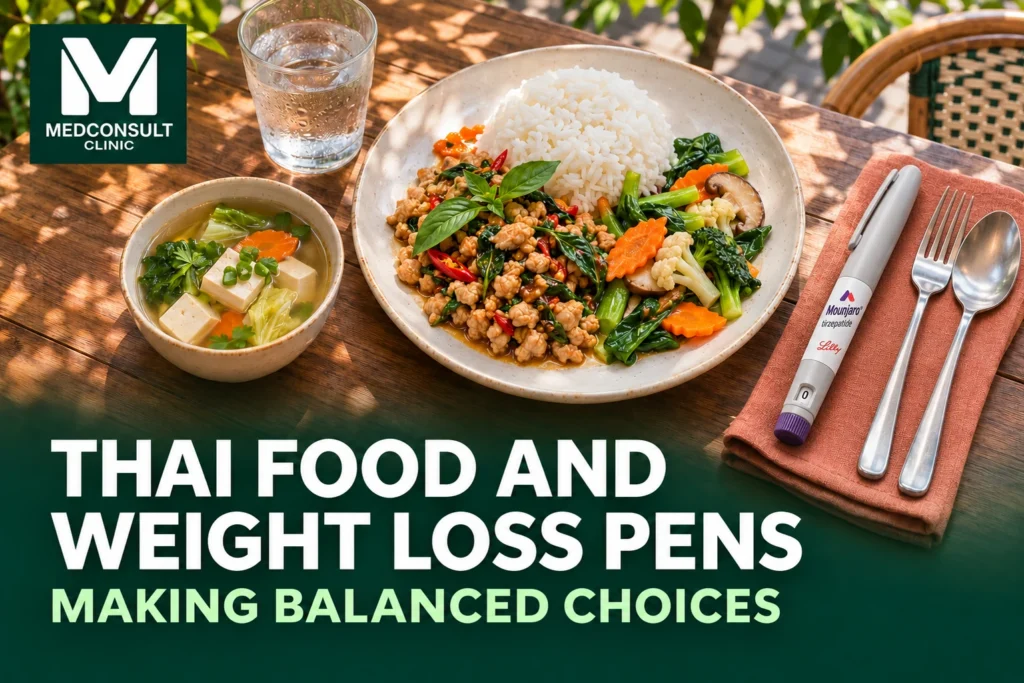
Thai food and weight loss pens can fit into the same routine. You do not need to replace familiar meals with plain salads or give up rice completely. A practical approach is to keep meals varied, include a useful source of protein, adjust portions to your appetite and pay attention to how different dishes make you feel.
Weight loss medicines can reduce hunger, but eating less does not automatically mean eating well. When your appetite changes, a smaller meal still needs to provide nourishment. This article looks at everyday choices in Bangkok, from noodle shops and food courts to home cooking and delivery orders.
If you are exploring treatment, MedConsult’s weight management services in Bangkok provide a starting point for discussing your health, eating pattern and treatment options.
Why Food Choices Still Matter With Weight Loss Pens
Many commonly used weight loss pens act on appetite-related hormones, helping people feel fuller. Some also slow stomach emptying. You may notice that your usual restaurant portion feels larger than before, or that a rich meal is less comfortable.
The aim is to find a sustainable way of eating that provides enough nutrition while supporting your treatment goals. Regularly managing only a few bites, feeling weak or struggling to drink needs attention. A very low appetite is not a reason to keep cutting food further.
Notice more than the number on the scale. Consider whether you have enough energy for your day, can eat a variety of foods and are maintaining everyday strength. These observations can make a treatment review more useful than simply reporting that you are eating less.
Use the Thai 2:1:1 Plate as a Starting Point
The Thai Department of Health describes a 2:1:1 approach: roughly half the plate vegetables, one quarter protein and one quarter rice or other starchy food. It offers an easy way to think about balance without weighing every ingredient.
For example, a meal might combine cooked morning glory and mixed vegetables, fish or tofu, and rice. At a food court, you can apply the same idea across separate dishes rather than expecting every plate to arrive in those proportions.
Use this as a flexible starting point, not a fixed portion for everyone. If you become full quickly, start with some protein and divide food into smaller eating occasions. Filling up on a large salad before touching the rest of the meal may leave little room for other nutrients.
A clinician or dietitian can help adapt the balance when you have kidney disease, diabetes, persistent digestive symptoms or another condition affecting your food choices.
Make Protein a Regular Part of Thai Meals
Weight loss can involve muscle as well as fat. Adequate protein and appropriate strength exercise help support muscle during weight loss, although neither guarantees that no muscle will be lost.
Practical protein choices include fish, chicken, lean pork, eggs, tofu and beans. Look at how much protein is actually in the meal: a few small pieces of meat in a large bowl of noodles may be less substantial than you expected.
You could add an egg to rice porridge, request extra tofu in soup, or share grilled fish alongside vegetables and rice. For vegetarian meals, make tofu, beans or another protein source a deliberate part of the order rather than relying only on vegetables and noodles.
There is no single protein target that suits every reader. Kidney health and other individual factors matter. Ask for a personal target if you are unsure, especially before adding several protein drinks or supplements to your day.
Rice and Noodles Can Stay on the Menu
Rice, noodles and other starchy foods provide energy. A balanced eating plan can include them alongside protein, vegetables and other nutrient-rich foods. Brown rice and other wholegrain choices offer additional fibre, but white jasmine rice can also fit into a varied diet.
Start with a portion that feels manageable and pause before adding more. If the meal is mostly rice or noodles, consider adding protein and vegetables rather than simply making the entire meal smaller.
For sticky rice, take a portion onto your plate so it is easier to see what you are eating. At a shared meal, you can return for more if you remain hungry. The same principle works with a large serving of fried rice: decide what feels comfortable, eat slowly and avoid treating finishing the plate as an obligation.
Practical Choices for Familiar Thai Dishes
The ideas below are examples, not a ranking of foods. Recipes, oil, sauces and portion sizes vary between kitchens, so a dish name alone cannot tell you its exact calories or nutrient content.
| Dish | A practical adjustment | What to keep in mind |
|---|---|---|
| Pad krapao | Choose chicken, lean pork or tofu, ask for less oil and add a vegetable side. | Include a comfortable rice portion. Choose the egg preparation you enjoy and tolerate. |
| Noodle soup | Add fish, chicken, egg or tofu and extra vegetables. | A clear broth can still contain plenty of salt. Taste before adding more seasoning. |
| Som tam | Pair it with cooked fish, chicken or tofu and some rice. | Salad alone may not supply enough protein. Dressing sweetness and chilli levels vary. |
| Khao man gai | Keep the chicken, add cucumber or another vegetable side, and request sauce separately. | The rice is usually cooked with fat. Choose a portion that fits your appetite. |
| Pad Thai | Include egg, tofu or prawns, and share a vegetable dish alongside it. | Oil, sauce and serving size vary. A smaller serving can still be enjoyable. |
| Coconut-based curry | Take some protein and vegetables with a moderate amount of sauce and rice. | A rich meal may feel uncomfortable during nausea; adjust to your tolerance. |
| Jok or khao tom | Add a fully cooked egg, fish, tofu or lean meat. | Plain rice porridge provides little protein unless a protein ingredient is added. |
Small Changes to Sauces, Oil and Seasoning
Fish sauce, soy sauce, seasoning powders and many dipping sauces contribute sodium. Excess sodium can raise blood pressure, so a meal’s salt content matters even when its portion is small.
Request dipping sauce separately, taste food before adding condiments and use enough for flavour rather than automatically emptying the serving. Soup does not have to be finished to the last spoonful of broth.
Oil and coconut milk also contribute energy. Asking for less oil or taking a smaller amount of rich sauce can be useful without removing these ingredients completely. The change can be modest: enjoy a curry with extra vegetables, or choose a steamed dish alongside something fried when sharing several plates.
Choose one or two adjustments you can repeat comfortably. A complicated list of rules can be difficult to maintain during an ordinary working week.
Thai Tea, Fruit Drinks and Desserts
Sweetened Thai tea, iced coffee, fruit drinks and smoothies can add substantial sugar, depending on their ingredients. “Less sweet” is useful wording, but it does not mean sugar-free; a premixed base or sweetened milk may still contribute sugar.
Water or an unsweetened drink can be an everyday option. When ordering, ask whether syrup, sugar or condensed milk can be reduced. Whole fruit provides fibre and is generally a more useful everyday choice than relying on juice.
Dessert can remain part of your eating pattern. If you want mango sticky rice or another favourite, choose a serving that feels comfortable or share it. Avoid replacing your main meal with dessert simply because it is the only food that sounds appealing. Repeated difficulty eating a balanced range of foods is worth discussing with your treating team.
Adjusting Meals When You Feel Nauseated or Too Full
Smaller meals, slower eating and stopping before you feel uncomfortable can help with mild nausea. Some people find plain rice, toast, eggs or soft tofu easier to manage. Fried, very fatty, strongly scented or spicy foods may aggravate symptoms for some people.
For a Thai meal, this might mean mild rice soup with fish or tofu instead of a rich curry that day. You can return to a wider range of foods as your tolerance improves. There is no need to avoid chilli permanently if it does not cause symptoms.
Take small sips of fluid and avoid lying down immediately after a meal. Keep a brief note of meals and symptoms if a pattern is unclear. If nausea repeatedly prevents adequate eating, contact the treating team rather than relying on increasingly restrictive food choices.
Fibre, Fluids and Constipation
Vegetables, whole fruit, beans and wholegrains help supply fibre. Increase fibre gradually rather than suddenly adding very large amounts, particularly if you already feel bloated.
Drink regularly through the day. Fluids help fibre work and support hydration, which matters during Bangkok’s heat and when vomiting or diarrhoea occurs. Your fluid needs depend on health, activity and circumstances; follow any existing fluid limit for a medical condition.
Simple options include cooked vegetables with lunch, fruit as part of a snack, or some brown rice when it is available and comfortable to eat. If constipation persists, ask a clinician or pharmacist about the next step. Do not assume that taking more fibre will solve every cause of abdominal discomfort.
An Example Day Using Familiar Foods
This is an illustration of variety, not a calorie-controlled menu or a complete nutrition plan. Portions and extra snacks depend on your appetite, health and individual needs.
Breakfast
Try rice porridge with fish, tofu or a cooked egg. If preparing breakfast is difficult, plain yoghurt with fruit and another suitable protein food can be a convenient alternative.
Lunch
Choose pad krapao with a protein you enjoy, a manageable serving of rice and a vegetable side. Ask for less oil if the kitchen can accommodate it.
Dinner
Have steamed or grilled fish, or tofu, with cooked vegetables and rice. A mild vegetable soup can add variety, but check that the meal contains enough protein beyond the broth.
Between meals
If needed, consider a boiled egg, plain yoghurt, fruit or an unsweetened fortified soy drink. On a low-appetite day, several smaller eating occasions may be easier than three large meals.
Useful Thai Phrases for Ordering
Specific requests are easier for a kitchen to understand than asking for “diet food.” These phrases can help when the dish is made to order.
| What you want | Thai phrase |
|---|---|
| Less oil | น้ำมันน้อย |
| No added sugar | ไม่เติมน้ำตาล |
| Dipping sauce separately | แยกน้ำจิ้ม |
| Extra vegetables | เพิ่มผัก |
| Less spicy | เผ็ดน้อย |
Some dishes and drinks are prepared in advance, so the vendor may not be able to make every change. In that case, choose another option or adjust what you serve yourself without expecting a perfectly customised meal.
Eating Out Without Making Every Meal Complicated
For shared meals, look for a protein dish, vegetables and a staple you enjoy. Serve some onto your own plate, eat slowly and decide whether you want more. You can participate in the meal without matching everyone else’s portions.
With delivery, keep a short list of meals that are convenient and comfortable to eat. An order note requesting sauce separately is often simpler than trying to redesign the whole recipe.
If work schedules, food preferences or medical conditions make eating difficult, discuss those details during a treatment review. MedConsult’s medical services offer a starting point for asking which type of appointment fits your concern. Bring examples of real meals rather than describing an ideal diet you rarely follow.
When Food Changes Are Not Enough
Contact your treating team if you regularly cannot eat enough, feel persistently weak or have digestive symptoms that interfere with daily life. Do not increase your pen dose yourself in response to a weight plateau or a larger meal.
Seek urgent medical attention for severe, persistent abdominal pain, especially pain spreading to the back. Repeated vomiting, inability to keep fluids down, very little urine or marked dizziness also need prompt assessment. These symptoms are not something to solve by changing a lunch order.
MedConsult’s GP services in Bangkok provide a route to medical assessment. Severe symptoms need urgent care rather than waiting for a routine appointment.
Making a Practical Plan With MedConsult
A useful review connects treatment with everyday life: what you eat, how your appetite changes, which symptoms occur and whether you have enough energy. Include any concerns about strength, bowel habits and drinking enough.
Check MedConsult’s locations and contact details for your preferred branch, or use the appointment page for planned follow-up. The goal is a realistic eating pattern that supports health and fits the Thai food you enjoy.
Weight management services in Bangkok
Frequently Asked Questions
Can I eat rice while using weight loss pens?
Yes. Rice can be part of a balanced meal with protein and vegetables. Choose a portion that fits your appetite and individual eating plan. There is no universal need to eliminate rice or switch every meal to a carbohydrate-free option.
Is som tam enough for a complete meal?
It depends on what accompanies it. Som tam usually works better as part of a meal with a substantial protein food and an appropriate staple, such as rice. Dressings and ingredients vary, so ask about sweetness, salt and chilli if relevant.
Do I need a protein shake every day?
No. Many people can obtain protein from ordinary foods. A shake may help when food intake is inadequate, but it is not automatically necessary. Discuss ongoing difficulty eating and personalised protein needs, especially with kidney disease.
Do I have to stop eating spicy Thai food?
No blanket ban applies. If chilli worsens nausea, heartburn or discomfort, choose milder dishes temporarily and note your response. If symptoms persist or are severe, seek medical advice rather than assuming spice is the only cause.
What if I am barely hungry all day?
Try manageable, nourishing meals or snacks at regular opportunities, with protein included. If very low appetite makes adequate eating difficult repeatedly, contact the treating team. The aim is to support nutrition, not to see how little you can eat.
References
Sources checked 15 November 2026. Thai dish examples apply general nutrition principles; recipes and portions vary. Individual food and treatment plans depend on health and tolerance.
- Thailand Department of Health: the 2:1:1 balanced plate.
- NHS inform: diet and activity while taking weight loss medication.
- Guy’s and St Thomas’ NHS Foundation Trust: food, protein and nutrition.
- Guy’s and St Thomas’ NHS Foundation Trust: balanced eating habits.
- Guy’s and St Thomas’ NHS Foundation Trust: managing digestive side effects with diet.
- NIDDK: eating and physical activity for weight management.
- World Health Organization: healthy diet and food variety.
- World Health Organization: sodium and salt reduction.
- NIDDK: food, fibre and fluids for constipation.
- NHS: dehydration and signs needing medical attention.
- MHRA: GLP-1 medicines, appetite effects and safety information.
- MHRA: recognising severe abdominal pain during GLP-1 treatment.