
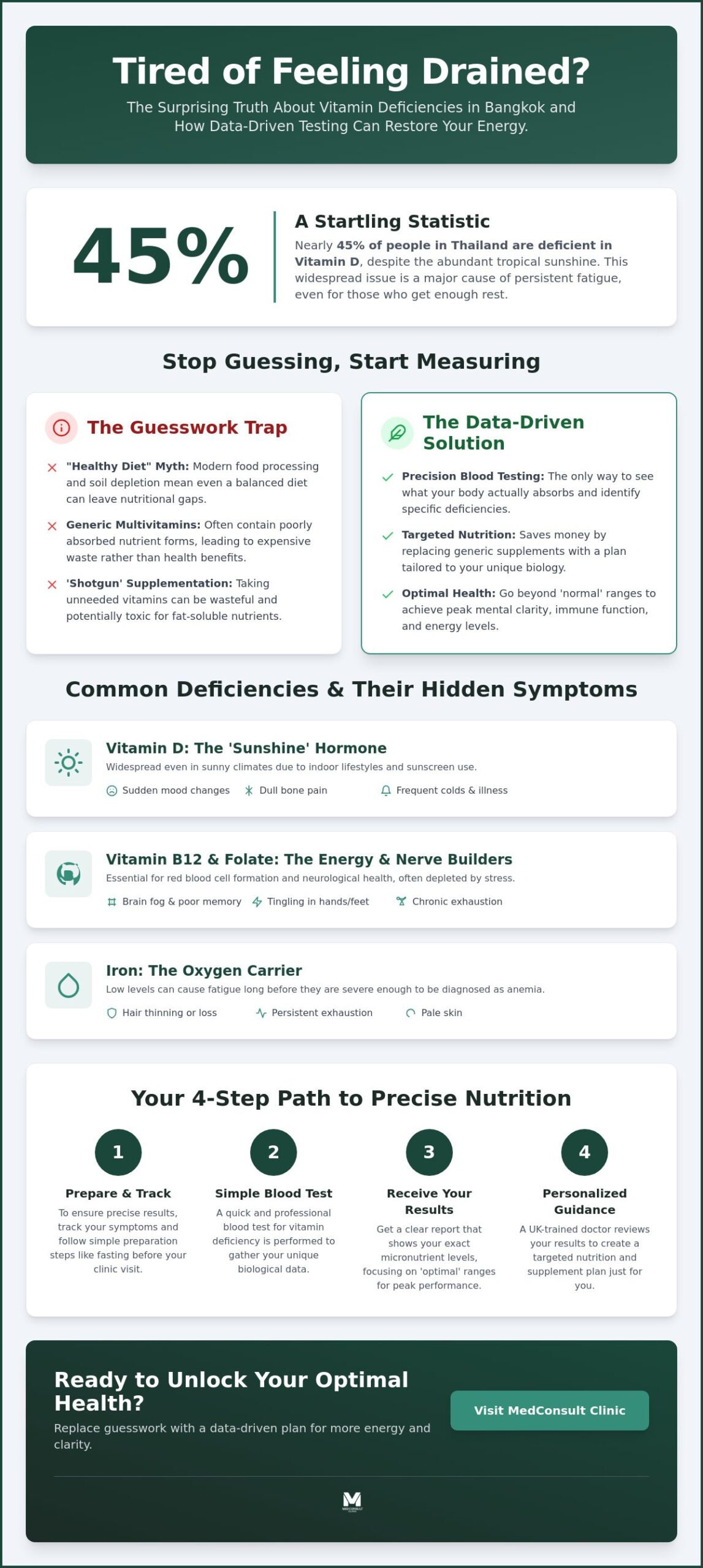
Did you know that nearly 45% of people in Thailand are deficient in Vitamin D, despite our abundance of tropical sunshine? It is a startling statistic that explains why so many residents in the city feel persistently drained regardless of how much they rest. You might find yourself waking up exhausted after a full night’s sleep or feeling confused by the endless aisles of generic supplements. It’s common to worry if those over-the-counter vitamins are even right for your body or if you are simply wasting your time on products you don’t actually need.
In this article, you will discover the truth about micronutrient testing and why a professional blood test for vitamin deficiency in Bangkok is the essential first step toward resolving chronic fatigue. We’ll show you how data-driven nutrition can replace guesswork with a personalized plan designed for your unique biology. We are going to break down the common myths surrounding supplements and explain how clear, clinical data can finally help you achieve the mental clarity and high energy levels you have been searching for.
Key Takeaways
- Move beyond the myth that a balanced diet guarantees health and understand how modern food processing impacts your actual nutrient levels.
- Identify the hidden physical symptoms of Vitamin D, B12, and Iron deficiencies to catch health concerns before they impact your daily productivity.
- See why choosing a blood test for vitamin deficiency Bangkok saves you money by replacing generic supplements with a targeted, data-driven nutrition plan.
- Learn the essential preparation steps, such as fasting and symptom tracking, to get the most precise results from your clinic visit.
- Discover how personalized medical guidance from a UK-trained doctor ensures your wellness journey is efficient, reliable, and tailored to your specific needs.
Vitamin Testing Myths vs. Reality: Why You Might Be Guessing Wrong
Many people believe that if they shop at organic markets and eat plenty of greens, they are immune to nutritional gaps. However, the reality of understanding vitamin deficiency is far more complex than just looking at your plate. Even with a balanced diet, factors like soil depletion and modern food processing mean that the nutrient density of our food isn’t what it used to be. Getting a blood test for vitamin deficiency Bangkok is often the only way to see what is actually reaching your cells versus what is just passing through your system.
Another common myth is that a daily multivitamin acts as a total insurance policy. While these pills are convenient, they often use the cheapest, least absorbable forms of nutrients. If your body cannot break down or absorb the specific chemical form of a vitamin, you are essentially paying for expensive waste. Relying on generic products without data is like trying to fix a car engine by throwing random parts at it; you might get lucky, but it’s rarely efficient.
The Problem with ‘Shotgun’ Supplementation
Taking a handful of supplements “just in case” can be both wasteful and potentially harmful. Some vitamins are fat-soluble, meaning they build up in your tissues and can reach toxic levels if taken unnecessarily. Every person has a unique genetic makeup and metabolic rate, a concept known as biochemical individuality. What works for your neighbor might be completely ineffective for you. Micronutrient testing serves as a precision tool for health optimization by identifying exactly which gaps need filling.
Why Lifestyle Factors Trumps Diet
Your environment often dictates your nutritional needs more than your meals do. High-stress urban living in a city like Bangkok rapidly depletes B vitamins and Magnesium, which are essential for nervous system function. Even in a country famous for its sun, our indoor lifestyles have led to a situation where nearly 45% of the population lacks sufficient Vitamin D. Spending the majority of your day in air-conditioned offices or malls creates a barrier that even the brightest Thai summer can’t penetrate.
Active individuals and athletes face even greater challenges. Physical exertion increases the turnover of minerals and antioxidants, meaning a “normal” intake might still leave an athlete in a deficit. Using a blood test for vitamin deficiency Bangkok allows you to adjust your intake based on your specific activity levels and stress markers rather than following generic guidelines. This data-driven approach ensures you are supporting your body’s recovery and energy production exactly where it’s needed most.
Common Deficiencies and Their Hidden Symptoms
Your body usually sends subtle signals long before a health issue becomes critical. Many patients arrive at our clinic complaining of persistent fatigue or low mood, often suspecting a serious illness when the culprit is actually a micronutrient gap. Identifying the ‘Big Three’ deficiencies, Vitamin D, B12, and Iron, is vital because their symptoms frequently mimic more complex conditions like thyroid dysfunction or clinical depression. A professional blood test for vitamin deficiency Bangkok provides the clarity needed to distinguish between a lifestyle-induced slump and a genuine medical concern.
One of the most important distinctions we make is the difference between ‘normal’ and ‘optimal’ lab ranges. A standard lab report might show your levels are within a ‘normal’ statistical average, but that doesn’t mean you are thriving. For example, your iron levels might not be low enough for an anemia diagnosis, yet they could be low enough to cause hair thinning and exhaustion. By focusing on targeted nutrition with supplements based on optimal levels, you can address these hidden symptoms effectively.
Vitamin D: The ‘Sunshine’ Hormone Deficiency
Despite Thailand’s bright climate, Vitamin D deficiency remains widespread. Symptoms often include dull bone pain, sudden mood changes, and a tendency to catch every cold that goes around. Because we spend so much time in air-conditioned offices and use high-SPF sunscreens, our skin rarely produces enough of this essential hormone. Vitamin D is a cornerstone of immune function, and maintaining optimal levels is a key part of long-term preventive health.
The B-Vitamin Complex and Energy Production
B12 and Folate are the heavy hitters when it comes to red blood cell formation and neurological health. If you are experiencing brain fog, a strange tingling in your hands or feet, or chronic exhaustion that sleep won’t fix, your B levels might be the issue. This is especially critical for those on plant-based diets, as B12 is primarily found in animal products and requires consistent monitoring to avoid long-term nerve damage.
Minerals: The Foundation of Cellular Health
Minerals like Magnesium and Zinc are often overlooked but are essential for over 300 biochemical reactions in your body. Magnesium is your “relaxation” mineral, helping with sleep and muscle recovery, while Zinc is vital for clear skin and a strong immune response. Brittle nails or white spots on the nail bed can often be a telltale sign of a mineral imbalance. For a more comprehensive overview of your wellness, you can consult our Full Body Check-up Checklist: Your 2026 Guide to Preventive Health. If you’re tired of feeling drained, you can speak with a doctor today to begin your data-driven health journey.
Blood Test vs. Multivitamins: The Case for Targeted Nutrition
Many people spend thousands of baht every year on multivitamins, hoping for a generic boost in energy or immunity. It’s a common habit, yet it often leads to frustration when those expensive pills don’t deliver the promised vitality. Without a blood test for vitamin deficiency Bangkok, you are essentially shooting in the dark. Bioavailability is a major factor that most consumers overlook. Some supplements use synthetic binders or low-quality ingredients that your digestive system simply cannot process effectively. By measuring your levels first, you ensure that the nutrients you buy are actually raising your blood levels. This data-driven approach often produces noticeable results in just a few weeks. When you target a specific gap, like a Vitamin B12 or Iron deficiency, your body responds much faster than it would to a low-dose, generic multivitamin.
The Financial Case for Vitamin Testing
Walk into almost any health-conscious home and you’ll likely find what we call a “supplement graveyard.” These are the half-used bottles of vitamins purchased during a fatigue-induced shopping spree but never finished because they didn’t seem to make a difference. Investing in a blood test for vitamin deficiency provides a clear six-month roadmap for your health. Instead of buying ten different products “just in case,” you might find you only need two specific ones in therapeutic doses. This makes testing a core part of a preventive health check, saving you money and shelf space in the long run. It’s about buying what you need, not what the marketing tells you to buy.
Avoiding the Toxicity Trap
While water-soluble vitamins like Vitamin C are generally safe because your body flushes out the excess, others require much more caution. Fat-soluble vitamins, specifically A, D, E, and K, are stored in your liver and fatty tissues. Over-supplementing these without clinical supervision can lead to toxicity, which may cause symptoms ranging from nausea to more severe organ stress. For instance, while some medical discussions note that evidence did not support routine screening for the general healthy population without any symptoms, it becomes essential if you are actively taking high-dose supplements. Blood tests ensure your supplement regimen remains in the safe, therapeutic zone rather than crossing into dangerous territory. Excessive intake of Iron or Vitamin A can be particularly risky without regular monitoring from a medical professional. Ultimately, blood tests ensure your supplement regimen is safe and effective for your specific biology.
Preparation Guide: Getting Accurate Results from Your Screening
To get the most out of your blood test for vitamin deficiency Bangkok, a little preparation goes a long way. Accuracy is the foundation of data-driven nutrition. If your baseline data is skewed by a recent meal or a specific supplement, your personalized plan won’t be as effective as it could be. We want to ensure that the numbers we see on your report are a true reflection of your body’s internal environment, not just a snapshot of what you ate for breakfast.
Following a simple, methodical process ensures your visit is efficient and the data is reliable. Start by noting down your specific symptoms, like the persistent fatigue or brittle nails we discussed earlier. You’ll typically need to fast for 8 to 12 hours before your appointment, especially if your screening includes markers like Iron, Glucose, or a lipid profile. During this time, you should also prepare a clear list of every supplement and medication you currently take. Finally, drink plenty of water before you arrive. Proper hydration makes your veins easier to find, ensuring a quick and comfortable blood draw.
Should You Stop Your Supplements Before the Test?
One of the most common questions we hear is whether to pause your daily vitamins. Biotin, also known as Vitamin B7, is a frequent culprit for lab interference. It’s often found in high doses in hair, skin, and nail formulas and can lead to misleading results in thyroid or hormone screenings. As a general rule, you should continue taking your routine medications prescribed by a physician. However, it’s often best to pause non-essential “extras” or high-dose boosters for 24 to 48 hours before your blood test for vitamin deficiency Bangkok. Maintaining a consistent routine is vital for year-over-year comparisons, allowing us to track how your levels change over time with precision.
Fasting and Hydration Tips
Fasting is necessary because the nutrients from a recent meal can temporarily spike your blood levels, giving an inaccurate reading of your actual reserves. While you must avoid food for at least 8 hours, staying hydrated with plain water is highly encouraged. Some patients ask about black coffee or tea, but even without sugar or milk, these can sometimes affect certain metabolic markers. It’s always safest to stick to water. Being well-hydrated is the secret to a “hassle-free” clinic visit. When your body is hydrated, the blood draw is significantly easier and more comfortable, allowing you to get back to your day quickly. If you’re ready to get clear data on your nutritional status, you can book your vitamin screening today and speak with our expert team.
Personalized Preventive Care with MedConsult Clinic
MedConsult Clinic stands out by offering a bridge between complex medical data and practical, everyday wellness. Led by Dr. Donna Robinson, a UK-trained physician with decades of experience, the clinic provides a patient-centered approach that prioritizes your comfort. We understand that finding reliable healthcare in a foreign city can be stressful. That is why we have designed our services to be transparent and welcoming, avoiding the sterile, impersonal atmosphere of a large hospital. When you choose a blood test for vitamin deficiency Bangkok at our clinic, you aren’t just getting a laboratory result; you are gaining a knowledgeable guide for your health journey.
Our process is built for efficiency and reliability. We ensure a fast turnaround for your results because we value your time as much as your health. These nutritional insights don’t exist in a vacuum; they often form the foundation for other specialized treatments. For example, optimizing your micronutrient levels is a critical component of BHRT for men and our weight loss management programs. When your body has the right vitamins and minerals, it can respond more effectively to hormonal adjustments and metabolic changes.
The MedConsult Difference: Beyond the Lab Report
We believe that a lab report is only as good as the interpretation behind it. We don’t just hand you a piece of paper filled with confusing numbers; we explain exactly how your blood test for vitamin deficiency Bangkok results relate to your daily energy. This “hassle-free” experience is tailored for the international community, ensuring clear communication and a non-judgmental environment. If your results show a deficiency, we provide access to professional-grade supplements that offer higher bioavailability than standard retail options.
Next Steps for Your Wellness Journey
Taking control of your health shouldn’t be a complicated process. You can book your consultation and test in just a few clicks through our online system. Many of our patients find it convenient to combine their nutritional check with other preventive measures, such as a sexual health screening, to achieve total peace of mind in a single visit. This comprehensive approach ensures that every aspect of your vitality is being monitored by experts who care about your long-term success. Your journey toward increased energy and mental clarity starts with a single, data-driven step.
Book your doctor consultation and vitamin screening today and discover the difference that personalized, expert care can make for your quality of life.
Start Your Journey to Data-Driven Vitality
Persistent fatigue and brain fog don’t have to be your daily reality. As we have discussed, moving away from generic multivitamins and toward a targeted, data-driven approach is the most efficient way to reclaim your energy. By identifying your specific nutritional gaps, you can stop wasting money on unnecessary supplements and start giving your body exactly what it needs to thrive. Clear data removes the guesswork, allowing you to focus on optimal health rather than just the absence of illness.
At MedConsult Clinic, we prioritize your peace of mind through professional expertise and a welcoming environment. Led by Dr. Donna Robinson, a UK-trained physician with over 20 years of experience serving Bangkok’s international community, our team works with JCI-standard laboratory partners to ensure every blood test for vitamin deficiency Bangkok is accurate and reliable. We’re here to help you interpret your results and create a personalized roadmap for your wellness journey.
Don’t wait for your symptoms to worsen before taking action. Book Your Professional Vitamin Screening at MedConsult Clinic today and take the first step toward a clearer, more energized future. You deserve to feel your best every single day.
Frequently Asked Questions
How often should I get a blood test for vitamin deficiency?
Most patients benefit from an annual screening as part of their routine health check to maintain optimal wellness. If you are currently treating a known deficiency, we usually recommend re-testing every 3 to 6 months to monitor your progress. This timeframe allows your body to absorb supplements and show measurable changes in your blood work. Regular monitoring ensures your plan remains effective and prevents you from taking unnecessary doses over the long term.
Can a vitamin deficiency cause weight gain or prevent weight loss?
Yes, certain deficiencies can significantly impact your metabolism and weight management efforts. For example, low levels of Vitamin D or Iron often lead to persistent fatigue, making it harder to stay active and potentially slowing your metabolic rate. B-vitamins are also essential for converting food into usable energy. Identifying these gaps through a blood test for vitamin deficiency Bangkok can help remove biological barriers that might be stalling your weight loss goals.
Is a vitamin blood test covered by international health insurance?
Coverage typically depends on your specific policy and the clinical reason for the test. Many international insurance providers cover diagnostic screenings if you are experiencing symptoms like chronic exhaustion, mood changes, or hair loss. However, tests performed solely for “wellness” or “preventive” reasons without active symptoms might not be reimbursed. We recommend checking with your provider beforehand. Our clinic provides the necessary medical certificates and receipts to support your insurance claim.
What is the difference between a standard health check and a micronutrient screen?
A standard health check usually focuses on major organ function, such as your liver, kidneys, and heart health. While it might include basic markers like hemoglobin, it rarely dives deep into specific vitamin and mineral levels. A micronutrient screen is a specialized analysis that looks at the specific building blocks of your health. It identifies subtle imbalances in vitamins like B12, D, and minerals like Zinc that standard screenings often overlook.
How long does it take to get the results of my vitamin test?
You can typically expect your results within 24 to 48 hours depending on the specific markers being analyzed. We prioritize efficiency so you can begin your personalized nutrition plan without unnecessary delays. Once the laboratory completes the analysis, we’ll send the report to you electronically. You can then schedule a follow-up consultation with our doctor to interpret the data and discuss the most effective next steps for your health.
Will the doctor help me choose the right supplements after the test?
Absolutely, interpreting the data is the most important part of the entire process. Our doctors don’t just hand you a lab report; they provide a professional interpretation and a tailored supplement plan based on your results. We help you choose high-quality, bioavailable forms of nutrients that match your body’s specific needs. This ensures your regimen is both safe and effective, preventing you from wasting money on products your body won’t absorb.
Can I get a vitamin test if I am currently pregnant or breastfeeding?
Yes, vitamin testing is highly recommended during pregnancy and breastfeeding to ensure both you and your baby have essential nutrients. Requirements for Folate, Iron, and Vitamin D change significantly during this period. A blood test for vitamin deficiency Bangkok provides the data needed to adjust your prenatal or postnatal support safely. Our medical team will guide you to ensure your supplement levels are optimized for your health and your baby’s development.
What happens if my vitamin levels are dangerously low?
If your results show a severe deficiency, our doctor will recommend an immediate therapeutic intervention to restore your levels. This might include high-dose oral supplements or vitamin injections for faster absorption if your levels are critically low. We will also investigate underlying causes, such as digestive issues or dietary gaps, to prevent the deficiency from returning. Our goal is to bring your levels back into the optimal range quickly and safely while closely monitoring your symptoms.