
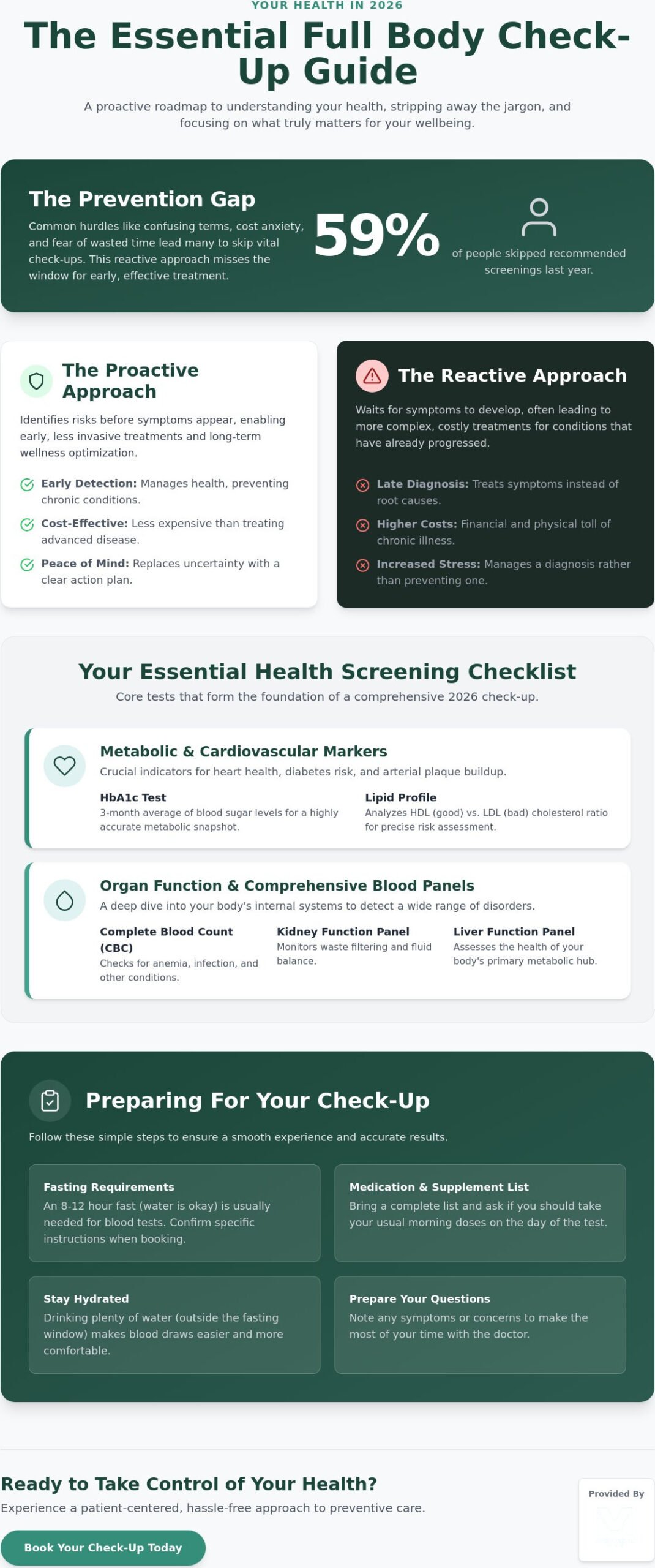
Did you know that 59% of people skipped their recommended preventive screenings last year? This rising trend often comes down to a few common hurdles: confusion over complex medical terms, anxiety about hidden costs, and the fear of wasting time on unnecessary tests. You want to stay on top of your health, but the process of booking a full body check-up can feel more like a chore than a proactive choice.
We believe healthcare should be transparent and stress-free. This guide provides a comprehensive, easy-to-follow checklist designed to help you approach your next clinical visit with absolute confidence. We will strip away the jargon and focus on what truly matters for your wellbeing in 2026. You will learn exactly which screenings are essential based on the latest medical guidelines, how to prepare for your appointment efficiently, and which questions to ask your doctor to ensure you get the most out of your time. From updated breast cancer imaging coverage to the latest colorectal screening ages, this is your roadmap to a clearer understanding of your health status.
Key Takeaways
- Understand why a proactive full body check-up serves as a baseline for your 2026 health goals rather than just reacting to symptoms.
- Identify the essential core tests, including metabolic panels and vital signs, that form the foundation of every comprehensive screening.
- Learn how to customize your health journey with advanced screenings for hormonal balance and age-specific concerns to target your unique needs.
- Get practical advice on fasting requirements and medication management to ensure your clinical experience is smooth and your results are accurate.
- Discover how a patient-centered, hassle-free approach can eliminate hospital wait times and provide medical clarity without the stress.
Decoding the Full Body Check-up: Why Prevention is Your Best Investment
Setting your health goals for 2026 requires more than just a gym membership or a new diet. It demands a clear, clinical baseline to understand where you truly stand. A full body check-up is a proactive medical assessment of all major organ systems. While many people wait until they feel unwell to visit a clinic, this reactive approach often means missing the window for the most effective, least invasive treatments. Preventive screening acts as a high-resolution map of your internal health, identifying risks before they manifest as painful or life-altering symptoms. Regular check-ups are the most cost-effective way to manage long-term health. Catching a minor imbalance now is far less expensive, both financially and physically, than treating a chronic condition after it has progressed.
The Shift from Reactive to Proactive Healthcare
Early detection fundamentally changes the prognosis for conditions like hypertension, diabetes, and even certain cancers. When we identify a trend toward high blood sugar early, we can often reverse it through simple lifestyle adjustments rather than lifelong medication. We’re moving beyond simply “checking for disease” and toward “optimizing wellness.” This means looking at your unique risk profile with a supportive, non-judgmental eye. Your family history plays a vital role here. It helps us determine which specific tests you need and how often you should have them. It’s about being one step ahead of your genetics. You gain peace of mind knowing that your health isn’t a mystery, but a managed journey.
Defining “Full Body”: Beyond a Simple Physical Exam
In the past, a routine visit might have just involved a blood pressure cuff and a quick listen to your heart. Today, that’s no longer enough to provide a complete picture of your wellbeing. To truly understand what is a physical examination in a modern context, we must look at the integration of advanced laboratory diagnostics and imaging. A comprehensive full body check-up in 2026 should include:
- Advanced Blood Panels: Looking at inflammation markers, kidney and liver function, and metabolic health.
- Vital Sign Analysis: Moving beyond just BP to include BMI and resting heart rate trends.
- Targeted Imaging: Using technology to see what a physical touch might miss.
- Clinical Consultation: A methodical discussion with an expert who can translate data into a personal health plan.
These 2026 standards for comprehensive outpatient screening ensure that no stone is left unturned. We replace guesswork with reliable clinical data. This thorough approach is designed to be efficient and hassle-free, respecting your time while prioritizing your long-term vitality. You leave the clinic not just with a folder of results, but with a clear understanding of your health status and the confidence to take the next step in your wellness journey.
Your Essential Health Screening Checklist: Core Tests You Need
A high-quality full body check-up relies on a foundation of core diagnostics that evaluate your internal systems from several angles. These tests act as early warning systems, flagging subtle changes in your physiology before they become symptoms. By following evidence-based U.S. Preventive Services Task Force guidelines, we ensure that every screening on your checklist provides actionable value for your long-term wellness.
Metabolic and Cardiovascular Markers
Heart health and blood sugar management are the cornerstones of modern preventive care. While many people are familiar with a standard glucose test, we prioritize the HbA1c marker. This test provides a three-month average of your blood sugar levels, making it a far better predictor of metabolic health than a single snapshot of fasting glucose. It helps us identify pre-diabetes early enough to make meaningful lifestyle changes. We also look closely at your lipid profile. Rather than just checking your “total cholesterol,” we analyze the ratio of HDL (good) to LDL (bad) cholesterol. This ratio is a critical indicator of cardiovascular stress and helps us assess your risk for arterial plaque buildup with much higher precision.
Organ Function and Comprehensive Blood Panels
Your blood is a rich source of data regarding your internal organs. A Complete Blood Count (CBC) is essential for detecting anemia, hidden infections, or issues with blood clotting. Beyond the blood itself, we evaluate how your organs are processing nutrients and clearing toxins. Liver enzymes like ALT and AST offer a window into your lifestyle; they can signal inflammation from diet, alcohol, or medication before any physical discomfort begins. Similarly, we use Creatinine levels and the Glomerular Filtration Rate (GFR) to monitor kidney health. We also include Thyroid Stimulating Hormone (TSH) in this checklist. Since the thyroid regulates your metabolism and energy, an imbalance here often explains persistent fatigue or unexplained weight changes. If you’re ready to see where your levels stand, booking a consultation is the most efficient way to start your screening journey.
Vital Signs and Physical Assessments
Data from a lab is vital, but it must be paired with a doctor-led physical assessment. This human element allows us to interpret your numbers in the context of your lifestyle and physical condition. We monitor vital signs including blood pressure, heart rate, and respiratory health. When we measure Body Mass Index (BMI), we do so with a focus on your unique body composition. It’s not just about a number on a scale; it’s about the balance of muscle versus fat and how that impacts your metabolic risk. During the exam, your doctor will also check heart sounds and lung clarity, ensuring that your cardiovascular and respiratory systems are functioning at their peak. This combination of advanced lab work and methodical physical examination provides the medical clarity you need to move forward with confidence.
Beyond the Basics: Advanced Screening for Targeted Wellness
A standard physical is a great start, but a truly effective full body check-up should be as unique as you are. Your health needs in your 30s, which might focus on peak performance or fertility, differ significantly from the priorities of your 50s, where cardiovascular resilience and cancer screenings take center stage. For example, medical standards now recommend colorectal cancer screening starting at age 45, while HIV screening is recommended at least once for all adults aged 15 to 65. Customizing your checklist ensures you aren’t just checking boxes, but actually addressing the specific biological markers that affect your daily quality of life. Understanding the benefits of regular check-ups allows you to move from general health maintenance to precision medicine. For professionals managing high-pressure careers, a tailored executive health screening takes this personalization even further, addressing the unique cardiovascular and metabolic risks that come with demanding leadership roles.
Sexual Health and Hormonal Balance
True vitality involves looking at aspects of health that are often overlooked in traditional hospital settings. We believe a sexual health screening should be a routine, judgment-free part of your wellness journey. It isn’t just about infection; it’s about your overall reproductive and endocrine health. For instance, monitoring testosterone and estrogen levels is essential for identifying the need for BHRT for men or hormone replacement for women experiencing the symptoms of aging. Sometimes, what feels like a hormonal decline is actually a vitamin deficiency. Screenings for Vitamin D and B12 are critical because their symptoms often mimic hormone imbalances, such as persistent fatigue or brain fog. Identifying these gaps allows us to restore your energy levels with medical precision. If you want to understand the facts behind micronutrient testing, our guide on blood test for vitamin deficiency Bangkok separates common myths from clinical reality.
Weight Management and Metabolic Health
Sustainable health often requires a deeper look at how your body processes energy. A comprehensive full body check-up serves as the perfect medical foundation for personalized weight loss strategies. For those exploring advanced pharmaceutical support, such as Mounjaro Thailand, having a recent clinical profile is essential for safety and efficacy. We go beyond the scale to examine insulin resistance markers. These markers help us design dietary plans that actually work for your specific metabolism. We also pay close attention to visceral fat. This type of fat surrounds your internal organs and is a major driver of long-term metabolic issues like heart disease and type 2 diabetes. By identifying these risks early, we can pivot from reactive dieting to proactive health management that prioritizes your long-term vitality.
Preparing for Your Appointment: A Practical Pre-Checkup Checklist
Arriving well-prepared for your visit is the best way to ensure medical clarity and a smooth, efficient experience. While we handle the clinical complexities, your preparation helps us capture the most accurate snapshot of your health. A full body check-up involves several moving parts, from laboratory work to physical assessments. By following a few simple steps, you can eliminate the anxiety of the unknown and make the most of your time with our medical team.
Fasting and Medication Guidelines
Most comprehensive screenings require a period of fasting to ensure your metabolic markers are accurate. For tests involving blood sugar (HbA1c) and lipid profiles, you should fast for 8 to 12 hours before your appointment. This means no food or colored drinks, including coffee or tea. However, staying hydrated is essential. You can and should drink plenty of plain water. Hydration makes blood collection more comfortable and keeps your vital signs stable. If you take chronic medications for blood pressure or heart health, continue taking them as usual with a sip of water. However, if you are on diabetes medication, please contact us for specific instructions, as fasting can impact your blood sugar levels differently. We want your experience to be hassle-free and safe.
Documenting Your Medical History and Concerns
Your doctor acts as a knowledgeable guide, but they rely on the information you provide. Before you arrive, take a moment to document your current health landscape. This includes a list of any vitamins, minerals, or herbal supplements you take daily. These can sometimes interfere with blood test results or interact with other treatments. Don’t ignore small changes in your body. Note any new or unusual symptoms, such as persistent fatigue, changes in sleep patterns, or minor aches. Even if they seem insignificant, they provide vital context for your full body check-up. Additionally, have a brief summary of your family medical history ready. Knowing if a close relative has had heart disease or diabetes allows us to tailor your screening with much higher precision. If you’re unsure whether your fatigue is linked to nutritional gaps, learning about a blood test for vitamin deficiency in Bangkok can help you ask the right questions at your appointment. If you’re ready to take the next step toward medical clarity, you can book your check-up online today.
Logistics and the “Question Checklist”
Practical logistics matter for your comfort. We recommend wearing loose, comfortable clothing that allows easy access for blood pressure monitoring and physical examinations. If your screening includes imaging, you may be asked to change into a clinical gown. Finally, come prepared with questions. The consultation is your time to gain a clear understanding of your health status. Consider asking:
- Which of my results are the most critical for me to monitor?
- Are there specific lifestyle changes that would improve my metabolic markers?
- Based on my family history, are there additional tests I should consider next year?
- How do these results compare to my previous baseline?
This proactive approach transforms a standard medical visit into a collaborative partnership. You leave the clinic not just with data, but with a clear plan for your future wellness.
Why MedConsult Clinic is the Choice for Personalized Health Check-ups
Choosing where to book your full body check-up is just as important as the tests themselves. Many large hospitals can feel like high-volume factories where you’re just another number in a long, sterile queue. We take a different approach. Our clinic is built on a “hassle-free” philosophy that prioritizes your comfort, time, and peace of mind. We’ve stripped away the intimidating clinical atmosphere to create a space where you feel heard and supported throughout your entire medical journey. This patient-centered focus ensures that your preventive care is a positive, empowering experience rather than a source of anxiety.
For pet owners, this commitment to a stress-free life often extends beyond the clinic; for instance, working with Sit Means Sit Dog Training can help create a more harmonious home environment, which is a key component of maintaining long-term cardiovascular health and mental wellbeing.
Beyond pets, many people find that optimizing their personal space for relaxation is equally important; for audiophiles, a purpose-built HiFi Rack can help create a focused environment for music appreciation, which is a great way to reduce daily stress and support mental wellness from home.
Additionally, for those who incorporate fitness and community sports into their wellness plan, using premium custom gear like Rally Towels can add a professional touch to your workout routine and help you stay motivated on your health journey.
The Friendly Expert Approach: Efficiency Meets Care
Dr. Donna Robinson leads our team with UK-trained expertise and decades of experience. This background ensures you receive medical care that meets high international standards while benefiting from a patient-centered warmth often missing in traditional settings. We understand that navigating a foreign healthcare system can be daunting for many in our international community. That’s why we focus on clear, non-judgmental communication in English, ensuring no detail is lost in translation. Our streamlined processes mean you can complete your screening and consultation without the typical hospital wait times. We respect your schedule, providing a reliable and efficient service that fits into your life without the stress of unnecessary delays.
Actionable Results and Professional Consultations
A full body check-up shouldn’t end when you receive a folder of lab data. We focus heavily on the “What Now?” factor by translating complex results into a clear, actionable roadmap for your 2026 health. You won’t leave our clinic with just a list of numbers; you’ll leave with a professional interpretation of what those numbers mean for your daily life and long-term vitality. This might include recommendations for specialized care; for example, if you are addressing hair loss linked to nutritional or hormonal imbalances, Hair Health Australia provides expert solutions for regrowth. Our goal is to move you from a state of inquiry to a state of absolute confidence in your health status.
If your results suggest a need for specialized support, we provide direct access to follow-up care within our facility. Whether you require professional Weightloss Management, are exploring BHRT Services to restore your energy, or simply need a follow-up Doctor Consultation to track your progress, our team is ready to assist. This continuity of care ensures your preventive screening leads to real, measurable improvements in your quality of life. We believe in transparent pricing and a collaborative partnership, avoiding aggressive sales tactics to focus purely on your wellbeing. Your journey to a healthier 2026 starts with a conversation, and we’re here to guide you every step of the way.
Take Charge of Your 2026 Wellness Journey
A proactive health strategy is the most effective way to ensure long-term vitality. By utilizing a comprehensive checklist, you move beyond guesswork and gain a clear, clinical understanding of your body’s unique needs. Whether you’re monitoring core metabolic markers or seeking advanced hormonal insights, early detection remains your best investment for a vibrant future. Your health isn’t just about the absence of disease; it’s about optimizing your daily performance and peace of mind, which is why professional support from WJW Counselling & Mediation can be a vital part of a truly holistic approach to wellness.
MedConsult Clinic offers a welcoming, efficient environment where your time and comfort are always prioritized. Led by Dr. Donna Robinson, a UK-trained physician with over 20 years of experience in Thailand, we provide the expertise you need with the approachability of a trusted local partner. Our transparent, package-based pricing ensures there are no hidden fees, allowing you to focus entirely on your results. When you’re ready to secure your medical clarity, Book Your Comprehensive Health Check-up at MedConsult Clinic Today. Your next full body check-up is the first step toward a stress-free, healthier you. We’re here to guide you every step of the way.
Frequently Asked Questions
How long does a full body check-up usually take?
A standard full body check-up usually takes between 60 to 90 minutes. This timeframe includes your initial vitals check, blood collection, and the clinical consultation with the doctor. If your package includes advanced imaging or specialized screenings, it might take a bit longer. We prioritize efficiency to ensure you aren’t spending your entire morning in a waiting room, making the process as hassle-free as possible for your busy schedule.
Do I really need to fast before my health check-up?
Yes, fasting is essential for the accuracy of your metabolic results. You should avoid all food and drinks except plain water for 8 to 12 hours before your appointment. This ensures that your blood sugar and cholesterol levels are measured at a baseline state, unaffected by your most recent meal. Drinking plenty of water is actually encouraged, as it keeps you hydrated and makes the blood draw process much easier and more comfortable.
What is the best age to start getting annual full body check-ups?
Most medical professionals recommend establishing a baseline in your early 20s. While younger adults may only need a screening every few years, annual visits become increasingly important after age 35. As you age, your risk profile for metabolic and cardiovascular issues changes, requiring more frequent monitoring. Starting early allows us to track trends in your health over time, making it easier to spot subtle shifts before they become serious concerns.
Can I get my check-up results on the same day?
You will receive some results, such as your physical exam findings and vitals, immediately during your consultation. However, comprehensive laboratory blood work typically requires 24 to 48 hours for processing to ensure medical accuracy. Once your full report is ready, we provide it in a clear, easy-to-read format. We can also schedule a follow-up call or visit to discuss the findings in detail and plan any necessary next steps.
Is a full body check-up covered by international health insurance?
Many international health insurance plans cover preventive screenings, though coverage varies significantly between providers. We recommend checking with your insurance company beforehand to see if wellness check-ups are included in your specific policy. While we operate on a transparent, package-based pricing model for those paying out-of-pocket, we can provide the necessary medical certificates and receipts to assist you with your insurance reimbursement claims after your visit.
What happens if my check-up results show an abnormality?
If an abnormality is detected, your doctor will explain the findings in a calm, non-judgmental manner. We don’t just hand you a report; we discuss what the results mean and whether further diagnostic tests are needed. Depending on the findings, we might suggest lifestyle adjustments, specialized consultations, or treatments like weight management or hormone therapy. Our goal is to provide a clear roadmap so you feel supported rather than overwhelmed.
How often should I repeat a full body check-up?
For most adults, an annual full body check-up is the gold standard for preventive health. However, the frequency can change based on your individual risk factors, family history, and previous test results. If you’re managing a specific condition or have a family history of heart disease, your doctor might suggest more frequent monitoring of certain markers. We help you determine the ideal schedule to maintain your health without unnecessary clinical visits.
Can I add specific tests, like an HIV test, to my check-up?
You can absolutely customize your screening by adding specific tests. We encourage patients to include sexual health testing, such as an HIV or STI screen, as a standard part of their wellness routine. Our environment is completely private and judgment-free, ensuring your comfort when discussing sensitive concerns. You can also add screenings for vitamin levels, thyroid function, or hormonal balance to ensure your check-up is perfectly tailored to your current lifestyle needs. For those in high-pressure professional roles, our dedicated executive health screening packages offer a structured way to address the specific demands that leadership and long working hours place on your body.