
What if the persistent fatigue, mood shifts, and brain fog you’re experiencing aren’t just inevitable signs of aging? It’s common to feel “off” while being told your basic blood panels are within a normal range, but this often means the root cause is being missed. Seeking professional hormone imbalance treatment starts with acknowledging that your symptoms are real and deserve a clinical deep dive rather than a “wait and see” approach.
You deserve clarity and safety when it comes to your health. We understand the anxiety surrounding therapy safety, yet recent shifts in the medical landscape, like the February 2026 removal of certain FDA black box warnings for hormone therapies, offer new reassurance for patients. This article provides a clear checklist of symptoms to monitor, explains which advanced blood tests are actually necessary, and outlines how to find a reliable medical partner for your journey. You’ll discover how to identify and effectively treat these imbalances using modern protocols and personalized care to finally restore your vitality.
Key Takeaways
- Learn to distinguish between everyday stress and clinical imbalance by monitoring the “Big Three” symptoms: unexplained weight shifts, fatigue, and mood volatility.
- Understand the diagnostic process, which includes documenting a 14-day symptom journal to provide your doctor with a clear clinical history.
- Explore modern hormone imbalance treatment options like Bio-Identical Hormone Replacement Therapy (BHRT) that offer a more personalized approach than traditional synthetics.
- Discover how metabolic support and weight management can break the obesity-hormone loop to improve your overall endocrine health.
- Identify the essential qualities of a healthcare partner in Thailand, focusing on transparency and the ability to communicate complex data clearly in English.
Identifying the Signs: Your Hormone Imbalance Symptom Checklist
Many individuals navigating the pressures of modern life in Thailand often mistake hormonal shifts for simple burnout or lifestyle stress. It’s easy to blame a demanding career or the demands of a fast-paced lifestyle for your exhaustion. However, when these feelings persist despite rest, they may signal an underlying Endocrine disease or a less severe but still impactful hormonal disruption. Identifying these signs early is the first step toward effective hormone imbalance treatment.
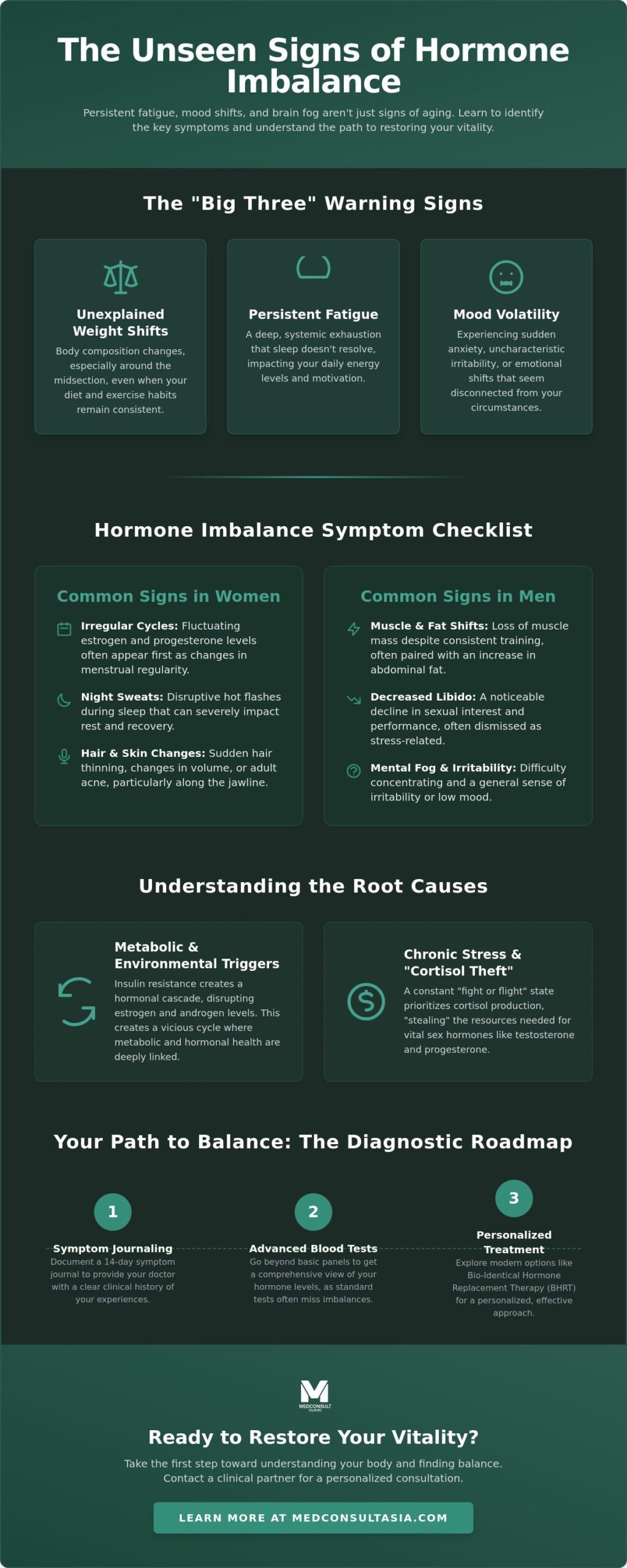
The “Big Three” indicators are often the most disruptive to daily life. Unexplained weight changes are a hallmark sign; you might find that your body composition is shifting, particularly around the midsection, even if your diet remains unchanged. Persistent fatigue follows closely. This isn’t just “feeling tired” after a long day. It’s a deep, systemic exhaustion that sleep doesn’t fix. Finally, mood volatility, ranging from sudden anxiety to uncharacteristic irritability, often points toward a chemical imbalance rather than a personality shift.
Physical markers provide visible clues that something is wrong. Watch for changes in your skin’s texture or sudden adult acne along the jawline. Hair thinning or a noticeable change in how you handle the tropical heat can also be telling. If you’re suddenly reaching for the air conditioning more often or feeling unusually cold in a temperate room, your thyroid or cortisol levels might be the cause. These shifts also disrupt sleep architecture, leaving you awake at 3:00 AM or struggling with “brain fog” that makes simple cognitive tasks feel monumental.
Common Symptoms for Women
For women, the transition into perimenopause or menopause brings distinct shifts. Irregular cycles are often the first sign that estrogen and progesterone levels are fluctuating. You might experience night sweats that disrupt your rest or sudden changes in hair volume. Adult acne is another common indicator, often appearing as hormonal ratios change. These symptoms aren’t just an inevitable part of aging; they are manageable clinical signs that respond well to targeted care. Exploring your options for menopause treatment in Thailand can help you find the most effective, personalized approach to managing these changes.
Common Symptoms for Men
Men often experience “Andropause” or Low-T more subtly than they expect. A primary sign is the loss of muscle mass despite consistent strength training, often accompanied by an increase in abdominal fat. Decreased libido and changes in sexual performance are significant indicators, yet men often dismiss them as stress-related. Mental fog and a general sense of irritability are also key indicators of testosterone decline. Seeking a professional hormone imbalance treatment can help address these metabolic and physical shifts before they impact long-term health. Learn how BHRT for men is specifically designed to address these hormonal symptoms and restore peak performance.
Understanding the Causes: Why Hormones Become Unbalanced
Your endocrine system acts as a complex communication network. Its primary goal is to maintain homeostasis, a state of internal balance where every physiological process runs smoothly. When this system is disrupted, the effects ripple through your entire body. Understanding these triggers helps determine the most effective hormone imbalance treatment plan for your specific needs.
Metabolic factors play a massive role in this delicate balance. Insulin resistance, for instance, isn’t just about blood sugar. When your body struggles to process insulin, it triggers a cascade that affects other hormones. High insulin levels can signal the ovaries to produce excess androgens or lead to weight gain that further disrupts estrogen levels. This creates a cycle where metabolic health and hormonal health are inextricably linked. Environmental triggers like chronic stress also play a part through the cortisol “theft” effect. When your body is in a constant state of “fight or flight,” it prioritizes cortisol production over sex hormones like progesterone and testosterone. It essentially “steals” the raw materials needed for your vitality to manage your stress instead.
Life Stages and Hormonal Shifts
Hormonal decline is a natural part of aging, but “natural” doesn’t have to mean “unavoidable.” Most people begin to see a gradual decline in key hormones starting in their mid-30s. This shift often happens so slowly that you might not notice it until the symptoms become disruptive. It’s helpful to weigh the Hormone therapy benefits and risks when considering how to manage these changes. Even if a decline is age-related, it can still be treated to significantly improve your quality of life and energy levels. Sudden lifestyle changes, such as extreme dieting or a move to a high-stress environment like Bangkok, can also shock the endocrine system into an early or more severe imbalance.
Medical Conditions That Disrupt Balance
Several clinical conditions can throw your system off track. Thyroid disorders are among the most common. Hypothyroidism slows your metabolism, while hyperthyroidism sends it into overdrive. Both conditions affect everything from your heart rate to your hair growth. Polycystic Ovary Syndrome (PCOS) is another significant disruptor, often driven by the relationship between the ovaries and insulin. We also see many patients dealing with adrenal insufficiency. While the term “adrenal fatigue” is often used in wellness circles, the clinical reality is that overtaxed adrenal glands struggle to produce the necessary levels of cortisol and aldosterone. When medical conditions are the root cause, a clinical hormone imbalance treatment becomes essential for restoring long-term health. If you’re feeling the effects of these shifts, you can book a consultation with our experts to begin your diagnostic journey.
The Diagnostic Roadmap: Clinical Steps for Hormone Imbalance Treatment
Moving from noticing symptoms to taking clinical action requires a structured approach. Your journey begins with documentation. Before your appointment, keep a 14-day symptom journal. Note your energy levels, sleep quality, and mood shifts throughout the day. This provides your physician with a longitudinal view of your health that a single snapshot cannot capture. It helps distinguish between a temporary dip in energy and a chronic hormonal pattern.
The next step is a thorough physical examination. A doctor looks for clinical markers beyond what blood work shows. They may check for thyroid enlargement, skin elasticity, or specific patterns of hair thinning. These physical clues often guide the selection of specific laboratory tests. Once the physical baseline is set, we move to comprehensive blood panels. For effective hormone imbalance treatment, a basic screening isn’t enough. We need to look at the interactions between different systems rather than viewing hormones in isolation.
Interpreting these results is where clinical expertise becomes vital. Many patients are told their results are “within range,” yet they still feel symptomatic. There’s a significant difference between a “normal” range and an “optimal” level. A laboratory range is often a broad statistical average. An optimal level is the specific point where you feel your best and your body functions at its peak. We focus on reaching those optimal markers to restore your vitality.
Essential Hormone Markers to Test
To get a full picture of your endocrine health, we typically look at three main categories of markers:
- Thyroid Panel: We test TSH, Free T3, and Free T4. Testing TSH alone often misses subtle cases of hypothyroidism.
- Sex Hormones: This includes measuring Estrogen, Progesterone, and both Free and Total Testosterone. These ratios are crucial for mood and metabolic health.
- Metabolic Markers: We monitor Fasting Insulin, Cortisol, and Vitamin D3. These levels directly impact how your body utilizes other hormones.
Why Professional Consultation is Non-Negotiable
It’s tempting to try over-the-counter supplements to fix a perceived imbalance. However, self-treating can be dangerous. Taking the wrong dose of a “natural” hormone can suppress your body’s own production or create a secondary imbalance. A specialist correlates your lab data with your unique physical symptoms to create a safe, effective plan. When preparing for your doctor consultation, ask about the specific delivery methods for therapy and how often your levels will be re-tested. This ensures your treatment remains precise and responsive to your body’s needs.
Modern Treatment Options: BHRT and Metabolic Support
Hormone therapy has evolved significantly over the last few decades. We’ve moved away from standard, synthetic options toward more precise, personalized protocols that respect your body’s unique chemistry. Modern hormone imbalance treatment focuses on restoring your specific levels using substances that are biologically identical to what you produce naturally. This shift ensures a smoother transition and fewer side effects than older, one-size-fits-all methods.
Every patient is unique. A protocol that works for one person might be completely ineffective for another. This is why personalized medicine is the cornerstone of our approach. We prioritize constant monitoring and data-driven adjustments. Your levels change as you progress through therapy, so your treatment must remain responsive. Regular follow-up testing allows us to fine-tune your dosage, ensuring you stay in that “optimal” zone rather than just falling within a broad laboratory range.
Bio-Identical Hormone Replacement Therapy (BHRT)
Bio-Identical Hormone Replacement Therapy (BHRT) differs from traditional HRT due to its molecular similarity. These hormones are derived from plant sources and share the exact structure of the hormones your body naturally creates. For women, this means significant relief from menopause symptoms while supporting bone density and cardiovascular health. Women seeking comprehensive menopause treatment in Thailand will find that BHRT offers a highly personalized path to managing symptoms like hot flashes, mood changes, and bone loss. For men, BHRT for men is essential for restoring muscle tone, mental clarity, and the vitality that often declines with age. Because the body recognizes these molecules as its own, the absorption is typically more efficient and better tolerated.
Medical Weight Management as Hormone Support
There is a direct, physiological link between weight and hormonal health, often referred to as the “Obesity-Hormone Loop.” Adipose tissue is metabolically active; it produces estrogen and can drive systemic insulin resistance. Addressing weight is often a core component of a successful hormone imbalance treatment. Modern medical options like Mounjaro Thailand help reset insulin sensitivity by mimicking natural gut hormones. Tirzepatide supports the body in achieving a healthy weight, which in turn allows your natural hormone production to stabilize. Medical supervision is vital when using these metabolic supports to ensure your blood work and energy levels remain balanced throughout your journey.
If you’re ready to break the cycle of fatigue and weight gain, schedule a consultation with our medical team to discuss a personalized plan tailored to your lifestyle in Thailand.
Choosing Your Clinical Partner for Hormone Health
Selecting a healthcare provider for hormone imbalance treatment is a decision that impacts your long-term quality of life. In Thailand’s private medical sector, you have many options, but the most effective care comes from a partner who prioritizes transparency and clinical expertise. You need a clinic that doesn’t just provide a prescription but acts as a guide through the complexities of endocrine health. This means having access to doctors who explain the “why” behind every test result and treatment adjustment.
Clear communication is non-negotiable when discussing complex health data. For the international community in Bangkok, English-speaking doctors are essential for ensuring that nothing is lost in translation. You should feel comfortable asking detailed questions about your hormone levels and the metabolic markers we’ve discussed. A “patient-first” approach means your treatment plan is truly customized to your lifestyle, body chemistry, and specific health goals. It’s not about following a rigid protocol; it’s about finding the precise balance that works for you.
The logistics of care should be as hassle-free as possible. Your time is valuable, so look for a clinic that offers easy online booking and responsive follow-up support. Effective hormone management requires regular check-ins and blood work, so a well-managed, organized clinic makes the journey toward vitality much easier to maintain. You’re looking for a collaborative partner, not a paternalistic medical authority.
The MedConsult Clinic Difference: Expert Care in Thailand
At MedConsult Clinic, we bridge the gap between high-level clinical care and the practical needs of a diverse population. Our team includes UK-trained physicians who adhere to international medical standards, ensuring you receive world-class care right here in Bangkok. We take a comprehensive approach to wellness, seamlessly combining BHRT Services with health check-ups and weight loss management to address your health from every angle. Our commitment to discreet, professional, and non-judgmental care means you can discuss your symptoms and goals with complete peace of mind.
Taking the First Step to Balance
Preparing for your initial hormone health screening is straightforward. Bring the 14-day symptom journal we recommended earlier and a list of any current supplements or medications you’re taking. During your first 30-minute consultation, we’ll review your clinical history, discuss your symptoms in detail, and determine which specific blood panels are necessary for your diagnostic roadmap. We focus on efficiency and clarity, moving you from a state of inquiry to a state of confidence in your treatment plan.
Ready to restore your balance? Book your professional consultation today and take the first step toward reclaiming your vitality.
Reclaim Your Vitality and Internal Balance
You don’t have to accept persistent fatigue or metabolic shifts as your new normal. By moving from simply noticing symptoms to following a structured diagnostic roadmap, you can uncover the specific data needed to restore your health. Whether you’re navigating perimenopause, andropause, or metabolic resistance, a clinical approach ensures your journey is both safe and effective.
MedConsult Clinic, led by UK-trained Dr. Donna Robinson, has supported the international community in Thailand for over 20 years. We specialize in advanced hormone imbalance treatment using personalized BHRT and Mounjaro protocols tailored to your unique physiology. Our team provides the transparency and medical expertise you need to feel confident and informed throughout your wellness journey.
Book Your Hormone Health Consultation Now and begin your path back to feeling like yourself again. We’re here to support you with professional, patient-centered care.
Frequently Asked Questions
What is the most effective hormone imbalance treatment?
The most effective hormone imbalance treatment is a personalized protocol that addresses your specific deficiencies while managing your metabolic health. This often involves Bio-Identical Hormone Replacement Therapy (BHRT) because it uses molecules that are chemically identical to your body’s natural hormones. By tailoring the dosage to your unique blood work and symptoms, we ensure better absorption and fewer side effects than standardized, one-size-fits-all medical approaches.
Can I treat a hormonal imbalance naturally without medication?
You can manage mild imbalances naturally through stress reduction, improved sleep, and targeted nutrition. However, if your hormone levels have significantly declined due to age or medical conditions, lifestyle changes alone may not be enough to restore optimal function. In these cases, medical intervention provides the necessary foundation, while natural habits support the long-term success of your treatment and overall endocrine health.
How long does it take to see results from BHRT?
Most patients begin to notice improvements in energy and mood within 2 to 4 weeks of starting therapy. However, it typically takes 3 to 6 months for your body to fully stabilize and for the most significant benefits, like changes in body composition or bone density, to become apparent. We conduct regular follow-up testing during this period to fine-tune your dosage and ensure you’re reaching your optimal levels.
Is hormone replacement therapy safe for long-term use?
Hormone replacement therapy is considered safe for long-term use when it’s monitored by a medical professional and tailored to your specific health profile. Recent clinical evidence led the FDA to remove certain black box warnings from many hormone products in February 2026, reflecting a more nuanced understanding of their safety. Regular screenings and blood work are essential to ensure the therapy continues to provide benefits while minimizing any potential risks as you age.
Does insurance cover hormone imbalance testing and treatment?
Coverage for hormone testing and treatment varies significantly depending on your specific insurance provider and policy. In Thailand, many international health insurance plans cover diagnostic blood work and doctor consultations if they’re deemed medically necessary. However, elective metabolic treatments or custom-compounded hormones are often out-of-pocket expenses. It’s best to check with your insurer or our clinic staff to understand your specific coverage options.
How do I know if my weight gain is caused by hormones or diet?
Clinical testing is the only definitive way to determine if your weight gain is driven by hormonal shifts rather than caloric intake. If you’re gaining weight despite a consistent diet and exercise routine, it’s often a sign of insulin resistance or declining thyroid and sex hormones. We look for metabolic markers like fasting insulin and cortisol to see if your body’s fat-storage signals are stuck in the “on” position.
What is the difference between synthetic HRT and BHRT?
The primary difference lies in the molecular structure of the hormones used. Synthetic HRT uses hormones that are similar but not identical to those produced by the human body, often derived from animal sources. BHRT uses plant-derived hormones that are chemically indistinguishable from your own. This molecular match allows your body to process the hormones more naturally, which often leads to a better patient experience and fewer unwanted side effects.
What happens if a hormonal imbalance is left untreated?
Leaving a hormonal imbalance untreated can lead to chronic health complications that extend far beyond simple fatigue. Over time, low levels of protective hormones increase the risk of osteoporosis, cardiovascular disease, and cognitive decline. It can also cause persistent metabolic dysfunction, making it increasingly difficult to maintain a healthy weight or manage stress, which significantly impacts your overall quality of life and long-term vitality.