
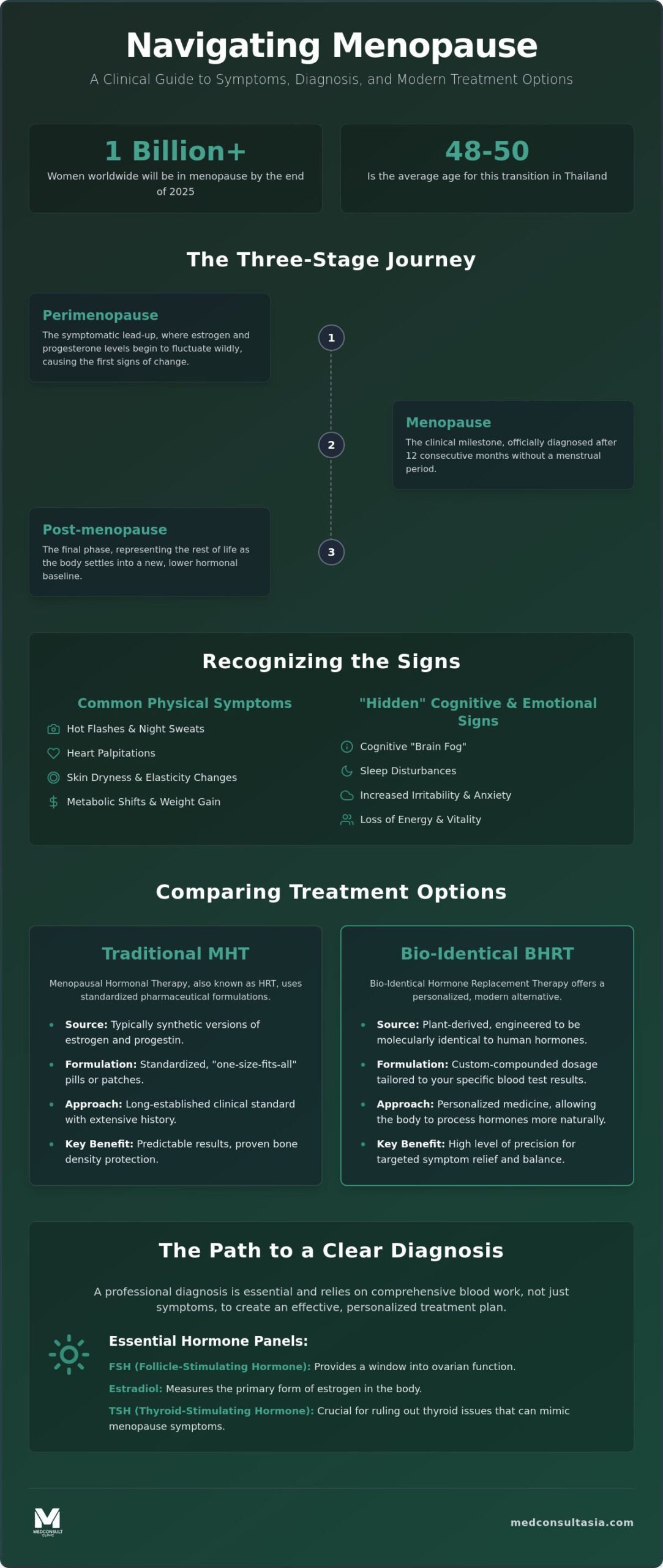
Did you know that by the end of 2025, over a billion women worldwide will have entered menopause? In Thailand, where the average age for this transition is between 48 and 50, many women find themselves searching for effective menopause treatment to manage unexpected weight gain and a frustrating loss of energy. It’s common to feel overwhelmed by conflicting safety reports or the challenge of finding English-speaking specialists who truly listen. You deserve a healthcare experience that feels supportive rather than clinical.
We understand that hormonal changes can feel like losing a part of yourself, but it’s possible to restore your balance and vitality. This guide explores the most effective medical options available in Thailand for 2026, from personalized lifestyle strategies to advanced hormone therapies. You’ll gain a clear understanding of the differences between BHRT and MHT, learn about the latest clinical guidelines from the Thai Menopause Society, and discover how to access Western-standard consultations. We’re here to help you move from a state of uncertainty to a place of total confidence in your health journey.
Key Takeaways
- Understand the three distinct stages of the menopausal transition and how to recognize “hidden” symptoms like cognitive fog and metabolic shifts.
- Compare the benefits of traditional MHT versus Bio-Identical Hormone Replacement Therapy (BHRT) to determine which menopause treatment path fits your goals.
- Gain clarity on the safety of modern hormone therapies by reviewing the latest research on risk mitigation and the “window of opportunity” for heart health.
- Discover how to manage the “menopause middle” using a combination of targeted nutritional strategies and modern medical weight management tools.
- Learn the exact process for securing a comprehensive hormonal consultation in Bangkok that meets international standards for personalized care.
Understanding the Menopause Transition: Symptoms and Diagnosis
Menopause isn’t an overnight event; it’s a profound biological shift that usually spans several years. Understanding Menopause requires looking at the transition as a three-part journey. It begins with perimenopause, continues through the clinical milestone of menopause, and settles into post-menopause. Each phase brings unique challenges, making it vital to identify where you are in the process to choose the most effective menopause treatment. Identifying these stages early allows you to manage symptoms before they become overwhelming.
Perimenopause is the symptomatic lead-up to the final menstrual period. During this time, your body’s production of estrogen and progesterone begins to fluctuate wildly. Menopause itself is officially diagnosed only after you’ve gone 12 consecutive months without a period. Post-menopause follows, representing the rest of your life as your body finds a new, albeit lower, hormonal baseline. While hot flashes and night sweats are the most recognized signs, many women experience “hidden” symptoms that are easily misattributed. Cognitive “brain fog,” sudden anxiety, and heart palpitations can be just as disruptive as physical changes. These shifts often happen gradually, making them difficult to track without professional guidance.
Identifying Perimenopause and Menopause Symptoms
Physical symptoms often manifest as night sweats that disrupt sleep, heart palpitations that cause sudden alarm, and changes in skin elasticity or dryness. The emotional impact is equally significant. Many women report increased irritability, sleep disturbances, and a new sense of anxiety that feels disconnected from their daily life. Recognizing these as hormonal rather than personal failings is the first step toward relief. Because these symptoms overlap with many other health conditions, a professional clinical diagnosis is essential to ensure you aren’t overlooking other underlying issues.
Diagnostic Testing: FSH, Estrogen, and Thyroid Panels
A professional diagnosis relies on more than just a list of symptoms. We use specific blood work to measure Follicle-Stimulating Hormone (FSH) and Estradiol levels, which provide a window into your ovarian function. It’s also critical to check Thyroid-Stimulating Hormone (TSH). Thyroid issues, particularly hyperthyroidism, can mimic menopause symptoms like hot flashes and a racing heart. Testing during perimenopause requires expert interpretation because hormone levels can fluctuate significantly from one day to the next. A single snapshot isn’t enough; you need a comprehensive view to build a personalized menopause treatment plan that works for your specific biology and restores your quality of life.
Comparing Menopause Treatment Options: MHT vs. BHRT
Choosing the right path for menopause treatment involves understanding the two primary medical approaches available today. While traditional therapy has been the clinical standard for decades, modern bio-identical options offer a more personalized alternative. Your choice depends on your specific symptoms, medical history, and long-term wellness goals. It’s about finding a solution that fits your lifestyle while ensuring your safety and comfort.
Traditional Menopausal Hormonal Therapy (MHT)
Traditional MHT, often referred to as Hormone Replacement Therapy (HRT), utilizes standardized pharmaceutical formulations. These treatments typically involve synthetic versions of estrogen and progestin. They’re highly effective at providing relief from vasomotor symptoms like hot flashes and are widely recognized for their ability to protect bone density. Because these are FDA-approved hormone therapies, they follow strict manufacturing protocols and offer predictable results for many women. This approach remains a common clinical choice due to its extensive history and proven efficacy in managing the physical milestones of aging.
The Rise of Bio-Identical Hormone Replacement Therapy (BHRT)
BHRT has gained significant popularity in Thailand’s private healthcare sector. Unlike synthetic hormones, bio-identical hormones are plant-derived and engineered to match the molecular structure of human hormones exactly. This precise match allows the body to process them more naturally. One of the biggest advantages of BHRT for women is the ability to customize the dosage. Instead of a “one size fits all” pill, your treatment is tailored to your specific blood test results. This level of precision is why many women now view BHRT as a cornerstone of modern aging management.
The way you receive these hormones also varies. Traditional MHT is frequently prescribed as oral tablets, which are convenient but must pass through the liver. In contrast, bio-identical menopause treatment often utilizes transdermal delivery methods like gels and creams. These are applied directly to the skin, allowing the hormones to enter the bloodstream directly. This method can often reduce the risk of certain side effects while providing a steady release of the active ingredients throughout the day.
Deciding between these options doesn’t have to be confusing. Whether you prioritize the long-standing clinical data of traditional MHT or the personalized precision of BHRT, the goal is to restore your hormonal balance comfortably. If you’re ready to explore which option is right for you, you can book a consultation with our medical team to discuss your unique needs and start your journey toward feeling like yourself again.
Safety and Risks: Addressing Common Hormone Therapy Concerns
Safety is the most common concern for women considering menopause treatment. Many fears stem from outdated studies that didn’t account for the timing of therapy or the specific types of hormones used. Today, the medical consensus has shifted significantly. Current research suggests that for most healthy women, the benefits of symptom relief and long-term health protection far outweigh the potential risks. We prioritize transparency, ensuring you have the facts to make an informed decision about your body.
When discussing Hormone Therapy for Menopause, it’s essential to distinguish between different patient profiles. For instance, women who still have a uterus must take progestin alongside estrogen. This combination protects the uterine lining from thickening, which can occur with estrogen-only therapy. While no medical intervention is entirely without risk, modern formulations and delivery methods have made therapy safer than ever before. However, hormonal menopause treatment isn’t for everyone. Women with a history of blood clots, active liver disease, or certain hormone-sensitive cancers should typically avoid these options. We conduct a thorough medical history review to identify these contraindications early in the process.
Understanding the Window of Opportunity
Timing is everything. Starting treatment before age 60 or within 10 years of the onset of menopause is often called the “Window of Opportunity.” Research indicates that initiating therapy during this specific period significantly reduces cardiovascular risks and supports long-term heart health. It also provides neuroprotective benefits that help maintain cognitive function. Early intervention maximizes bone density protection. By catching hormonal shifts early, you’re not just treating symptoms; you’re investing in your future vitality. For those looking to further support their long-term health with advanced research tools, you can read more about specialized peptide protocols.
Individualized Risk Assessment and Monitoring
We don’t believe in a one-size-fits-all approach to wellness. Before you begin any program, we perform personalized screenings for breast and uterine health to establish a safe baseline. Once therapy starts, long-term monitoring becomes our priority. Regular blood tests allow us to ensure your hormone levels stay within the “optimal” range, rather than just the “normal” range. This data-driven approach lets us adjust your dosage as your body settles into its new balance. You can also explore natural lifestyle shifts to support hormone imbalance treatment, such as targeted nutrition and stress management, which work alongside your clinical care to produce the best results.
A Holistic Resource: Managing Symptoms Beyond Hormones
While hormonal balance is a major piece of the puzzle, a truly comprehensive menopause treatment includes addressing the metabolic and lifestyle shifts that occur during this transition. Many women find that even with stable hormone levels, they still struggle with changes in body composition or sleep quality. By adopting a holistic approach, you can manage these symptoms more effectively and improve your overall quality of life. This means looking at nutrition, movement, and medical support as an integrated system rather than isolated fixes.
Weight Management and Metabolic Health
One of the most frustrating aspects of this stage of life is the “menopause middle.” As estrogen declines, your body naturally shifts where it stores fat, often favoring the abdominal area. This isn’t just about aesthetics; it’s a metabolic change that can increase health risks like insulin resistance. For women facing significant metabolic challenges, modern medical interventions like Mounjaro Thailand offer a powerful tool for weight management. These treatments work by regulating appetite and improving how your body processes insulin, providing a bridge to better health when diet alone isn’t enough. Alongside medical support, prioritizing high-quality protein and calcium-rich foods is essential for maintaining muscle mass and bone density. Strength training also plays a critical role by boosting your metabolism and preserving the lean tissue that often declines with age.
Lifestyle and Environmental Adjustments
Environmental adjustments can also provide immediate relief from daily discomfort. Simple cooling strategies, like using moisture-wicking bedding or portable fans, can make a significant difference in managing vasomotor symptoms. Physical activity is another non-negotiable pillar of long-term health. Weight-bearing exercises, such as walking or resistance training, are vital for preventing osteoporosis and keeping your joints mobile. We also address often-overlooked concerns like vaginal health. Non-hormonal moisturizers and low-dose creams can restore comfort without systemic effects, ensuring that every aspect of your well-being is cared for. Integrating stress management techniques like mindfulness or improved sleep hygiene further supports your body’s transition. If you’re looking for a personalized menopause treatment plan that goes beyond the basics, you can schedule a consultation with our experts to discuss a holistic strategy tailored to your lifestyle.
Personalized Menopause Care at MedConsult Clinic
Finding a trusted partner for menopause treatment shouldn’t be a source of stress, especially when you’re living in a foreign country. At MedConsult Clinic, we’ve built our practice around the specific needs of the international community in Thailand. Led by Dr. Donna Robinson, a UK-trained physician with decades of experience, we provide a bridge between high-level clinical expertise and the practical, everyday needs of our patients. Our goal is to make your healthcare journey as smooth and transparent as possible, removing the psychological barriers often associated with medical procedures.
Our process is methodical and data-driven. We don’t guess when it comes to your health. Every personalized plan begins with the comprehensive blood panels we discussed earlier, measuring FSH, Estradiol, and TSH to establish your unique hormonal baseline. By analyzing these results alongside your symptom profile, we can craft a strategy that specifically addresses your needs. This isn’t a one-time transaction; it’s an ongoing partnership. As your body settles into its new balance, we schedule regular follow-ups to adjust your therapy, ensuring you continue to feel your best without any unnecessary pressure or aggressive sales tactics.
Your Consultation with an English-Speaking Physician
Communication is the foundation of effective care. We offer a non-judgmental, patient-centered environment where you can speak openly about your symptoms, from physical discomfort to emotional shifts. During your initial consultation, we’ll review your full medical history and discuss the various options we’ve covered, such as the differences between synthetic MHT and bio-identical structures. We focus on creating a “hassle-free” experience, ensuring you leave with a clear roadmap and no unanswered questions. Our team is highly organized and responsive, valuing your time as much as your health.
Integrating BHRT and Wellness
We believe that hormonal health is just one part of a larger wellness picture. That’s why we often combine BHRT services with broader health check-ups and aesthetic care, such as Botox and fillers, to help you look as vibrant as you feel. We also recognize that hormonal shifts affect everyone in a household; we offer specialized treatments like BHRT for men to support the health and performance of your partner as well. For partners experiencing symptoms like unexplained fatigue, muscle loss, or brain fog, our testosterone therapy program offers a clinically supervised path to restoring vitality and hormonal balance. This integrated approach ensures that you can navigate the challenges of aging with vitality and confidence. When you’re ready to take the next step in your menopause treatment journey, you can easily book your appointment online or reach out to us via WhatsApp for a quick, professional response.
Take Control of Your Hormonal Health Today
Embracing this new chapter doesn’t have to mean compromising on your quality of life. Modern menopause treatment in Thailand has evolved into a highly personalized and safe experience. By combining advanced BHRT services with medical weight loss and holistic lifestyle strategies, you can effectively manage symptoms like brain fog and metabolic changes. You don’t have to navigate these shifts alone or settle for “one size fits all” solutions that don’t address your unique biology.
At MedConsult Clinic, we prioritize your comfort and clarity above all else. Led by UK-trained Dr. Donna Robinson, our team has spent over 20 years serving Thailand’s international community with transparent, expert care. Whether you’re interested in specialized BHRT or our medical weight loss programs, we’re here to provide the supportive, English-speaking environment you deserve. It’s time to restore your hormonal balance and rediscover your vitality with a partner you can trust.
Book Your Personalized Menopause Consultation at MedConsult Clinic and start your journey toward a more balanced, energetic future.
Frequently Asked Questions
What is the best menopause treatment for someone with a family history of cancer?
The best approach for those with a family history of cancer is a highly individualized risk assessment. While some women may still be candidates for specific transdermal therapies, others find relief through non-hormonal medications or targeted lifestyle shifts. We review your family history in detail to determine if hormonal menopause treatment is appropriate or if alternative strategies would be safer for your specific profile. Safety is always our primary concern.
How long can I safely stay on hormone replacement therapy?
There’s no longer a strict five-year limit for how long you can stay on hormone therapy. Most medical guidelines suggest that you can continue treatment as long as the benefits for symptom control and bone protection outweigh your individual risks. We recommend annual reviews to reassess your health status and adjust your dosage. This ensures your program remains safe and effective as you move through different stages of post-menopause.
Can I get bio-identical hormones (BHRT) in Thailand?
Yes, you can easily access bio-identical hormone replacement therapy (BHRT) across Thailand’s private medical sector. These plant-derived hormones are chemically identical to those your body produces, allowing for a more natural integration. At our clinic, we specialize in tailoring these treatments to your specific blood test results. This personalized approach is a popular choice for international patients seeking Western-standard care while living or traveling in Bangkok.
What is the difference between perimenopause and menopause treatment?
Perimenopause treatment usually focuses on managing the rollercoaster of fluctuating hormones, often using low-dose options to stabilize cycles and mood. In contrast, menopause treatment is designed to replace hormones that your body has almost entirely stopped producing. While perimenopause care targets the transition, menopause care focuses on long-term symptom relief and protecting your heart and bone health for the decades ahead.
Will menopause treatment help me lose weight?
Hormone therapy isn’t a primary weight loss solution, but it can help stabilize your metabolism by restoring hormonal balance. Many women find it easier to manage their weight once their sleep and energy levels improve. For those struggling with the “menopause middle,” we often combine these services with medical weight loss options like Mounjaro to achieve more significant metabolic results. It’s about creating a comprehensive plan that works for your body.
Are there non-hormonal options for treating hot flashes?
There are several effective non-hormonal options for managing hot flashes if you cannot or choose not to use hormones. Certain low-dose medications, such as SSRIs or SNRIs, have been clinically proven to reduce the frequency and severity of vasomotor symptoms. Additionally, lifestyle adjustments like improving sleep hygiene and using targeted nutritional supplements can provide relief. We help you explore these alternatives to find a solution that fits your specific health profile.
How do I know if my hormone levels are low enough for treatment?
We determine if you need treatment by combining comprehensive blood panels with a detailed evaluation of your symptoms. While tests for FSH and Estradiol provide important data, your physical and emotional experiences are equally vital. If you’re experiencing night sweats, brain fog, or extreme fatigue, these are strong indicators that your levels may be clinically low for your body’s needs, regardless of where you fall on a generic lab range.
What are the first signs that menopause treatment is working?
The first signs that your treatment is working are typically an improvement in sleep quality and a reduction in the intensity of night sweats. Many patients report feeling more like themselves within the first few weeks as their mood stabilizes and brain fog begins to lift. While physical changes like skin elasticity take longer to notice, the restoration of your energy and emotional balance is often the most immediate and welcome benefit.