
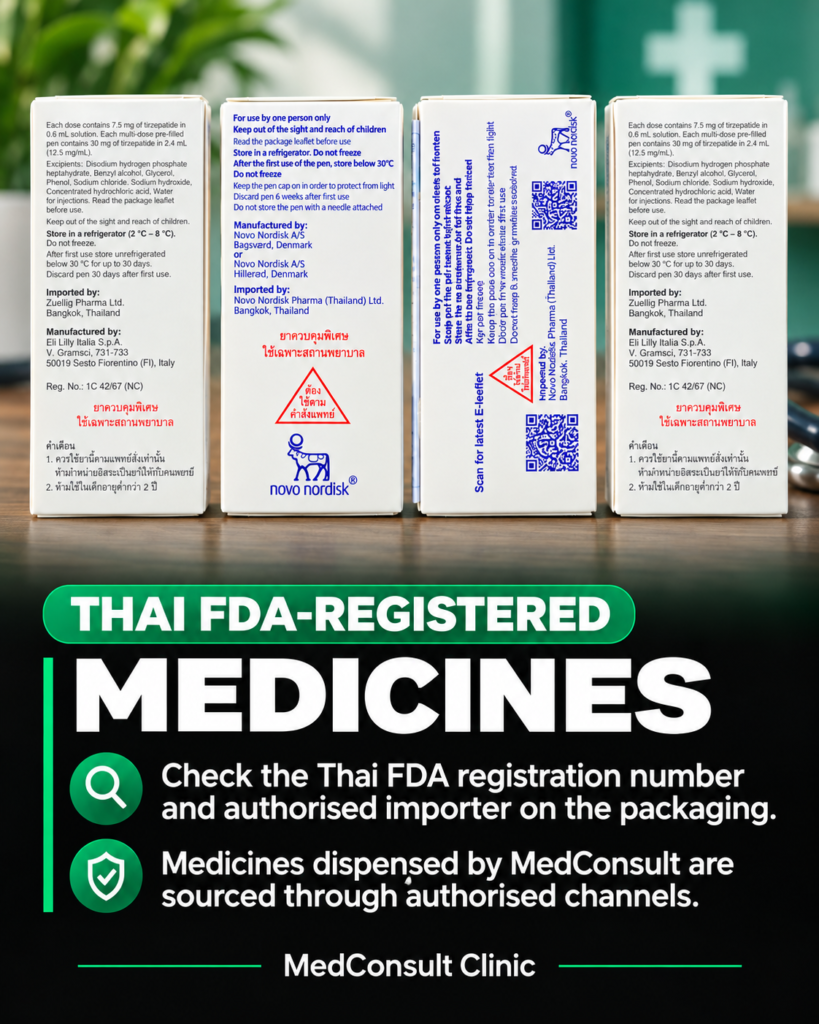
Weight Loss Pens in Thailand Require a Doctor’s Prescription
Weight loss injection pens have become increasingly popular in Thailand, with many people searching online for treatments that may help with appetite control and weight management.
However, these medications are not ordinary weight-loss products. They are prescription medicines that affect important biological pathways involving appetite, digestion, and blood sugar regulation.
The Thai Food and Drug Administration (FDA) has announced a new regulation stating that weight loss injection pens containing GLP-1 receptor agonists are classified as specially controlled medicines and require a doctor’s prescription. The regulation takes effect from 15 September.
The change follows concerns about inappropriate use, unregistered sales, and patients obtaining injectable weight-loss medicines without proper medical assessment.
For patients considering weight loss injections in Thailand, understanding the new rules and the reason behind them is an important step toward safer treatment.
What Are Weight Loss Injection Pens?
Weight loss injection pens are pre-filled injection devices containing medications that may support weight management.
Many of these medicines belong to a group called GLP-1 receptor agonists.
GLP-1 stands for glucagon-like peptide-1, a hormone naturally produced in the body.
GLP-1 helps regulate:
- Appetite
- Feeling full after eating
- Blood sugar control
- Digestion
- Insulin response
Some commonly discussed GLP-1 medicines include:
- Liraglutide
- Semaglutide
Newer medications may also act on additional hormone pathways involved in metabolism.
Why Did Thailand Introduce Prescription Requirements?
The popularity of weight loss injection pens has increased rapidly, especially through online platforms and social media.
However, the Thai FDA raised concerns about:
- Use without medical assessment
- Incorrect dosing
- Unregistered products
- Unauthorised online sales
- Patients changing doses themselves
- Products from unknown sources
These medicines can affect appetite, digestion, blood sugar, and other aspects of health.
Using them without understanding whether they are medically suitable may increase the risk of side effects or inappropriate treatment.
The new regulation aims to ensure that patients receive appropriate medical evaluation before starting treatment.
What Does the New Rule Mean for Patients?
Under the new regulation:
- Weight loss injection pens containing GLP-1 receptor agonists require a doctor’s prescription
- They should be supplied through appropriate pharmacy channels
- Patients should receive medical assessment before treatment
This means patients should no longer treat weight loss pens as products that can simply be purchased online without consultation.
A prescription helps ensure that a doctor has reviewed:
- Medical history
- Current medications
- Weight-related health risks
- Possible side effects
- Treatment suitability
Are Weight Loss Injection Pens Banned in Thailand?
No.
The new regulation does not mean that weight loss injection pens are banned.
Patients who are medically suitable may still receive treatment through appropriate healthcare channels.
The purpose of regulation is to improve:
- Patient safety
- Medication quality control
- Supply chain monitoring
- Appropriate prescribing
The goal is safer access, not preventing patients who need treatment from receiving it.
Why GLP-1 Medicines Need Medical Supervision
GLP-1 medications are not suitable for everyone.
Before starting treatment, doctors may consider:
Medical History
Including:
- Previous illnesses
- Digestive conditions
- Endocrine conditions
- Previous medication reactions
Weight-Related Health Risks
Including:
- BMI
- Waist circumference
- Blood pressure
- Blood sugar levels
- Cholesterol
Current Medications
Some medications or medical conditions may affect whether treatment is appropriate.
What Happens During a Weight Loss Injection Consultation?
A proper consultation usually involves more than choosing a medication.
A doctor may review:
- Your weight history
- Previous attempts to lose weight
- Eating patterns
- Lifestyle factors
- Medical conditions
- Family history
- Current medications
Depending on your situation, additional tests may include:
- HbA1c
- Fasting glucose
- Cholesterol
- Liver function
- Kidney function
This helps create a treatment plan based on your overall health.
What Are the Risks of Buying Weight Loss Pens Online?
Online sellers may advertise weight loss pens at attractive prices, but patients should be careful.
Potential concerns include:
- Counterfeit medication
- Unregistered products
- Incorrect storage
- Expired products
- Unknown supply sources
- Incorrect dosage information
A medicine may look authentic but still have problems with storage, handling, or authenticity.
Prescription medication should come from a trusted medical source.
Why Correct Dosing Matters
One common issue with weight loss injections is patients adjusting their own dose.
Examples of unsafe practices may include:
- Increasing the dose faster than recommended
- Using a stronger pen to create another dose
- Sharing medication
- Changing treatment without medical advice
Dose selection depends on:
- Individual response
- Side effects
- Medical history
- Treatment goals
A dose that works for one patient may not be appropriate for another.
What Are Common Side Effects of GLP-1 Weight Loss Injections?
Because GLP-1 medicines affect digestion and appetite, common side effects may include:
- Nausea
- Vomiting
- Constipation
- Diarrhoea
- Bloating
- Reduced appetite
- Stomach discomfort
Many patients experience these effects when starting treatment or changing doses.
A doctor can help manage side effects and determine whether adjustments are needed.
Who May Benefit From Weight Loss Injection Treatment?
Weight loss injections may be considered for selected patients who need medical support.
A doctor may consider:
- Obesity
- Overweight with health risks
- Difficulty losing weight through lifestyle changes alone
- Insulin resistance
- Prediabetes
- Weight-related conditions
However, medication is not the right choice for everyone.
Some patients may benefit from:
- Nutrition guidance
- Exercise planning
- Health monitoring
- Lifestyle changes alone
What a Doctor May Assess
A doctor-led weight management approach may include:
- Medical consultation
- BMI assessment
- Weight history review
- Waist circumference
- Blood pressure
- Blood tests if needed
- HbA1c testing
- Cholesterol testing
- Liver and kidney function
- Medication review
- Treatment suitability
- Side-effect monitoring
- Follow-up planning
Benefits of Proper Medical Supervision
Medical supervision helps patients:
- Use appropriate medication
- Understand realistic expectations
- Manage side effects
- Monitor health changes
- Avoid unsafe products
- Adjust treatment safely when needed
Weight management is a long-term process, not simply a choice of injection.
Why Doctor-Led Care Matters
Weight loss injections affect the body’s hormone pathways and metabolism.
A doctor can help answer important questions:
- Is this treatment suitable for me?
- Which option is appropriate?
- Are my symptoms related to medication?
- Do I need blood tests?
- How should progress be monitored?
This ensures treatment decisions are based on health needs rather than online trends.
Book a Weight Loss Consultation in Bangkok
If you are considering weight loss injection pens in Thailand, MedConsult Clinic provides doctor-led weight management consultations in Bangkok.
Our medical team can assess your health history, weight goals, metabolic health, and treatment options before starting prescription medication.
The goal is to provide safe, personalised weight management based on your individual needs.
Frequently Asked Questions
Are weight loss injection pens still available in Thailand?
Why do weight loss injections need a prescription?
Because these medicines affect appetite, digestion, and metabolism. Medical assessment helps ensure they are suitable and used safely
What are GLP-1 receptor agonists?
GLP-1 receptor agonists are medicines that act like the natural hormone GLP-1, which helps regulate appetite and blood sugar.
Can I buy weight loss pens online?
Patients should avoid purchasing prescription injections from unverified sellers because authenticity, storage, and safety cannot always be confirmed.
References
Thai Food and Drug Administration (Thai FDA)
Regulation of GLP-1 receptor agonist weight-loss injection pens requiring prescription and pharmacy dispensing.
U.S. Food and Drug Administration (FDA)
GLP-1 receptor agonist medication safety information.
Wilding JPH, Batterham RL, Calanna S, et al.
Once-Weekly Semaglutide in Adults with Overweight or Obesity.
New England Journal of Medicine. 2021;384:989–1002.
https://doi.org/10.1056/NEJMoa2032183
Jastreboff AM, Aronne LJ, Ahmad NN, et al.
Tirzepatide Once Weekly for the Treatment of Obesity.
New England Journal of Medicine. 2022;387:205–216.