
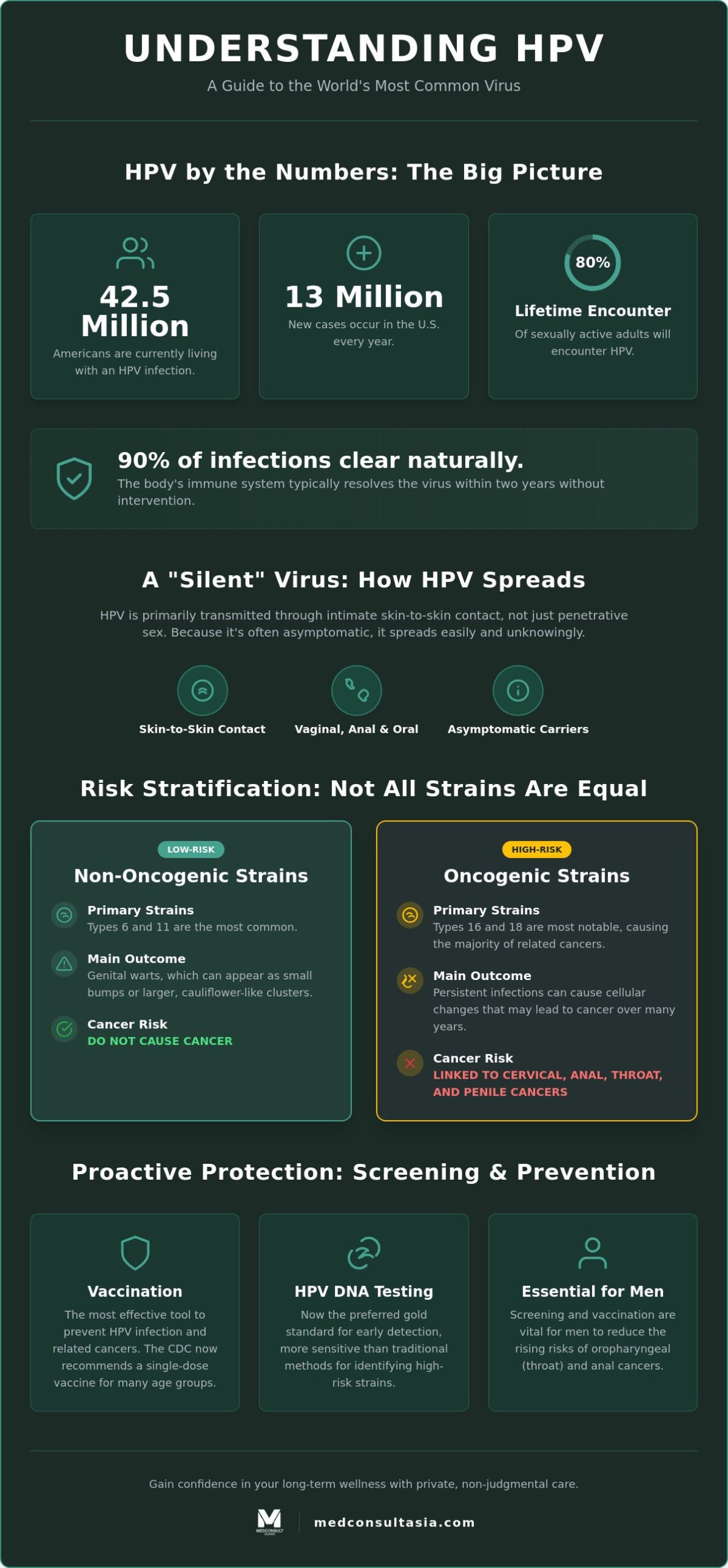
Did you know that an estimated 42.5 million Americans are currently living with an HPV infection? With 13 million new cases occurring every year, this virus is a near-universal reality for most adults at some point in their lives. It’s completely normal to feel a wave of anxiety or even a bit of stigma when you think about the risks. You might worry about a future cancer diagnosis or feel confused by the complex web of different viral strains.
We understand that managing your sexual health can feel overwhelming, especially when medical guidelines seem to evolve so quickly. This comprehensive 2026 guide is designed to replace that fear with clarity and professional insight. You’ll learn the vital differences between high-risk and low-risk strains; discover why the CDC now recommends a single-dose vaccine for many age groups; and find out exactly which screenings you need to stay protected. From the latest FDA-approved self-collection tests to proactive prevention strategies, we’re here to help you move from a state of inquiry to a state of total confidence in your long-term wellness.
Key Takeaways
- Learn why hpv is considered a “silent” virus and how it affects nearly every sexually active adult at some point in their lives.
- Understand the critical difference between high-risk oncogenic strains and low-risk types that primarily cause genital warts.
- Discover why screening and vaccination are essential for men to reduce the rising risks of throat and anal cancers.
- Explore modern diagnostic tools, including why HPV DNA testing is now the preferred gold standard for early detection over traditional methods.
- Gain the confidence to discuss your sexual health in a private, non-judgmental setting with international medical experts who prioritize your privacy.
What is HPV? Understanding the Worlds Most Common Virus
The term Human Papillomavirus (HPV) actually refers to a broad family of more than 200 related viruses. It’s incredibly common. In fact, research suggests that roughly 80% of sexually active adults will encounter at least one type of this virus during their lifetime. In the United States alone, an estimated 42.5 million people are currently infected. Despite these high numbers, hpv remains a “silent” virus for the majority of people. Most individuals never develop symptoms and don’t even realize they’ve been infected. This lack of visible signs is exactly why it spreads so easily across all demographics, often without any warning.
How HPV Spreads and Who is at Risk
It’s a mistake to think this virus only spreads through penetrative sex. It actually travels through simple skin-to-skin contact in the genital area. This means it can be passed during vaginal, anal, or oral contact. Because the virus often lives in the skin without causing any visible marks or discomfort, asymptomatic carriers are the most common source of transmission. You can’t tell if someone has it just by looking. While having multiple partners can increase the likelihood of exposure, the sheer prevalence of the virus means that even those with a single partner can be affected. Your immune system’s strength is also a factor, as a compromised system may have a harder time preventing the virus from taking hold.
The Immune Systems Role in Clearing HPV
The good news is that your body is remarkably good at handling these infections. About 90% of cases are cleared naturally by the immune system within two years. If you receive a positive test result, it doesn’t automatically mean you have a serious health problem or a cancer diagnosis. It often just means the virus is present and your body is in the process of dealing with it. We see many patients who feel immediate panic after a positive result, but it’s vital to remember that most infections are transient. However, in a small percentage of cases, the infection persists. Factors like smoking or high stress can sometimes hinder the body’s ability to clear the virus. These persistent infections are what we monitor closely, as they are the ones that can eventually lead to cellular changes if left unchecked.
Risk Stratification: High-Risk vs. Low-Risk HPV Strains
Risk stratification is simply a medical way of sorting which strains of the virus need the most attention. Not all types of the hpv virus are equal. Most of the 200 plus varieties are completely harmless and often go unnoticed by the body. However, we focus on two main categories: low-risk and high-risk. Understanding this distinction is the first step in moving from a state of worry to a state of proactive health management. It’s about knowing what to monitor and when to take action.
Low-Risk Strains and Genital Warts
Strains 6 and 11 are the primary culprits behind genital warts. These are considered low-risk because they are non-oncogenic, meaning they don’t cause cancer. These growths can appear as small, flesh-colored bumps or larger, cauliflower-like clusters in the genital or anal areas. While they aren’t life-threatening, they can cause significant emotional stress and physical discomfort. We offer various treatments to remove visible warts, such as specialized creams or clinical procedures. It’s important to remember that while we can treat the symptoms, your immune system is what eventually clears the underlying virus. If you’re concerned about new or unusual growths, you can easily book a private consultation with our team to discuss your options in a non-judgmental environment.
High-Risk Strains and Cancer Potential
High-risk strains, most notably types 16 and 18, are oncogenic. They have the potential to cause cancer by lingering in the body and slowly altering the DNA of healthy cells. This progression doesn’t happen overnight. It typically takes years of a persistent infection for these cellular changes to become serious. While cervical cancer is the most well-known risk, these strains are also linked to anal, penile, and oropharyngeal (throat) cancers. Because these high-risk types rarely cause visible symptoms, staying up to date with HPV vaccines and modern testing is the most effective way to protect your long-term health. Regular sexual health screening allows us to catch these subtle cellular shifts early. Catching them early means we can often intervene before cancer has a chance to develop, giving you total peace of mind.
HPV in Men: Breaking the Gender Awareness Gap
For too long, the conversation around hpv has focused almost exclusively on women. This gender gap in awareness often leaves men feeling that the virus isn’t something they need to worry about. The reality is quite different. While men don’t face the risk of cervical cancer, they are increasingly affected by other serious conditions. In fact, oropharyngeal (throat) cancers have become the most common HPV-associated cancers among men in recent years. Anal and penile cancers also remain significant risks that require proactive attention. Awareness is the first step toward protection.
The Difficulty of Testing for Men
One of the biggest challenges for men is the current lack of a standardized, routine screening test. Unlike the Pap smear or HPV DNA tests available for women, there is no FDA-approved test for asymptomatic men. Diagnosis usually happens through clinical observation. A doctor looks for physical signs like warts or lesions during an exam. This makes it vital to monitor your own body for HPV symptoms and causes, such as unusual growths, sores that don’t heal, or persistent throat pain. If you notice anything out of the ordinary, you should seek a doctor consultation immediately. Laboratory testing is typically reserved for cases where symptoms are already present, so early clinical evaluation is your best tool.
Protecting Partners and Personal Health
Vaccination isn’t just about personal safety; it’s about community health. When men get vaccinated, they help build herd immunity, which significantly lowers the overall presence of the virus in the population. In many populations, men act as the primary vectors for high-risk strains, unknowingly carrying and transmitting the virus to their partners. While barrier methods like condoms are helpful, they don’t provide 100% protection because the virus can live on skin not covered by the condom. Open communication with partners and staying up to date with your own health screenings are essential. Our team provides a discreet, English-speaking environment where you can discuss these concerns without any pressure or judgment.
- Monitor for persistent throat pain or difficulty swallowing.
- Check for unusual skin textures or growths in the genital area.
- Discuss vaccination options, even if you’re over the age of 26.
Prevention and Screening: Vaccines and Modern Testing
The way we screen for the hpv virus has changed significantly in recent years. While the traditional Pap smear was once the only tool available, HPV DNA testing is now the gold standard for many age groups. A Pap smear looks for abnormal cell changes on the cervix that have already occurred. In contrast, an HPV test looks for the presence of the virus itself, often identifying a risk before any cellular damage begins. In 2026, medical guidelines emphasize this proactive approach. For women aged 30 to 65, the recommendation is now screening every five years with a high-risk HPV test or co-testing. Younger women aged 21 to 29 are still advised to have a Pap smear every three years.
Vaccination remains our most powerful defense. Gardasil 9 is currently the primary vaccine used globally, offering protection against the nine most common high-risk and wart-causing strains. It is highly effective at preventing the types of hpv that cause most cervical cancers and genital warts. Studies have shown that protection from the 9-valent vaccine lasts for at least 14 years, providing long-term peace of mind. If you are ready to prioritize your prevention plan, you can schedule your vaccination or screening today through our hassle-free booking system.
The HPV Vaccine: Is It Too Late for You?
What to Do if You Test Positive
Receiving a positive result can be a jarring experience. If you find yourself navigating a positive std test thailand, the most important thing is to stay calm. A positive test is not a cancer diagnosis; it’s a signal for closer monitoring. Your doctor might suggest a follow-up procedure called a colposcopy to get a closer look at the cervical tissue. Beyond clinical steps, you can support your immune system’s ability to clear the virus through healthy lifestyle choices. Smoking cessation is particularly critical, as tobacco use can hinder the body’s natural clearing process. Focus on high-quality nutrition and stress management to give your body the best chance at resolving the infection naturally.
Confidential Care: Navigating HPV with MedConsult Clinic
Managing sexual health care in a foreign country adds a layer of complexity to an already personal topic. At MedConsult Clinic, we recognize that the psychological barriers, such as fear of judgment or confusion over local medical systems, can often prevent people from seeking the care they need. Our clinic is designed to be a trusted partner for the international community in Thailand. We provide a space where you can discuss hpv and other concerns with total peace of mind. Our approach is built on transparency, efficiency, and a deep respect for your privacy. We focus on getting you the answers you need without the sterile, intimidating atmosphere found in many traditional hospitals.
A Patient-Centered Approach to Sexual Wellness
Led by UK-trained physician Dr. Donna Robinson, our team understands that sexual health is a pillar of your overall wellness. We don’t just look at a single virus in isolation. Instead, we offer a comprehensive view of your health. For instance, many patients choose to combine their hpv screening with a broader STI panel, including a syphilis test bangkok. This holistic approach ensures that no part of your health is left to chance. Our English-speaking medical team explains every result clearly, ensuring you leave with an actionable follow-up plan rather than a list of confusing medical jargon. We prioritize your comfort from the moment you walk through our doors until you receive your final results. This patient-centered focus is why so many expats and travelers trust us with their most sensitive health needs.
Taking the Next Step for Your Health
Taking control of your health shouldn’t be a source of stress. We’ve streamlined our booking process to be as hassle-free as possible, valuing your time as much as your health. Whether you’re visiting us for a routine screening or your first dose of the Gardasil 9 vaccine, you can expect a professional and welcoming experience. During your first visit, a doctor will discuss your history, answer any lingering questions about viral strains, and perform the necessary tests in a discreet environment. There is no pressure and no aggressive sales tactics. We simply provide the expertise you need to make informed decisions about your body. Our goal is to move you from a state of uncertainty to a state of total confidence. You can schedule your discreet sexual health consultation at MedConsult Clinic today and take a proactive step toward a healthier future.
Take Control of Your Long-Term Wellness Today
Understanding that hpv is a common part of adult life is the first step toward removing the stigma and fear surrounding it. We’ve explored how high-risk strains require consistent monitoring through modern DNA testing and how the latest vaccination strategies provide a powerful shield for both men and women. Your health journey doesn’t have to be a solo effort; it’s about making informed choices based on clarity rather than anxiety.
At MedConsult Clinic, we offer a discreet and non-judgmental environment where your privacy is our priority. Led by UK-trained Dr. Donna Robinson, our team provides comprehensive sexual health testing and expert guidance tailored to the international community. We’re here to ensure your care is efficient, transparent, and completely hassle-free. Don’t wait for symptoms to appear when proactive prevention is just a few clicks away.
Book a Confidential HPV Screening or Vaccination Today and move forward with the confidence that your health is in expert hands. You deserve a partner in wellness who values your time and your peace of mind.
Frequently Asked Questions
Can HPV be cured with medication?
There is currently no medical cure for the hpv virus itself, though we can treat the symptoms it causes. Most infections are cleared by your own immune system within two years. If the virus leads to genital warts or precancerous cell changes, we use clinical procedures to remove those tissues. We focus on managing these outcomes while your body works to resolve the underlying infection naturally.
If I have HPV, does it mean my partner cheated?
A positive test result is not proof of infidelity. The virus can remain dormant in the body for many years, or even decades, before it’s detected by a screening. It’s impossible to determine exactly when or from which partner you contracted the virus. We encourage open, non-judgmental communication with your partner rather than assuming the infection is a recent occurrence.
How long does it take for HPV to turn into cancer?
It typically takes 10 to 20 years for a persistent infection with a high-risk strain to develop into cancer. This slow progression is exactly why regular screening is so effective. By identifying cellular changes early, we can often intervene long before cancer has a chance to form. Most people who have the virus will never develop cancer if they follow recommended screening intervals.
Does the HPV vaccine protect against all types of the virus?
The vaccine does not protect against every single type of the virus. Gardasil 9 is designed to protect against the nine most common strains, which include those responsible for the majority of cervical cancers and genital warts. While it offers broad protection, it doesn’t cover all 200 plus related viruses. This is why we still recommend regular screenings even for those who have been fully vaccinated.
Can I get HPV if I always use a condom?
Yes, you can still contract the virus even if you use condoms consistently. Unlike many other infections, it’s transmitted through skin-to-skin contact in the genital area. Condoms significantly reduce your risk, but they don’t cover all the skin where the virus might live. Vaccination and regular testing remain essential components of a complete sexual health strategy alongside barrier methods.
What is the difference between a Pap smear and an HPV test?
A Pap smear and an hpv test serve different purposes during a screening. A Pap smear looks for abnormal cell changes on the cervix that might lead to cancer. An HPV test specifically looks for the DNA of high-risk viral strains. Using both together, or using the DNA test alone, allows us to identify your risk level more accurately than a traditional Pap smear could by itself.
Is the HPV vaccine safe for adults over 30?
The vaccine is considered safe and is FDA approved for adults up to age 45. While it’s most effective when given at a younger age, adults over 30 can still benefit from protection against strains they haven’t been exposed to yet. We recommend a personal consultation to discuss your history and determine if vaccination is a valuable step for your long-term health plan.
What are the symptoms of HPV in the throat?
Symptoms of an infection in the throat can be subtle and easily mistaken for other conditions. You should look for a persistent sore throat, earaches, or a hoarse voice that doesn’t go away. Other signs include pain when swallowing, unexplained weight loss, or a lump in the neck. If you experience these symptoms for more than two weeks, a professional clinical evaluation is necessary to rule out serious issues.