
What if the persistent fatigue and stubborn weight gain you are fighting aren’t just inevitable signs of aging, but a signal that your body’s internal chemistry is out of sync? It is frustrating to feel like you’re doing everything right while your energy levels continue to dip. Many people find themselves confused, struggling to distinguish between natural aging and a treatable hormonal shift. Hormones serve as the essential regulators of your metabolism and vitality. When they are out of balance, your body simply cannot perform at its peak.
You deserve a clear path to feeling like yourself again. This guide will help you understand how these systems work and provide a roadmap for modern testing and professional consultation. We will explore safe, evidence-based treatment options and the latest WPATH SOC8 guidelines for feminizing care. We’ll cover everything from specific estradiol targets to the shift toward patient-centered, nuanced medical support. Our goal is to move you from a state of uncertainty to a state of confidence, equipped with the knowledge to restore your balance and vitality.
Key Takeaways
- Understand how your endocrine system uses a “lock and key” mechanism to signal cells and regulate your overall health.
- Learn to identify the subtle physical and emotional red flags, from brain fog to weight changes, that suggest your levels are out of sync.
- Discover how balancing your Hormones can optimize vital metabolic functions like blood sugar regulation and your basal metabolic rate.
- Explore the differences between synthetic treatments and modern BHRT services to find a safe, plant-derived approach to restoration.
- Gain a clear roadmap for comprehensive blood testing and professional consultations based on the latest WPATH SOC8 medical standards.
What are Hormones? The Chemical Messengers of Your Body
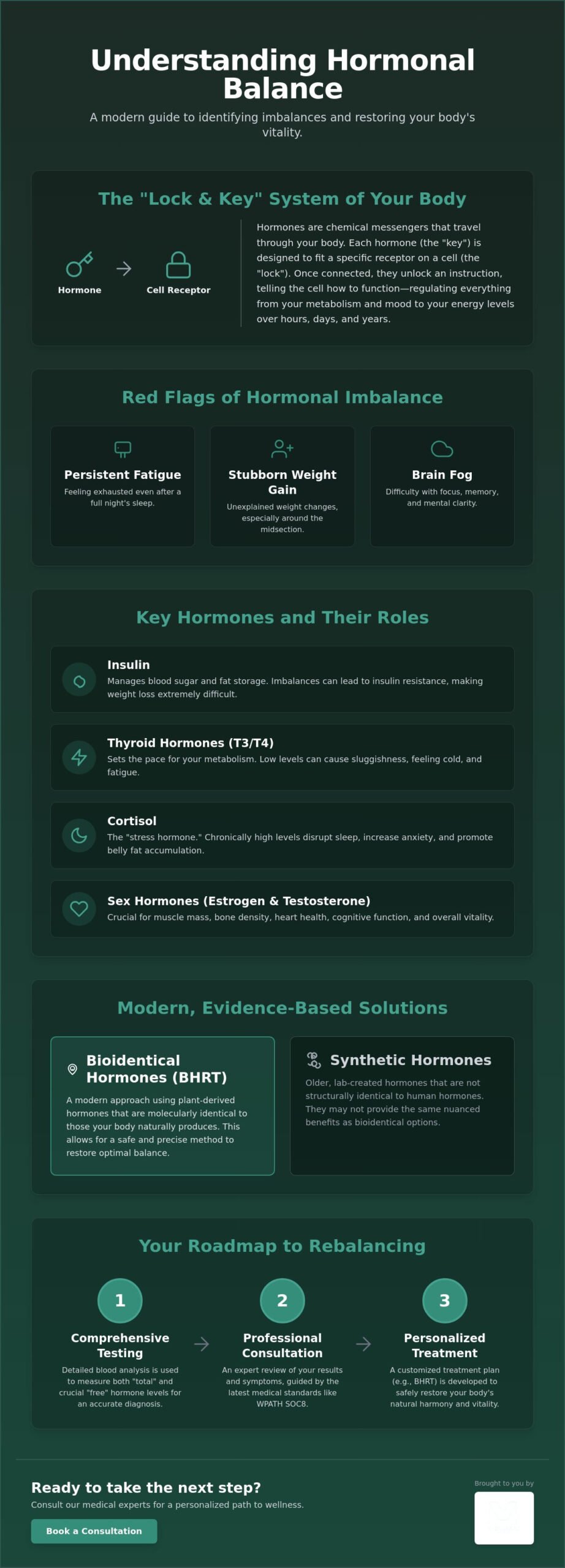
Hormones are the Chemical Messengers of Your Body, produced by a complex network of glands known as the endocrine system. These specialized chemicals act like a biological “lock and key” system. Each hormone travels through your system searching for a specific receptor on a target cell. Once it finds the right fit, it unlocks a specific instruction, telling that cell to grow, produce energy, or change its function. Unlike neurotransmitters that send lightning-fast signals across a single nerve gap, hormones work on a slower, more sustained timeline. They don’t just trigger a quick flinch; they orchestrate your mood, your metabolism, and your physical development over hours, days, and even years. Because your body is so sensitive to these signals, even a tiny shift in concentration can lead to noticeable changes in how you feel and function.
The Endocrine System: Your Internal Control Center
Think of your endocrine system as a highly organized communication network. At the top is the hypothalamus, which acts as the command center, constantly monitoring your internal environment. It sends signals to the pituitary gland, often called the “master gland,” which then directs other major players to maintain your health. This network includes:
- Thyroid: Manages your metabolic rate and energy levels.
- Adrenals: Regulate your stress response and blood pressure.
- Pancreas: Controls blood sugar through insulin production.
These glands use feedback loops to stay in balance. When levels get too high or too low, the system adjusts its production to maintain homeostasis. If one part of this loop is interrupted, the entire control center can struggle to keep your body running efficiently. This is why professional oversight is vital when managing your hormones.
How Hormones Travel and Interact
Once released, these messengers enter the bloodstream to reach distant organs and tissues. However, they don’t always travel alone. Many use binding proteins as a sort of transport bus. While a hormone is attached to a protein, it is inactive; it is simply passing through. The “free” hormone levels, the ones not bound to proteins, are what actually interact with your cells. This is a critical distinction in modern medicine. When we look at your lab results, your total levels might look normal, but if your free levels are low, you’ll still feel the symptoms of an imbalance. Understanding this nuance is the first step toward effective optimization and feeling like yourself again.
Key Hormones and Their Roles in Your Health
Hormones aren’t just about puberty or reproduction; they are the gears behind almost every physical process in your body. Insulin acts as the master regulator of blood sugar and fat storage. When insulin levels remain chronically high, your body stays in a fat-storage state, making weight loss nearly impossible. Thyroid hormones, specifically T3 and T4, set the pace for your basal metabolic rate. If these levels are low, you’ll likely feel sluggish and cold regardless of your activity level. Cortisol, the “stress hormone,” is essential for waking up and responding to danger, but chronic elevation leads to fragmented sleep and stubborn visceral belly fat. Finally, sex hormones like testosterone and estrogen influence everything from heart health to bone density and cognitive function.
Metabolic Hormones and Weight Management
Weight management is often a hormonal battle rather than a simple caloric one. Insulin resistance occurs when your cells stop responding efficiently to insulin, trapping energy in fat cells and leaving you feeling hungry and tired. Modern medical solutions now address these pathways directly. GLP-1 and GIP receptor agonists, such as Tirzepatide, mimic natural gut hormones to regulate appetite and improve insulin sensitivity. These tools, often utilized in professional Weightloss Management programs, help reset the body’s metabolic set point. Supporting these systems naturally involves prioritizing high-quality sleep and fiber-rich diets, which help stabilize blood sugar spikes and reduce the burden on your pancreas.
Vitality and Performance Hormones
Your daily vitality and long-term physical integrity depend on a precise balance of performance-focused hormones. Testosterone is vital for maintaining muscle mass, bone density, and mental clarity. In gender-affirming care, the WPATH Standards of Care, Version 8 provides a rigorous framework for balancing these levels. For feminizing therapy, clinicians typically aim for an estradiol range of 100-200 pg/mL while suppressing testosterone to less than 55 ng/dL. These targets ensure physical transition while protecting cardiovascular health and mood stability. Progesterone may also be added to support breast development and sleep quality. Additionally, Growth Hormone acts as the body’s primary repair mechanism, maintaining skin elasticity and tissue integrity as you age. Balancing these complex messengers requires professional expertise and regular monitoring to ensure you reach peak performance safely.
Signs and Symptoms of Hormonal Imbalance
Identifying a shift in your hormones often starts with small, nagging changes that are easy to dismiss. You might notice your hair feels thinner or that your skin has lost its usual glow. Unexplained weight gain, particularly around the midsection, often points to a mismatch between insulin and cortisol levels. It’s not just physical, though. Many people describe a persistent “brain fog” that makes simple tasks feel overwhelming. You might find yourself more irritable with loved ones or experiencing sudden waves of anxiety without a clear trigger. These aren’t personality flaws; they’re often biological signals that your internal chemistry needs attention.
Energy levels provide some of the clearest clues. If you’re experiencing a “3 PM crash” every day regardless of what you ate for lunch, your metabolic messengers might be struggling to keep your blood sugar stable. Sleep also becomes a battlefield. Insomnia or waking up drenched in night sweats suggests that your body’s temperature regulation and stress response are out of sync. Additionally, changes in libido or sexual performance act as a critical “check engine light” for your overall health. When these systems falter, it is rarely about one single factor but rather a cascade effect across your entire endocrine system.
Hormonal Shifts in Men vs. Women
While the underlying chemistry is similar, the way imbalances manifest can differ by gender. For women, perimenopause can begin years before the actual onset of menopause, bringing unpredictable mood swings and hot flashes as estrogen fluctuates. Men experience a more gradual decline known as andropause, or “Low T.” Because testosterone levels in men often drop by about 1% each year after age 30, the symptoms like loss of muscle mass and decreased motivation can feel like “just getting older.” Despite these differences, both genders are equally susceptible to thyroid issues and adrenal fatigue. These conditions often stem from modern lifestyle stressors that exhaust the glands responsible for maintaining your daily stamina.
When to Seek Professional Medical Advice
It’s vital to distinguish between the natural process of aging and a treatable medical imbalance. You don’t have to accept persistent fatigue or a lack of vitality as your new normal. Gathering baseline data is the most effective way to start your journey back to balance. We recommend a comprehensive sexual health screening to get a clear picture of your current levels. For expats living in Thailand, finding an English-speaking doctor consultation is essential for clear communication. Being able to describe your symptoms accurately ensures that your treatment plan is precise, safe, and tailored to your specific needs. Professional guidance turns guesswork into a clear, actionable roadmap for recovery.
Modern Solutions: BHRT and Medical Optimization
Bio-Identical Hormone Replacement Therapy, or BHRT, represents a shift from traditional replacement to precise medical optimization. Unlike synthetic options, which are often made from animal sources and only mimic human chemistry, bio-identicals are plant-derived. They are molecularly identical to the hormones your body produces naturally. This exact match allows for a seamless “lock and key” fit at the cellular level, which significantly reduces the risk of side effects. We don’t believe in a one-size-fits-all approach. Your treatment is customized based on your specific blood work, ensuring your levels are restored to an optimal range rather than just a “normal” one. This level of precision is also a cornerstone of metabolic health. For those struggling with weight, understanding your hormonal profile is a prerequisite for success with advanced treatments like Mounjaro Thailand, which uses tirzepatide to fix underlying insulin issues.
Benefits of BHRT for Men and Women
Restoring your hormonal balance does more than just alleviate symptoms; it revitalizes your entire quality of life. Patients often report a swift return of cognitive clarity and steady energy levels that last throughout the day. Beyond feeling better, BHRT provides essential long-term protection for your physical integrity. It helps maintain bone density and supports cardiovascular health as you age. While women often seek BHRT for menopause, men also see profound results in muscle retention and mood stability. You can explore these specific advantages further in our BHRT for men guide. Whether you are looking to regain your competitive edge or simply want to age with grace, optimization provides the biological foundation you need.
Safety and Monitoring in Hormone Therapy
Safety is our highest priority, which is why professional medical supervision is non-negotiable. We use regular, comprehensive blood tests to monitor how your body responds to therapy. This allows us to make micro-adjustments to your dosage, ensuring you stay within the “Goldilocks zone” where you get maximum benefits with minimal risk. There are many myths surrounding the safety of hormones, but modern BHRT, when managed correctly, is a well-studied and reliable medical tool. We focus on transparency and education, guiding you through each step of the process so you feel confident in your care. Regular consultations ensure that your roadmap to health evolves alongside your body’s changing needs.
Ready to discover how a personalized plan can restore your vitality? Book your expert medical consultation today to start your journey toward peak performance.
The Path to Balance: Testing and Consultation
Restoring your vitality is a methodical process that begins with self-awareness and ends with a precise medical strategy. The journey starts by identifying the specific symptoms and lifestyle factors that are impacting your daily life. Whether it is the persistent fatigue mentioned earlier or a shift in mood, these observations provide the context for your care. We then move to comprehensive blood panels. These tests go beyond basic screenings to measure the levels of active hormones in your system. By focusing on “free” levels rather than just total counts, we gain a clear picture of what is actually available for your cells to use. This data acts as the foundation for your professional consultation with a physician trained in BHRT. Together, you will develop a personalized treatment and lifestyle plan designed to restore your unique biological balance.
What to Expect During Your Hormone Consultation
We believe that healthcare should be a collaborative partnership. When you walk into our clinic, you will find a non-judgmental, patient-centered environment designed to lower the psychological barriers often felt in medical settings. Your consultation is a time to discuss your full medical history and your long-term wellness goals in detail. We want to know how you want to feel, not just what your lab results say. Private medical clinics in Thailand are known for providing efficient, hassle-free care, making it easy for the international community to access high-level expertise without the traditional clinical red tape. Our goal is to move you through the process with clarity and reliability, ensuring you feel like a priority at every step.
Maintaining Balance Through Lifestyle
Medical optimization is most powerful when it works in tandem with your daily habits. There is a significant synergy between hormone therapy, targeted nutrition, and consistent exercise. For example, stabilizing your blood sugar through diet can reduce the burden on your insulin production, allowing your hormones to function more efficiently. We also emphasize stress management techniques to protect your adrenal health, as chronic stress can quickly deplete your progress. Regular check-ups are the final, essential piece of the puzzle. These visits allow us to monitor your levels and make fine-tuned adjustments to your plan. This proactive approach ensures that your vitality is not just a temporary fix but a sustained state of peak performance that evolves with you as you age.
Your Roadmap to Sustained Vitality and Balance
Understanding how your body’s internal chemistry works is the first step toward reclaiming your energy and focus. We have explored how these chemical messengers regulate everything from your mood to your metabolic rate, and why identifying the early signs of imbalance is so critical for your long-term wellness. By utilizing precise testing and bio-identical solutions, you can move past the confusion of aging and start a journey toward medical optimization. Hormones shouldn’t be a source of frustration; they are the foundation for your peak performance and physical integrity.
Our clinic, founded by UK-trained Dr. Donna Robinson, specialized in BHRT and comprehensive weight loss management to help you reach your goals. We provide nationwide private outpatient care across Thailand that is both efficient and supportive. You don’t have to navigate these complex biological changes alone. Our team acts as your knowledgeable guide in a non-judgmental environment, ensuring your transition or optimization is managed with the highest medical standards. We prioritize your comfort and peace of mind at every stage of the process.
We look forward to helping you restore your balance and live your life with renewed confidence and vitality.
Frequently Asked Questions
How do I know if my hormones are out of balance?
You can identify a potential imbalance by tracking persistent symptoms like unexplained fatigue, mood swings, or changes in skin and hair quality. While these physical and emotional signs provide strong clues, a clinical blood panel is the only way to confirm your levels. Measuring both free and total hormone concentrations allows a doctor to see exactly how your body is functioning and where your system needs support.
Is Bio-Identical Hormone Replacement Therapy (BHRT) safe?
BHRT is a safe and effective treatment when administered under the supervision of a trained medical professional. These therapies use plant-derived compounds that are molecularly identical to the messengers your body naturally produces. This precise match reduces the risk of adverse reactions compared to older synthetic alternatives. Regular monitoring through follow-up consultations ensures that your levels remain within the optimal range for your specific health goals.
Can hormonal imbalances cause weight gain that won’t go away?
Yes, issues with insulin resistance or thyroid dysfunction can make losing weight nearly impossible through diet and exercise alone. When these systems are out of sync, your body often defaults to storing fat rather than burning it for energy. Addressing these metabolic hurdles through professional weightloss management helps reset your internal chemistry, allowing your body to respond correctly to lifestyle changes and nutritional improvements.
What kind of doctor should I see for hormone issues in Thailand?
You should seek a physician who is specifically trained in BHRT and understands international medical guidelines like the WPATH SOC8. In Thailand, many expats prefer private clinics where they can consult with English-speaking doctors. This ensures clear communication regarding symptoms and treatment goals. A qualified doctor will prioritize a patient-centered approach, focusing on your comfort and long-term health rather than just treating a single symptom.
How long does it take to see results from hormone therapy?
Most patients begin to feel a noticeable difference in their energy levels and mental clarity within 3 to 8 weeks of starting therapy. However, more significant physical transformations, such as changes in muscle mass or fat distribution, typically require 3 to 6 months of steady treatment. Consistency is key, as your body needs time to adjust to its newly optimized chemical environment and reach a state of homeostasis.
Are hormone tests covered by standard health check-ups?
Standard health check-ups usually focus on general markers like cholesterol or blood sugar and rarely include detailed hormone testing. To get a full picture of your endocrine health, you should request a specialized panel that includes sex hormones, thyroid markers, and cortisol. These specific tests provide the baseline data needed to identify subtle imbalances that a routine physical might otherwise overlook during a standard visit.
Can men benefit from hormone therapy as they age?
Men can certainly benefit from therapy to address the gradual decline in testosterone that occurs during andropause. Optimizing your hormones can help restore muscle retention, improve sleep quality, and maintain bone density. Many men find that addressing these shifts early helps them stay active and mentally sharp, preventing the “slow down” that many people mistakenly assume is just an unavoidable part of the aging process.
Do I need a prescription for BHRT or weight loss injections?
You must have a professional medical consultation and a valid prescription to access BHRT or advanced weight loss injections. This requirement is in place to protect your safety, as these treatments significantly impact your hormones and metabolic function. A doctor will use your blood work to determine the correct dosage and monitor your progress, ensuring that the treatment remains both effective and safe for your unique physiology.